


Antique Silver Cutlery Chest
An antique silver cutlery chest safeguards fine flatware in sturdy timbers like mahogany and oak, pairing everyday utility with handsome domestic display.
Antique Silver Cutlery Chest
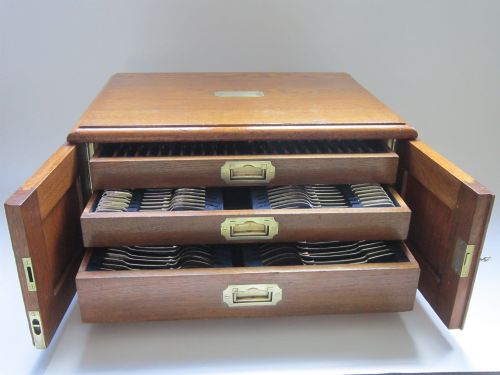
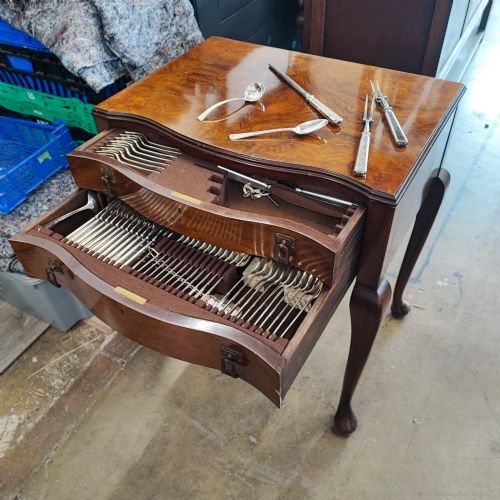
The pieces appearing on this page encompass various traditional forms including mahogany cutlery boxes, oak canteens, and walnut cases. Makers utilised durable hardwoods to house heavy silverware, creating functional furniture that often displays distinct period styling like Queen Anne Revival or Edwardian craftsmanship.
Earlier examples include eighteenth-century bow front mahogany boxes featuring solid silver mounts, while later nineteenth and twentieth-century pieces incorporate extensive canteens with sterling silver or silver plate and steel implements. These chests serve both practical storage needs and traditional interior decoration.
Markers of quality
Quality in these pieces rests upon the selection of timber and the precision of the interior fittings designed to hold each utensil firmly in place. Superior chests display finely grained mahogany or burr walnut alongside robust brass hardware and intact velvet or felt linings.
The integrity of the construction and the presence of original locks, keys, and matching flatware sets distinguish finer canteens from utilitarian replacements. Attention to detail in the exterior cabinetwork and the clever use of space mark out the more accomplished workshop productions.
Listings feature woods like mahogany, oak, and burr walnut paired with interior linings of velvet and felt.
Walker & Hall, Sheffield·Mappin & Webb
The Antique Silver Cutlery Chest Glossary
- Canteen
- A fitted box or cabinet designed specifically to hold a complete set of cutlery and flatware.
- Escutcheon
- A protective metal plate surrounding a keyhole, usually fashioned from brass in these chests.
- Fiddle Pattern
- A traditional nineteenth-century flatware handle shape featuring a narrow stem that widens toward a squared, notched end.
- Patina
- The surface sheen and mellowed appearance developed by aged wood through decades of handling and polishing.
- Silver Plate
- A base metal coated with a thin layer of pure silver, offering the appearance of solid silver at a lower cost.
Antique Silver Cutlery Chest: Frequently Asked Questions
What periods do these chests cover?
The available selection spans several distinct eras, beginning with eighteenth-century pieces and moving through Georgian, Victorian, and Edwardian times.
Later examples extend into the nineteen-twenties and nineteen-thirties, reflecting changing domestic fashions and larger flatware requirements.
How were these chests used?
Households utilised these heavy wooden containers to protect valuable silverware from tarnish, dust, and loss while keeping dining implements organised.
Larger versions remained stationary in dining rooms or hallways, whereas campaign trunks and smaller boxes allowed families to transport silverware securely.
How do I maintain the interior lining?
Original velvet and felt linings benefit from gentle dry dusting with a soft brush to remove accumulated debris without disturbing delicate fibres.
Avoiding moisture and direct sunlight helps preserve the textiles and prevents the underlying wood from warping over time.
Are the cutlery sets always complete?
Some chests retain their original matched flatware suites, while others are sold as empty cases or with assembled sets gathered over time.
Checking individual listings clarifies whether the contents match the period of the exterior housing.