

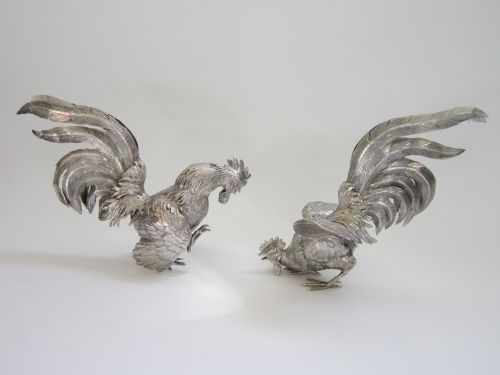


Antique Silver Cockerel
These antique silver cockerel pieces are striking table ornaments, barware, and figures that bring character and period craftsmanship straight into a room.
Antique Silver Cockerel
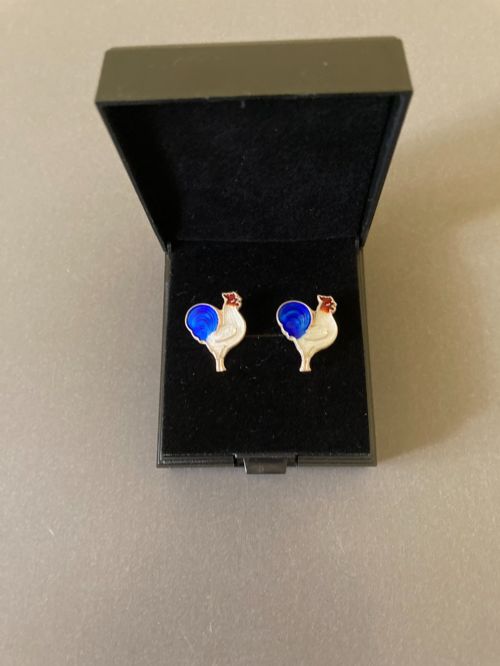
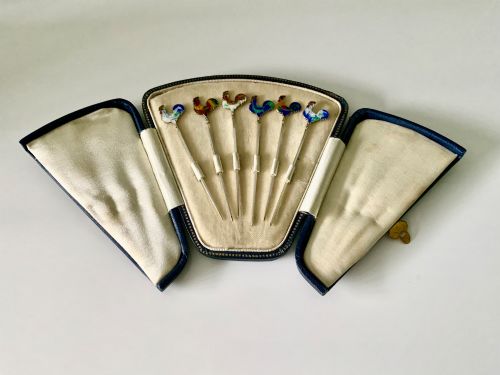
The selection encompasses standing figures, fighting cockerels, and practical items such as cocktail shakers and boxed cocktail sticks decorated with enamel. These objects cross several stylistic categories, including Art Deco, Meiji period Japanese work, and continental Victorian designs.
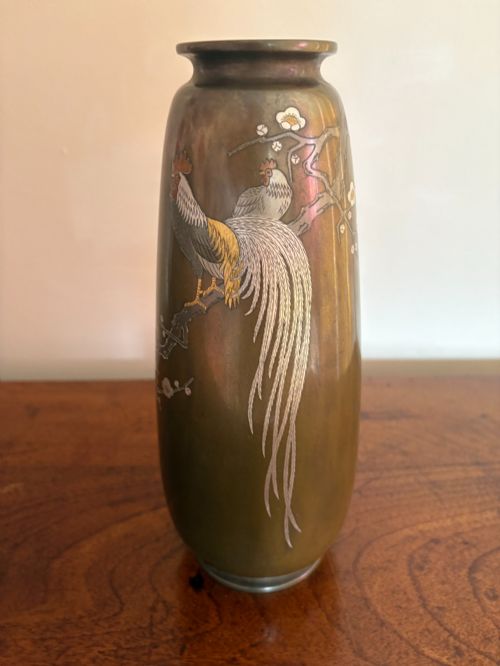
Origins vary widely across the inventory, with English, French, German, and Italian pieces appearing alongside Japanese bronze vases. Collectors encounter both single decorative figures and matched pairs designed to face one another on a dining table or sideboard.
Discerning quality in silver birds
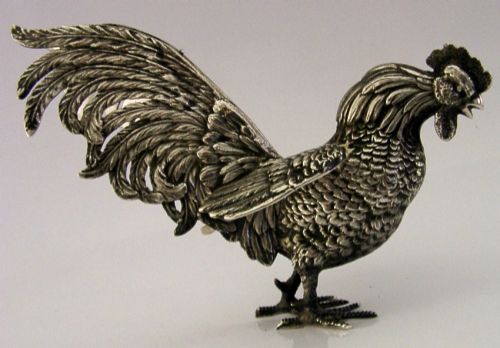
Quality rests upon the precision of the casting and the crispness of the hand-chased feather work across the body and tail. Superior examples display anatomical realism and secure posture, whereas simpler production relies on standard plating over base metals.
The integration of secondary materials such as enamel determines the distinction between standard barware and higher-tier decorative sets. Intact, undamaged enamel work on cocktail sticks and shakers elevates the finished piece significantly.
Antique Silver Cockerel Retail Price Guide 2026
Typical asking prices for silver cockerel among the pieces listed under this phrase on Sellingantiques today, from the lower quarter to the upper quarter. They describe what is for sale here now, not the wider market.
Several cockerels are caught mid-battle as fighting figures, bringing aggressive poultry posture right into the cocktail hour.
KANASAWA
The Antique Silver Cockerel Glossary
- Sterling silver
- A standard alloy of silver containing 92.5 percent pure silver and 7.5 percent other metals, usually copper. This composition provides the durability required for detailed figural casting.
- 833 silver
- A continental European silver standard containing 83.3 percent pure silver. It is frequently encountered on items originating from certain European workshops.
- Cocktail shaker
- A barware vessel used to mix drinks by shaking, occasionally formed or decorated in the shape of a cockerel during the Art Deco period. Glass bodies with silver mounts appear in this category.
- Chasing
- A metalsmithing technique where the silver is worked from the front with punches to sink the metal and create surface decoration. This method creates the fine texture of bird plumage.
- Vitreous enamel
- A material made by fusing powdered glass to a substrate by firing, producing a smooth and durable coloured coating. It decorates the wings and tails of specific cocktail accessories.
Antique Silver Cockerel: Frequently Asked Questions
What were antique silver cockerels used for?
Many of these pieces served as decorative table ornaments or novelty items like inkwells on Victorian desks. Others functioned directly as barware, including cocktail shakers and sets of cocktail sticks.
Over time, their purpose shifted from practical dining accessories to collectible display pieces. Pairs of fighting cockerels were traditionally placed on sideboards or dining tables as striking decorative centerpieces.
How do I identify Art Deco pieces?
Art Deco examples often incorporate geometric simplicity alongside bright vitreous enamel decoration on items such as cocktail sticks and glass shakers. They typically date from the 1920s and 1930s.
The styling prioritises sleek lines and stylised representations of the bird rather than strict naturalism. Hallmarks from Birmingham dating to this era provide a reliable confirmation of period origin.
Are these figures solid silver or plated?
The inventory includes both solid sterling silver, 833 silver, and silver plated items. Weight often indicates the difference between solid metal and plated wares.
Descriptions specify whether a piece is solid silver or silver plated, and hallmarks on solid items denote the purity standard and assay office. Plated items utilise a base metal core beneath a thin exterior layer of silver.
How should I clean silver cockerel ornaments?
Cleaning requires a soft microfibre cloth and a gentle silver polish formulated to preserve fine detail and chased textures. Care must be taken around enamelled sections to avoid scratching the glass surface.
Harsh chemical dips should be avoided, particularly on pieces with enamel or delicate plating. Regular light dusting helps maintain the lustre of display silver without wearing down the metal.