




Antique Silver Agate Jewellery
Antique silver agate jewellery combines hardstone pebbles with traditional metalwork, offering wearable pieces from the nineteenth century that collectors treasure for their distinct regional character.
Antique Silver Agate Jewellery
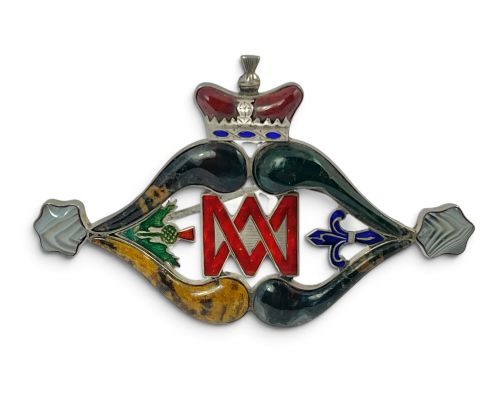
When searching for antique silver agate jewellery, you encounter a strong representation of nineteenth-century pieces, particularly from the Victorian era and the Scottish Revival movement. Brooches dominate the selection, appearing alongside kilt pins, dirk pins, padlock pendants, charms, earrings, rings, and occasional jewellery suites.
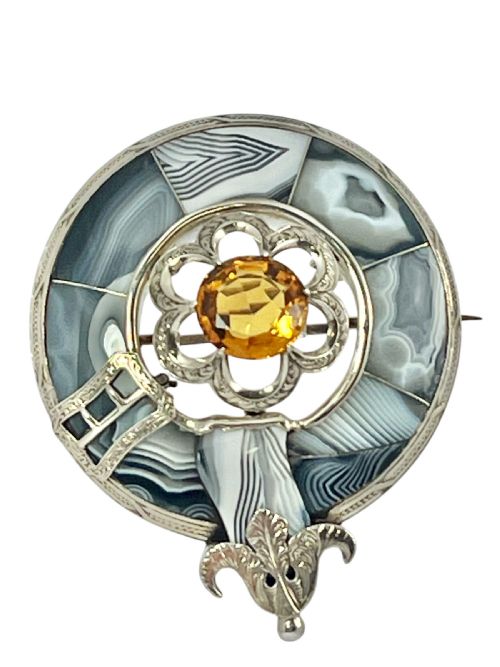
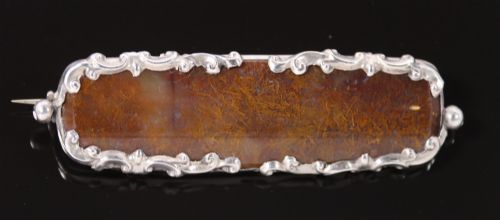
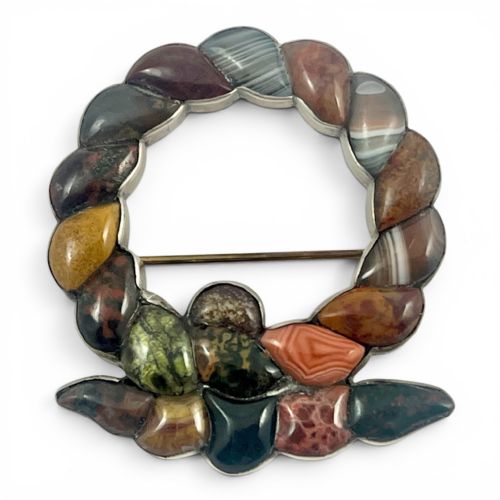
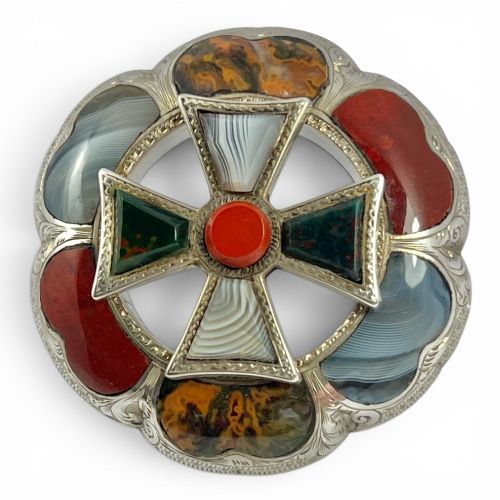
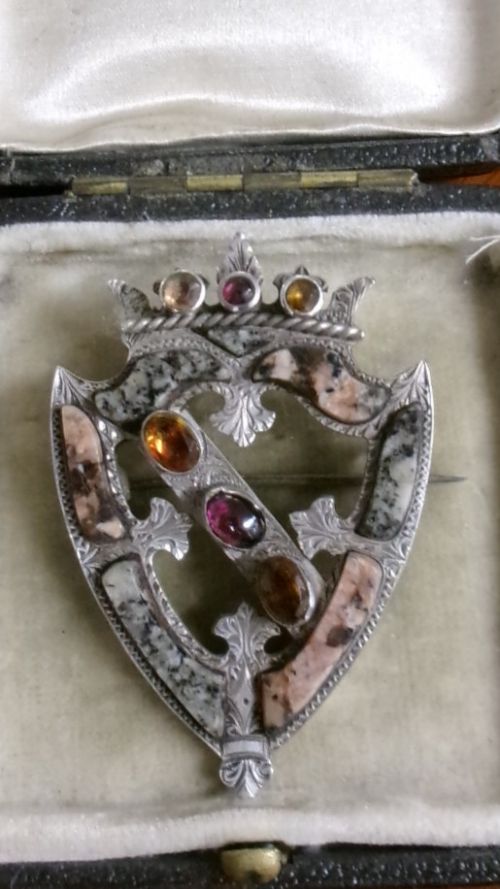
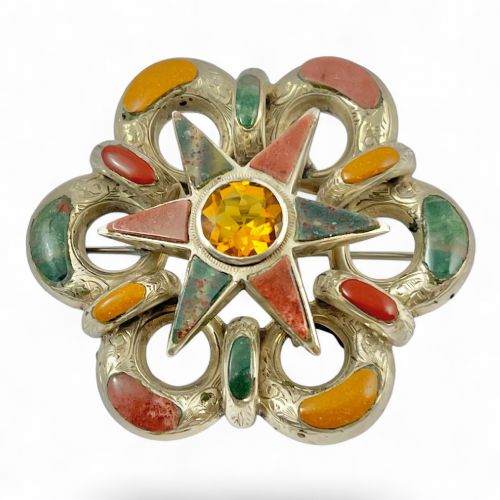
The most common formats on this page are Scottish pebble brooches and shield shapes, frequently incorporating citrine, bloodstone, jasper, or moss agate alongside silver settings. Pieces range from early Victorian provincial examples to later nineteenth-century designs, reflecting a distinct regional aesthetic inspired by Highland traditions.
How They Were Made
Maker's workshops utilised sterling silver and silver gilt to mount hand-cut hardstones, securing variegated agates, jaspers, and bloodstones within detailed bezels. Metalwork often featured engraved basket-hilted broadswords, dirks, bows, and braided plaid motifs characteristic of nineteenth-century Scottish silver production.
Stones such as Montrose agate and moss agate were shaped into geometric shields, crosses, and circular pebble arrangements, sometimes accented with citrine or chalcedony. The assembly combined traditional lapidary work with durable silver mounts designed for daily wear on heavy woollen garments.
Antique Silver Agate Jewellery Retail Price Guide 2026
Typical asking prices for silver agate jewellery among the pieces listed under this phrase on Sellingantiques today, from the lower quarter to the upper quarter. They describe what is for sale here now, not the wider market.
Listings span the Victorian period, the Georgian era, and around nineteen hundred, featuring silver, agate, jasper, citrine, bloodstone, and moss agate.
What Varies in Quality
Quality in these pieces rests upon the variety and visual depth of the hardstones, alongside the crispness of the silver chased work. Finer examples display tightly fitted stones with striking natural banding, polished to a high sheen without surface pitting.
The complexity of the metal design also sets pieces apart, moving from simple bezels to intricate dirk pins, broadsword kilt fasteners, and multi-stone braided arrangements that demand greater skill from the silversmith.
The Antique Silver Agate Jewellery Glossary
- Agate
- A form of chalcedony displaying distinct natural banding or coloration. It serves as the primary hardstone in Scottish Revival and Victorian pebble jewellery.
- Citrine
- A yellow variety of quartz frequently set alongside agates in Victorian Scottish brooches. It provides bright contrast to darker grey and red stones.
- Pebble brooch
- A nineteenth-century Scottish style featuring multiple polished hardstones mounted in silver. These pieces often took the form of shields, swords, or traditional cross motifs.
- Bloodstone
- A dark green jasper flecked with red spots of hematite. Lapidaries utilised this stone alongside agate in regional nineteenth-century pieces.
- Silver gilt
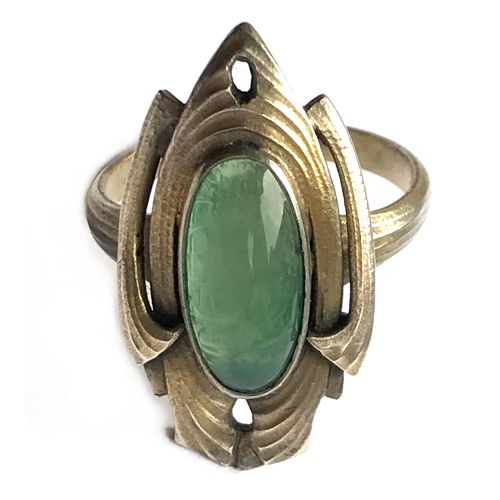
- Silver that has been coated with a thin layer of gold. This technique appears on select rings and brooches from the period.
Antique Silver Agate Jewellery: Frequently Asked Questions
What is Victorian Scottish Revival jewellery?
This design movement gained popularity during the nineteenth century, inspired by Queen Victoria's affection for the Scottish Highlands. Craftsmen produced silver ornaments incorporating native stones and traditional weaponry motifs.
Items from this period range from simple pebble brooches to elaborate dirk pins and plaid brooches worn on heavy garments.
How do I care for antique silver agate pieces?
Hardstones like agate and jasper respond well to gentle cleaning with a soft, dry cloth. Avoid submerging antique silver mounts in harsh chemical dips, which can damage the stones and underlying foil.
Store pieces individually to prevent harder gems from scratching neighbouring silver surfaces or softer mounted stones.
Are these pieces from the nineteenth century?
The majority of pieces date from the Victorian era, spanning the early nineteenth century through to nineteen hundred. Styles include Georgian moss agate work alongside later Victorian Scottish pebble designs.
Datable examples sometimes carry specific years, while others attribute to the broader mid-to-late nineteenth century based on their construction.
What stones are used besides agate?
Jewellery from this category frequently incorporates citrine, bloodstone, jasper, moss agate, and chalcedony. These materials were often sourced locally and cut to showcase natural patterns.
Different stones were combined within a single silver mount to create colourful geometric and symbolic arrangements.