
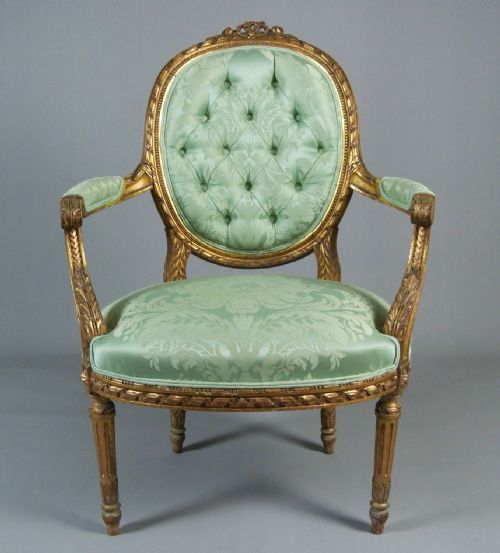
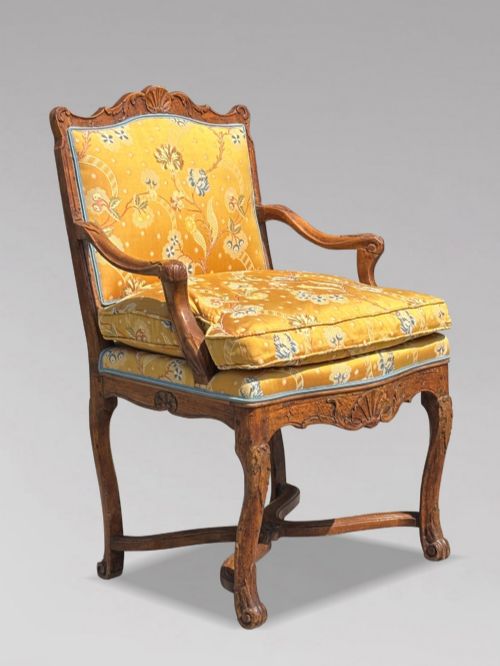
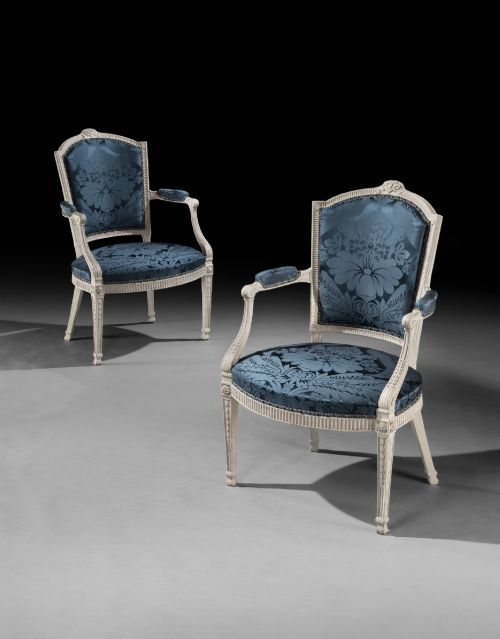
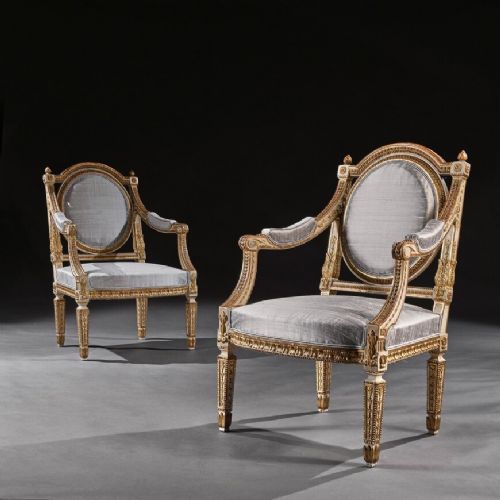
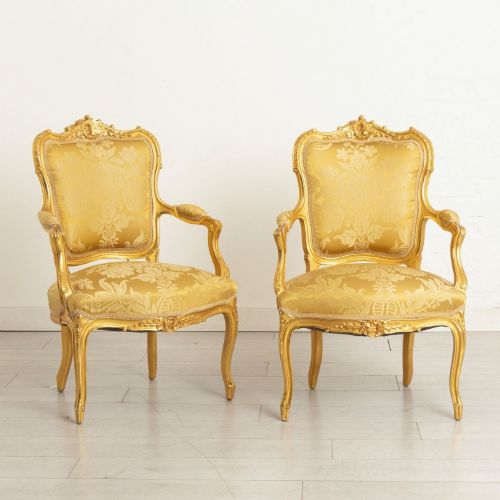


Antique Silk Armchairs
Antique silk armchairs combine period frames in walnut, mahogany and giltwood with lavish textile upholstery.
Antique Silk Armchairs
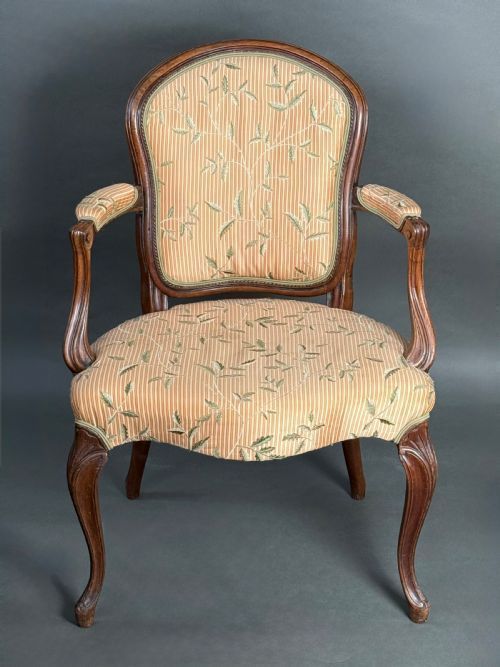
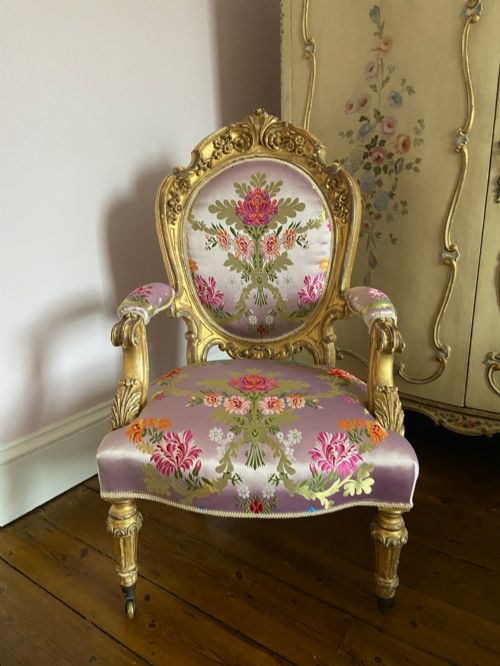
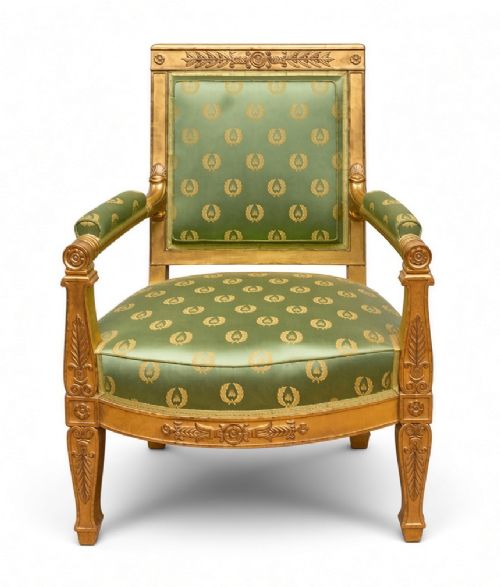
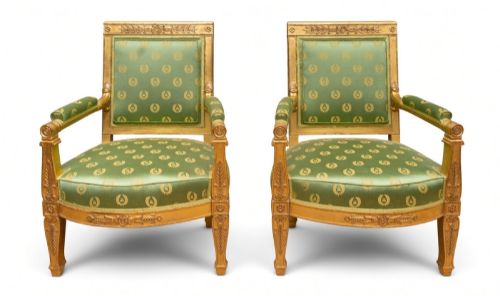
When you search for antique silk armchairs, you encounter formal seating primarily rooted in the eighteenth and nineteenth centuries. The selections span English Georgian mahogany and walnut alongside French styles such as Louis XV, Louis XVI and Restauration.
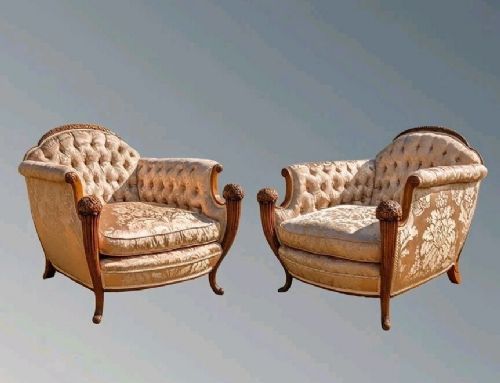
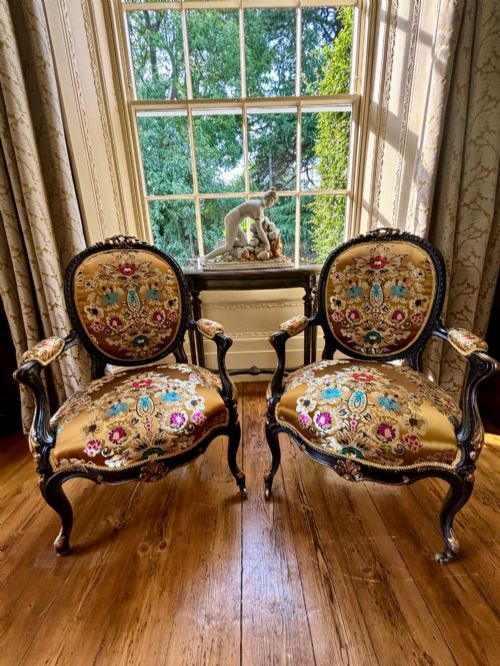
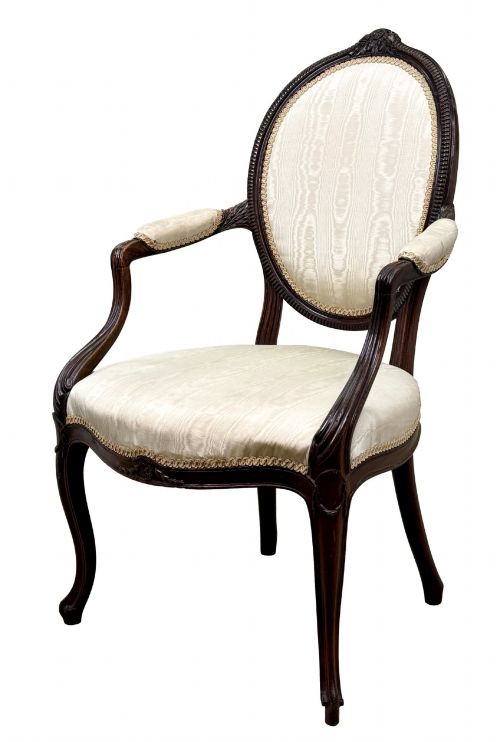
The frames take various forms, from open armchairs and fauteuils to wingbacks and salon chairs. Many pieces feature silk, silk damask or patterned fabric upholstery, ranging from traditional designs to newly applied coverings.
How they were made
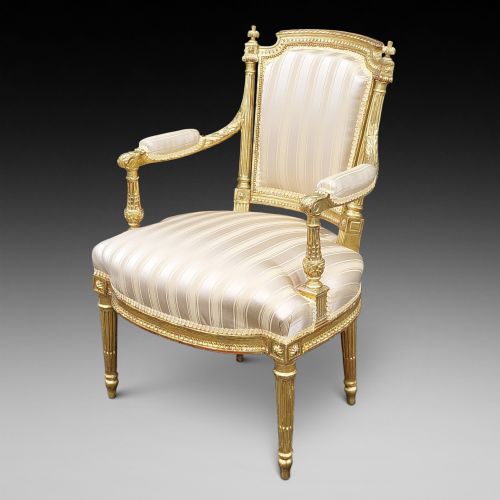
Cabinetmakers shaped the structural frames using dense hardwoods like walnut and mahogany, or applied gold leaf to giltwood surfaces. Brass and ormolu mounts sometimes accent the framework.
Upholsterers then applied textiles including woven silk and silk damask to the seats and backs, often securing them to carved open armchairs or closed wingback forms.
Listings include armchairs spanning from the eighteenth century through the 1930s, featuring silk, giltwood, mahogany, walnut and brass.
What varies in quality
The standard of carving across the wooden or giltwood frame determines much of the distinction between pieces, with crisp detailing indicating superior craftsmanship. The choice and execution of the silk upholstery also influence the overall character.
Makers and attribution matter significantly, as documented pieces from known workshops hold greater historical interest than unmarked examples of similar periods.
Jacob-Desmalter·Thomas Chippendale·Robert Manwaring
The Antique Silk Armchairs Glossary
- Giltwood
- Wood that has been coated with a thin layer of gold leaf. This finish appears frequently on French and English formal seating.
- Silk damask
- A reversible figured fabric woven on a loom, featuring patterns formed by contrasting warp and weft threads. It is commonly used for formal period upholstery.
- Wingback
- An armchair with side panels or wings attached to the back, designed to shield the occupant from drafts. These appear in both Georgian and later nineteenth-century forms.
- Restauration
- A French decorative style dating from the early nineteenth century. Pieces from this period often display restrained classical lines.
Antique Silk Armchairs: Frequently Asked Questions
How do I care for silk upholstery?
Silk requires protection from direct sunlight to prevent fading and degradation of the natural fibres over time. Gentle vacuuming with a soft attachment helps remove surface dust without damaging the weave.
Professional cleaning is advisable for stubborn marks, as water can leave rings on antique silk fabrics. Using armcaps can also reduce wear on high-contact areas.
Are these chairs comfortable for daily use?
Many period armchairs were built for formal reception rooms rather than lounging, meaning the seats can feel firm. The supportive frames and upright postures suit reading or conversation.
Upholstery stuffing materials vary by period, influencing the give of the seat and back. Testing individual pieces helps determine whether they suit your intended use.
How can I tell eighteenth-century frames apart from later revivals?
Eigteenth-century frames display the tool marks, timber shrinkage and construction methods characteristic of period joinery. Wood species and fastener types also offer clues to the actual date of manufacture.
Nineteenth-century revival pieces often copy earlier styles like Louis XVI or Chippendale while employing contemporary manufacturing techniques. Examining the underside and interior frame components reveals these structural differences.
What is the difference between a fauteuil and an open armchair?
A fauteuil specifically denotes a French open-arm armchair with upholstered arm pads. These frames usually feature exposed carved giltwood or walnut.
English open armchairs of the Georgian period follow distinct regional proportions and carving styles, such as the Irish manner or Hepplewhite designs.