

Antique Silhouette in Frame
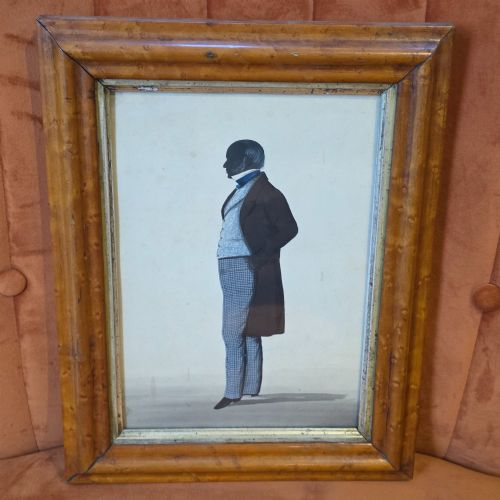
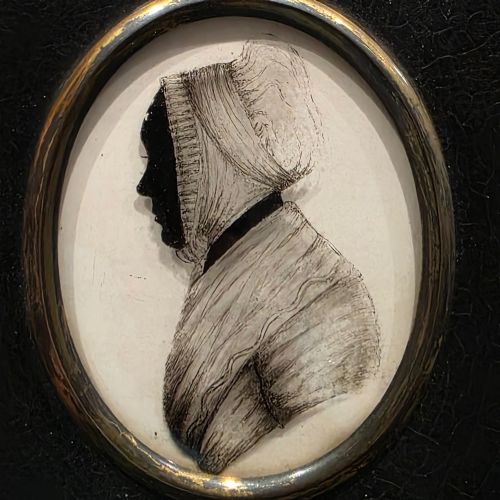
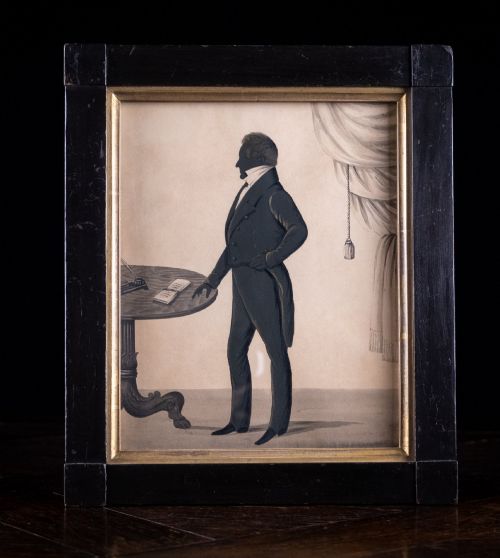
An antique silhouette in frame brings intimate likenesses of Georgian and Victorian sitters directly onto the wall with striking monochrome contrast.
Antique Silhouette in Frame
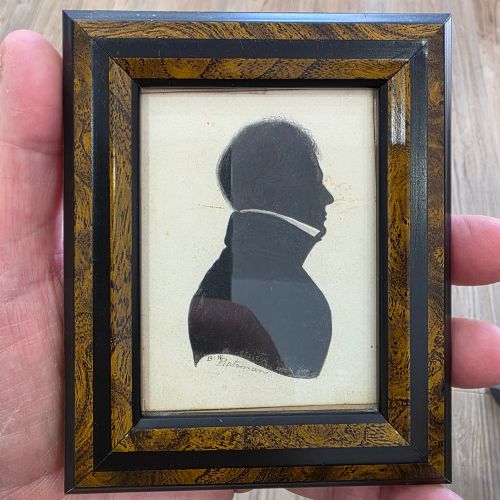
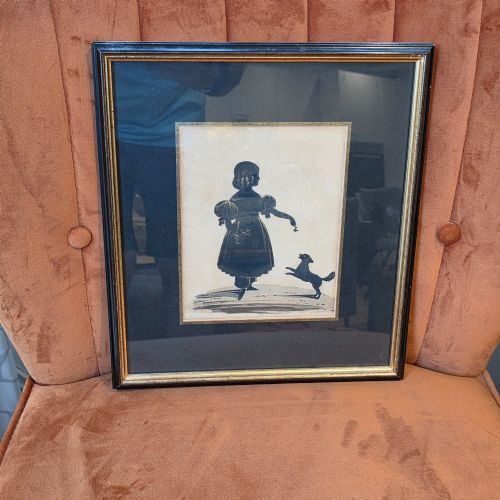
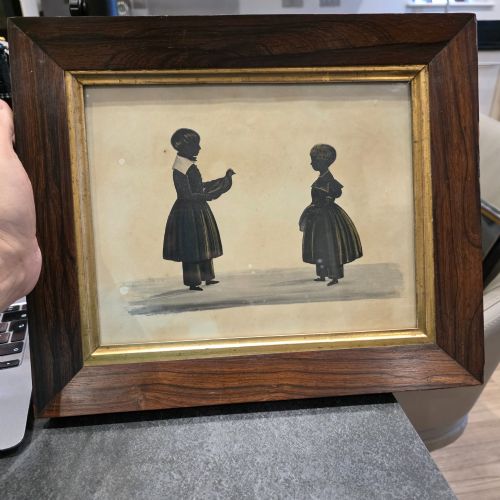
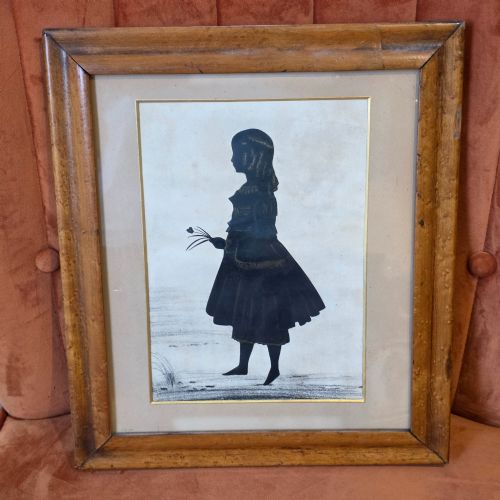
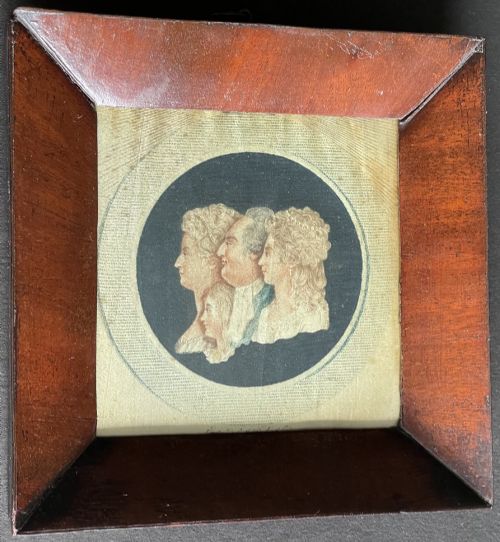
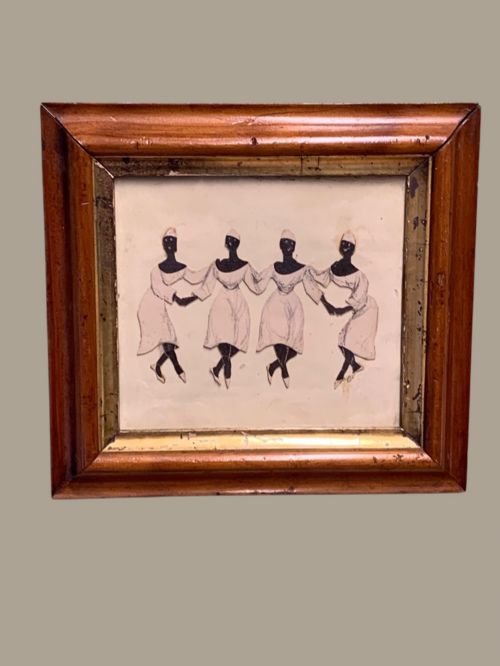
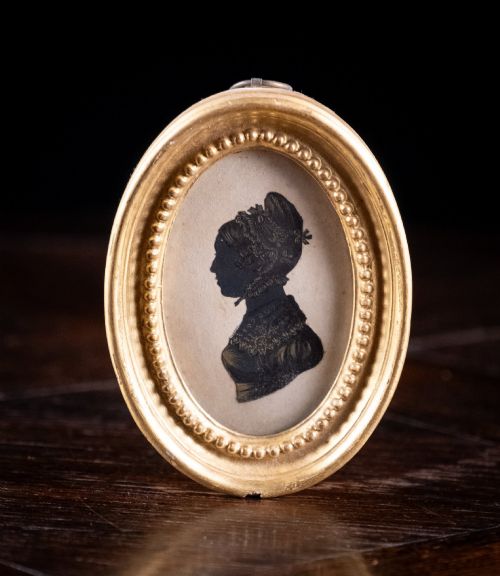
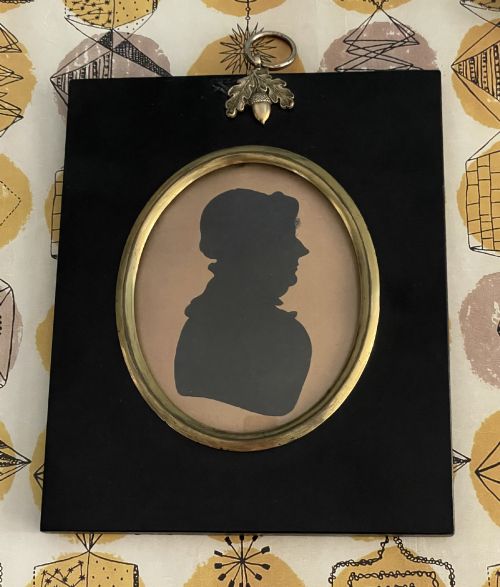
When you search for an antique silhouette in frame, you encounter profile portraits capturing sitters from the eighteenth, nineteenth, and early twentieth centuries. These works record the likenesses of gentlemen, ladies, and children through precise paper cuts or painted profiles.
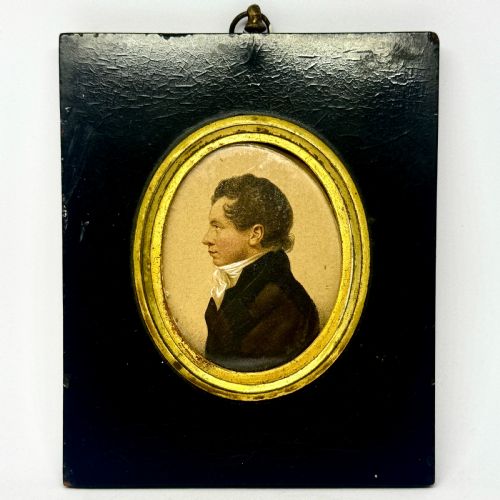
The pieces on this page appear primarily within the Regency, Georgian, and Victorian periods. You find them housed in original surrounds such as ebonised wood or rosewood frames, often retaining their brass bezels and convex glass.
Materials and construction methods
Maker utilise black paper for hollow-cut profiles or applied silhouettes, mounting the dark paper against a contrasting light background. Other pieces employ ink, watercolour, or oil paint applied directly onto glass, plaster, or card.
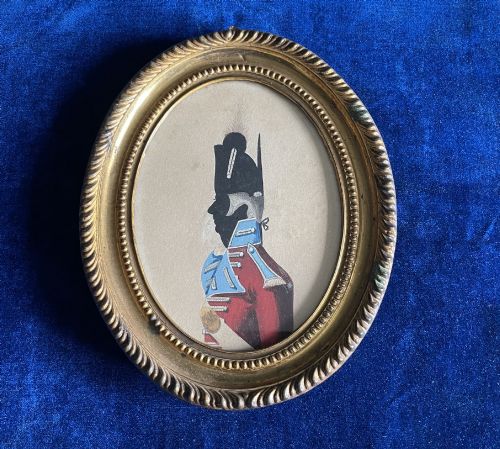
Framing materials typically comprise wood, specifically ebonised timber or rosewood, fitted with brass slip mounts and protective glass. Gold leaf accents frequently highlight costume details, jewellery, or hair within the profile.
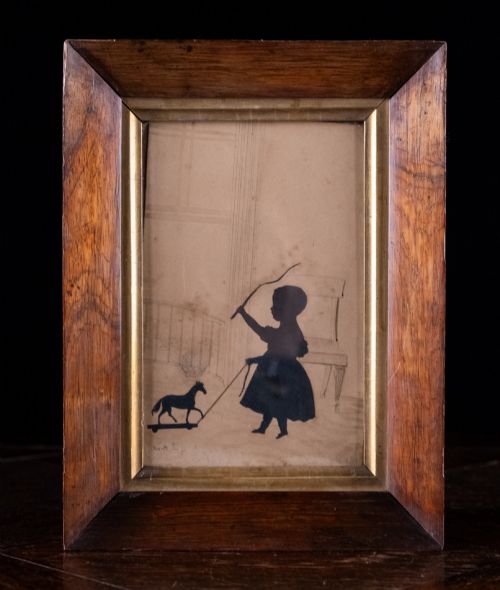
Several silhouettes capture family pets alongside their owners, including a girl with her dog and a child mounted upon a horse.
Assessing detail and execution
Quality rests upon the precision of the cutting or brushwork, where master profileists capture immediate likeness through the exact contour of a nose, lash, or cravat. The crispness of a paper cut or the fine touch of bronze powder determines the visual strength of the portrait.
The preservation of the original mounting contributes significantly to the integrity of the piece. Surviving convex glasses, untouched trade labels on the reverse, and unblemished gilding elevate the status of a framed portrait.
William James Hubard·Augustin Edouart·John Miers·George Atkinson·J. Deacon
The Antique Silhouette in Frame Glossary
- Silhouette
- A profile portrait filled in with a solid dark colour, typically black, derived from the name of the French finance minister Etienne de Silhouette. These profiles form the core of the portraits seen here.
- Ebonised wood
- Timber treated to resemble ebony, providing the dark, glossy frames common in the Regency and Victorian periods. This finish creates a stark border that accentuates the pale background of the profile.
- Reverse painted
- A technique where the artist paints directly on the underside of the glass so the image displays correctly through the upper surface. This method appears on glass silhouettes from the Georgian era.
- Hollow-cut
- A method where the profile is cut out from a piece of white paper, which is then laid over dark fabric or paper to reveal the silhouette. It requires immense dexterity with small scissors.
- Gilded silhouette
- A profile enhanced with gold leaf or bronze powder to delineate costume details, lace, or hair. This adds considerable depth and luminance to an otherwise flat monochrome image.
Antique Silhouette in Frame: Frequently Asked Questions
How do I hang a framed silhouette?
Hang these pieces away from direct sunlight to prevent the fading of delicate watercolours and paper grounds. Use picture hooks suited to the weight of the timber frame and glass.
Group several profile portraits together on a wall to create a traditional gallery arrangement, echoing the way nineteenth-century collectors displayed their portrait miniatures.
Are silhouettes signed by artists?
Some profiles feature signatures on the paper, while others carry trade labels pasted to the reverse of the frame. Renowned profileists often utilised specific studio stamps that record their London or provincial addresses.
Unsigned pieces remain common because many travelling artists and domestic practitioners did not mark their work. Attribution then relies on style, cutting technique, and framing materials.
What is a hollow-cut silhouette?
A hollow-cut silhouette is created by snipping the profile shape out of a sheet of white paper, leaving the surrounding paper intact. This sheet is then placed over a dark background material so the portrait emerges.
Artists often signed their name directly beneath this central opening on the remaining paper mount, sometimes adding delicate pencil or watercolour details around the collar.
How do I care for antique glass frames?
Clean the exterior glass gently with a soft cloth and minimal moisture, ensuring liquid does not seep beneath the edge of the frame. Old glass is fragile and prone to scratching.
Avoid opening the frame yourself, as the seal protects the delicate paper, wax, or plaster substrate from dust and atmospheric moisture damage over the centuries.