





Antique Sienna Marble
Antique sienna marble brings the rich ochre warmth of Italian quarries straight into nineteenth-century drawing rooms through mantel clocks, tazzas, and architectural ornaments.
Antique Sienna Marble
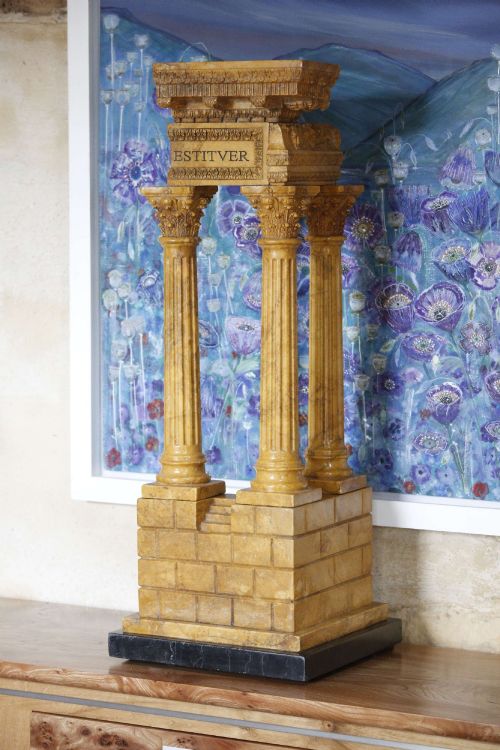
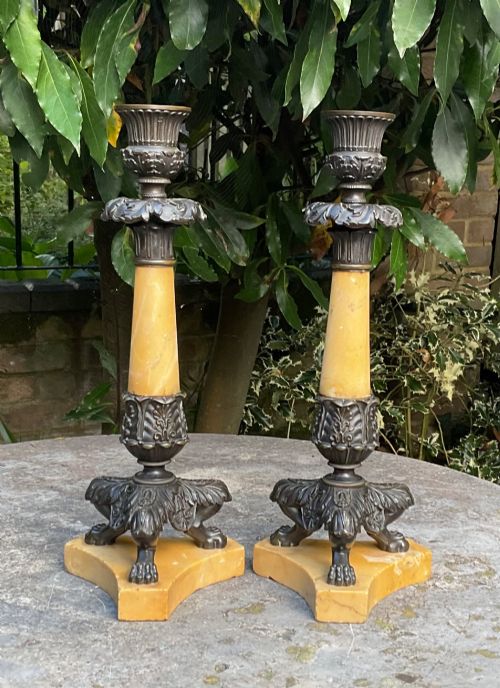
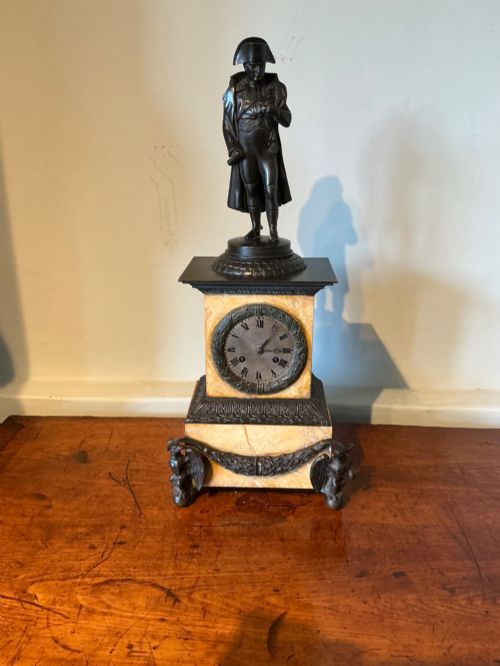
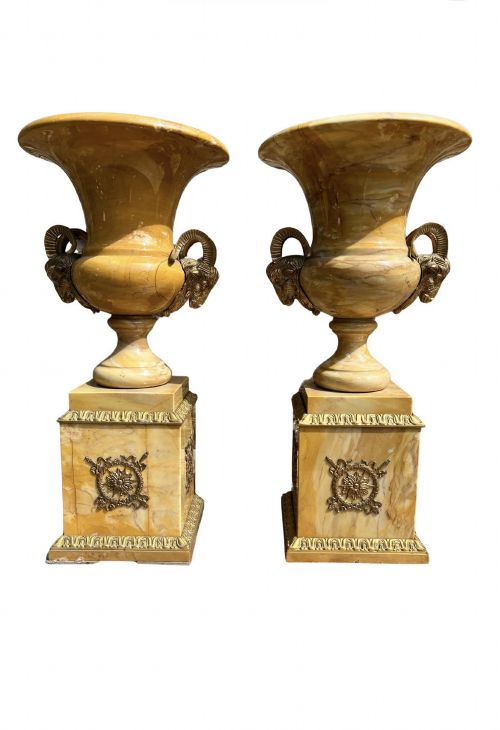
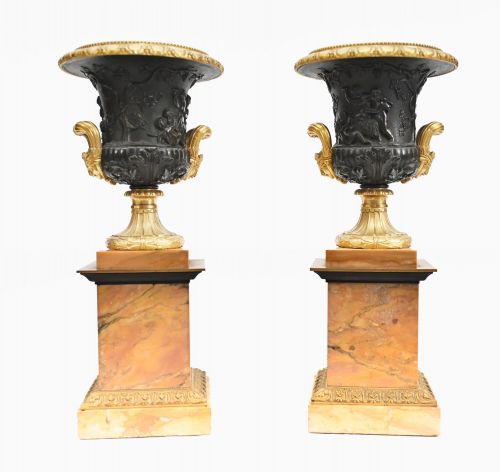
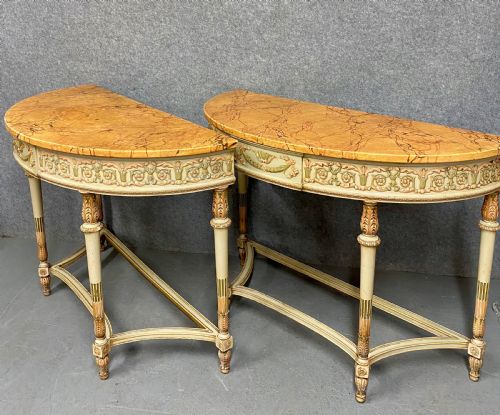
When you search for antique sienna marble, you encounter decorative objects and furnishings shaped from this distinctive yellow stone, often paired with contrasting patinated bronze or ormolu. The pieces span the nineteenth century, taking forms such as mantel clocks, candlesticks, decorative urns, and console tables.
You are most likely to meet mantel clocks and pairs of candlesticks or tazzas originating from Regency, Victorian, and Grand Tour periods. These items reflect classical revival tastes, channelling neoclassical architecture and Italian sculpture into domestic interior decoration.
How they were made
Makers cut and polished the natural sienna marble, harnessing its characteristic golden-yellow ground and dark veining to form smooth plinths, columns, and vessels. Stonemasons worked the marble alongside metalworkers who cast complementary details in bronze, brass, and ormolu.
Artisans combined these heavy stone bodies with fire-gilded or patinated metal mounts, securing figures, bezels, and handles to the marble bases. Clockmakers integrated French movements into the stone housings, whilst sculptors carved low reliefs directly into the marble panels.
Antique Sienna Marble Retail Price Guide 2026
Typical asking prices for sienna marble among the pieces listed under this phrase on Sellingantiques today, from the lower quarter to the upper quarter. They describe what is for sale here now, not the wider market.
Listings feature periods spanning the Regency, Victorian, and 1930 eras, combining sienna marble with bronze, brass, and glass.
What varies in quality
The distinction between ordinary and superior pieces rests on the crispness of the bronze chasing and the intensity of the marble's natural figuring. Finer examples display deeply undercut metal castings and rich, varied coloration within the stone itself.
Proportion and architectural balance dictate the success of each piece, distinguishing ambitious Grand Tour commissions from standard decorative wares. The precision of the stonework joints and the depth of the polish reveal the maker's hand.
The Antique Sienna Marble Glossary
- Sienna marble
- A high-grade ornamental limestone quarried in Italy, known for its deep yellow colour and dark branching veins. It became immensely popular during the Grand Tour period.
- Ormolu
- Finely chopped and mercurically gilded bronze mounts applied to furniture and clocks. This technique creates a brilliant golden finish that contrasts sharply with dark stone.
- Tazza
- A shallow ornamental cup or vase raised on a stem and foot, frequently carved from marble or cast in bronze. These decorative objects adorned nineteenth-century sideboards and tables.
- Grand Tour
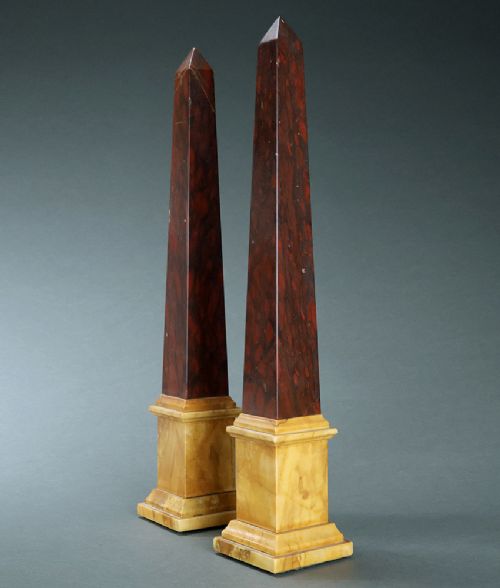
- A traditional trip through Europe undertaken by upper-class young men to absorb classical art and culture. Travellers frequently returned home with marble obelisks, bronzes, and tazzas.
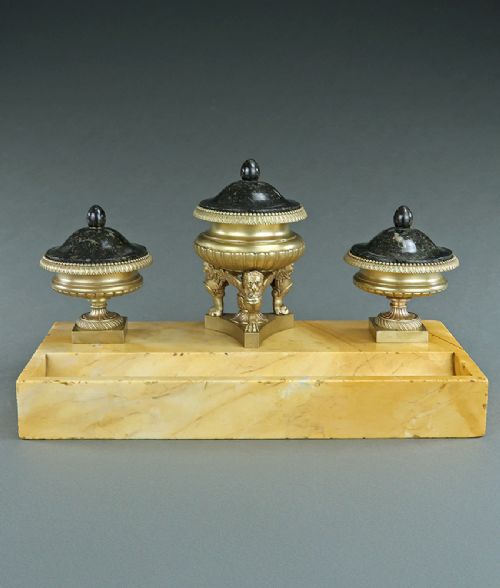
- Encrier
- A portable writing desk set or inkstand equipped with inkwells and penholders. Many surviving examples feature heavy marble bases fitted with gilt-bronze mounts.
Antique Sienna Marble: Frequently Asked Questions
What is sienna marble?
Sienna marble is a striking natural stone sourced from Italian quarries, celebrated for its warm yellow background and dark, dramatic veining. Craftsmen utilised it throughout the nineteenth century to build decorative bases for clocks, lamps, and architectural ornaments.
The stone takes a high polish, making it a favourite for neoclassical designers who sought vivid colour contrasts against patinated bronze and ormolu metalwork.
How do I date antique marble clocks?
Dating these items involves examining the style of the bronze mounts, the construction of the clock movement, and the prevailing aesthetic of the period. Regency and Empire pieces often feature rigorous classical proportions, whereas later Victorian examples incorporate more eclectic revival details.
Looking closely at the backplate of the movement and the wear on the marble edges helps establish whether a piece belongs to the early or late nineteenth century.
What was a Grand Tour object?
Grand Tour objects were souvenirs purchased by wealthy travellers touring Italy and France during the eighteenth and nineteenth centuries. These ranged from miniature bronze busts of classical philosophers to marble obelisks and tazzas.
Craftsmen in Rome and Florence produced these luxury items specifically to satisfy the foreign demand for tangible pieces of classical antiquity.
How should I clean antique marble?
Cleaning antique sienna marble requires only a soft, dry cloth to remove dust without disturbing the surface or old polish. Harsh modern chemical cleaners strip the historic finish and can permanently etch the delicate stone.
Keeping the pieces away from direct heat sources and sudden temperature changes protects both the marble body and any delicate metal fixings.