



Antique Shop Display Unit
An antique shop display unit brings the honest utility of historic trade directly into a modern interior with glazed panels and robust timber frames.
Antique Shop Display Unit
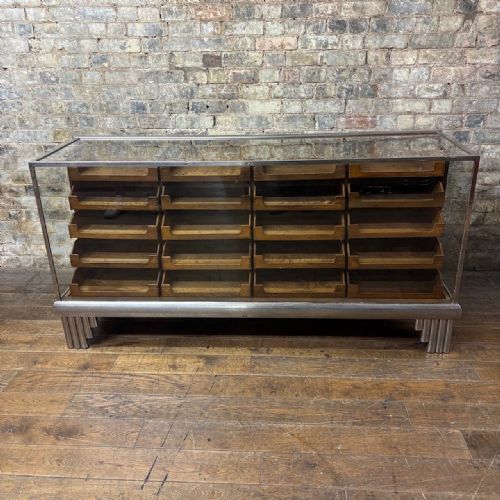
When searching for an antique shop display unit, buyers encounter robust commercial fixtures originally built for trade use across the Victorian, Edwardian, and interwar periods. These pieces survive in forms ranging from expansive mahogany haberdashery counters and banks of pine drawers to brass-framed display cases and wall-mounted shelving.
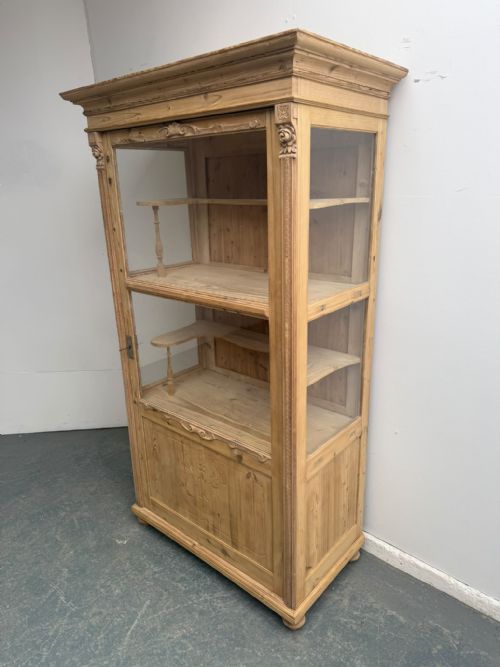
The selection here draws heavily from late nineteenth-century mercantile fittings and 1930s commercial designs, including specialised chemist shop fittings, draper's countertop needle cabinets, and stacking French bookcases. Most examples combine glazed upper sections for visibility with lower timber storage or multiple small drawers designed for sorting merchandise.
Origins span English, French, and Hungarian workshops, reflecting the diverse sourcing requirements of historic retail environments. Buyers find both natural hardwood finishes in oak and mahogany and painted pine surfaces that bear the weathered character of active commercial use.
Materials and construction methods
Makers constructed these commercial units primarily in durable timbers such as mahogany, oak, and pine to withstand the daily demands of bustling retail spaces. Glazed doors and panels utilised heavy sheet glass housed within tight wooden rebates, while specialised brass, bronze, and cast iron hardware provided structural reinforcement and smooth operation for drawers and sliding doors.
Joinery techniques focused on longevity, employing robust housing joints and dovetailed drawer construction capable of holding heavy inventories of fabric, hardware, or apothecary goods. Metal elements, including chrome and brass framing, appeared more frequently in the later twentieth-century commercial pieces to project a cleaner, modern aesthetic.
Antique Shop Display Unit Retail Price Guide 2026
Typical asking prices for shop display unit among the pieces listed under this phrase on Sellingantiques today, from the lower quarter to the upper quarter. They describe what is for sale here now, not the wider market.
Listings feature oak, mahogany, and pine construction across Victorian, Edwardian, and 1930s commercial periods.
Distinguishing quality in commercial antiques
Quality in a shop display unit rests upon the integrity of the original hardware, the clarity of the glass, and the retention of maker's brass plaques or stampings. Pieces retaining their original functioning drawer pulls, working locks, and unmodified glazing bars command greater appreciation among collectors than those altered for domestic utility.
The grade of timber and the sophistication of the internal layout also dictate value, moving from utilitarian painted pine workshop storage to finely figured mahogany and oak haberdashery counters with numerous small glazed drawers. The degree of surviving factory paint or patinated polish directly influences how successfully the piece bridges its commercial past with domestic placement.
F. Sage & Co·Dudley & Co·Saml. Elliott & Sons
The Antique Shop Display Unit Glossary
- Haberdashery cabinet
- A specialised multi-drawer storage unit featuring glass-fronted or clear-topped drawers originally used for selling sewing notions and small textiles. These pieces are prized today for organised domestic storage.
- Chemist shop fitting
- Heavy utilitarian cabinetry originating from nineteenth-century pharmacies, typically comprising tall banks of small drawers and shelving intended for organising medicinal ingredients. They offer immense storage capacity.
- Display counter
- A shop fixture combining a glazed viewing surface on top with enclosed storage below, designed to showcase goods to customers across a retail barrier. They function well as kitchen islands or retail reception desks.
- Display stand
- An open metal or wooden framework utilised in shop windows or interiors to elevate merchandise for prominent viewing. These minimalist structures highlight structural ironwork and brass framing.
- Shop fitting
- Custom-built commercial cabinetry designed specifically to fit the interior architecture of a historic retail premises. Such items often possess unique dimensions and maker markings.
Antique Shop Display Unit: Frequently Asked Questions
How are antique shop display units best used at home?
These cabinets serve wonderfully in kitchens for tableware, in living rooms for collections, or in studies for organising stationery. Their deep drawers and glass shelves keep items visible while protecting them from dust.
Larger counters function effectively as kitchen islands or focal points in retail spaces. Their practical compartmentalization makes modern organisation straightforward.
What is the difference between Victorian and 1930s units?
Victorian examples typically feature rich timber grains in mahogany and walnut, hand-cut dovetails, and heavier brass hardware. Their construction emphasises traditional craftsmanship and dense hardwood.
Interwar pieces from the 1930s introduce chrome framing, streamlined symmetry, and lighter oak finishes. These later designs reflect the shift toward brighter, more accessible retail displays.
Are painted finishes on these cabinets original?
Many trade pieces received multiple coats of durable paint to withstand heavy daily use in historic shops. Hungarian and English pine fittings frequently showcase original or early painted surfaces that have worn down naturally over decades.
Buyers should examine the layers beneath chipped areas to determine the history of the finish. Patinated paint adds significant character and historical depth to the piece.
How do I maintain the glass and metal hardware?
Regular dusting with a dry microfiber cloth protects fragile historic glazing from scratching. Avoid harsh chemical cleaners on antique brass and bronze fittings to preserve their natural dark patination.
Treating exposed wooden interiors with appropriate wax feeds the dry timber. Gentle care ensures the moving parts and sliding mechanisms remain functional.