





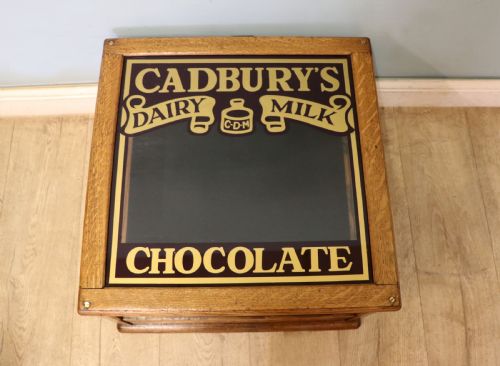


Antique Shop Box
An antique shop box serves commercial life, holding tobacco, coffee, sewing cottons and apothecary supplies in glass, brass and mahogany.
Antique Shop Box
An antique shop box encompasses countertop display cabinets, glass cases, storage tins, apothecary boxes and haberdashery storage units designed for commercial trade. These pieces originate from periods spanning the Victorian era through the 1930s, reflecting the retail environments of nineteenth and early twentieth century shops.
Countertop display cabinets and tabletop cases dominate the selection, often constructed from mahogany or oak with glass panels for merchandise visibility. Alongside these sit specialised storage tins, toleware grocery hoppers and multi-compartment boxes used in cafes, tobacconists and grocers.
Haberdashery cabinets and sewing cotton display cases form a distinct category, built to showcase threads and buttons for customers. Apothecary boxes and watchmaker cabinets complete the range, providing compartmented storage for small goods and medicinal preparations.
Materials and construction
Cabinet makers utilised solid hardwoods like mahogany and oak for structural frames, jointing them securely to withstand daily retail counter use. Glass panels were fitted into doors and tops to protect contents while allowing customer inspection.
Metal elements such as brass rims, hinges and handles reinforced wooden structures and provided durable closures for frequently accessed compartments. Toleware and tin constructions relied on shaped sheet metal finished with paint and lettering for commercial branding.
Antique Shop Box Retail Price Guide 2026
Typical asking prices for shop box among the pieces listed under this phrase on Sellingantiques today, from the lower quarter to the upper quarter. They describe what is for sale here now, not the wider market.
Materials recorded across the inventory include glass, brass, mahogany, oak, pine, toleware and paint.
Judging build and preservation
The standard of timber selection and joinery marks the primary difference across these commercial pieces, distinguishing robust workshop construction from simpler utility items. Fine cabinets display precise framing, high-grade mahogany or oak, and integrated glass mouldings.
The preservation of original branded signage, painted finishes and maker inscriptions significantly affects character. Units retaining authentic manufacturer lettering or commercial attribution hold stronger documentary value than plain or altered examples.
G H Gledhill Halifax·Manoah Rhodes & Sons Ltd·Chadwick’s·Ermen & Roby·Rowntree’s·Fry’s·Cadbury's
The Antique Shop Box Glossary
- Toleware
- Painted or lacquered sheet metal items used for storage and display in commercial settings. These pieces often feature dark surfaces with decorative borders or lettering.
- Haberdashery
- Retail trade relating to small articles of clothing and sewing accessories such as threads, buttons and ribbons. Cabinets made for this purpose contain multiple small drawers or glazed compartments.
- Apothecary
- A practitioner who prepared and sold medicines and drugs, utilising specialised wooden boxes and jars for storage. These boxes contain fitted compartments for bottles and ingredients.
- Countertop display
- Furniture designed to sit upon a shop counter to present goods directly to prospective purchasers. They combine wooden framing with transparent glass panels.
Antique Shop Box: Frequently Asked Questions
What were antique shop boxes used for?
These boxes served commercial trades, holding tobacco, coffee, sewing cottons, apothecary items and confectionary on retail counters. Merchants used them to store goods securely while displaying products directly to customers.
Different boxes suited specific trades, such as glass cases for chocolates and multi-compartment boxes for haberdashery items. Their design prioritized both functional storage and point-of-sale merchandising.
How do I date an antique shop box?
Dating relies on materials, construction methods and stylistic indicators from periods like the Victorian era, Edwardian period and 1930s interwar years. Hardware such as brass hinges and locks also offer chronological clues.
Maker inscriptions, brand names on glass or painted panels, and patent details provide precise points of reference. Oak and mahogany usage shifted across these decades, reflecting broader furniture manufacturing trends.
How do I clean and maintain wooden shop cabinets?
Maintenance requires gentle dusting with a dry, soft cloth to protect polished wood surfaces and glass panels. Avoid harsh chemical cleaners that can damage historical finishes and painted sign-writing.
Applying a traditional beeswax polish occasionally preserves hardwood frames without sealing moisture into the grain. Glass sections can be cleaned with standard glass cleaner applied sparingly to a cloth.
Where should I place a shop display box at home?
These cabinets and boxes sit well on tabletops, sideboards or desks where their glass panels and compartments can be viewed. Their shallow countertop proportions make them suitable for displaying small collections.
Placing them away from direct sunlight protects interior items and prevents timber frames from drying out excessively. Stable indoor environments prevent the wood and glass joints from shifting over time.