





Antique Shield Mirror
An antique shield mirror brings refined proportion to a room, offering practical reflection through distinctive curved frames.
Antique Shield Mirror
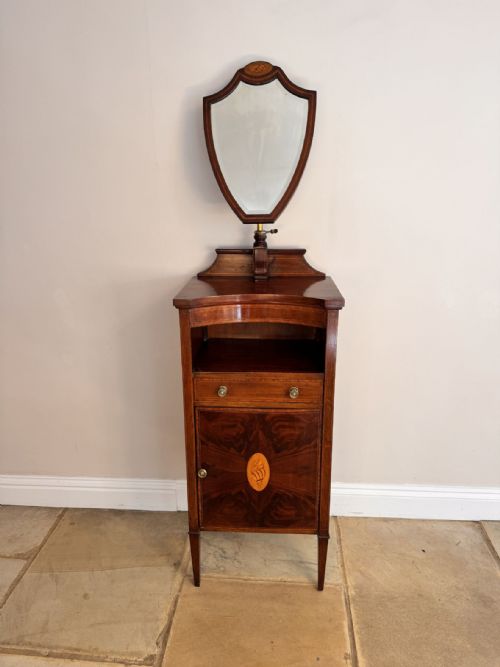
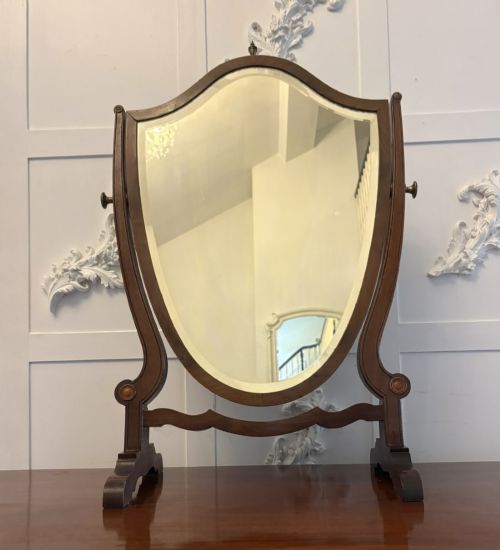
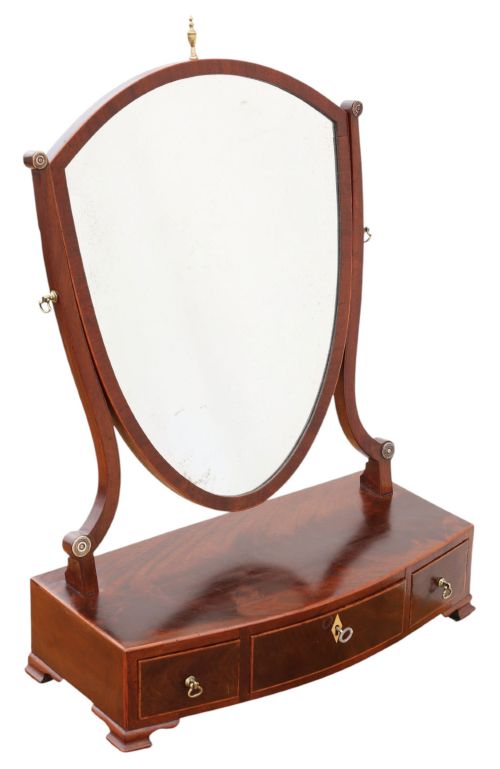
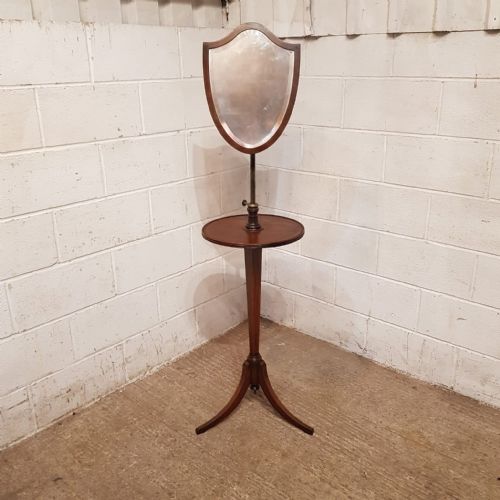
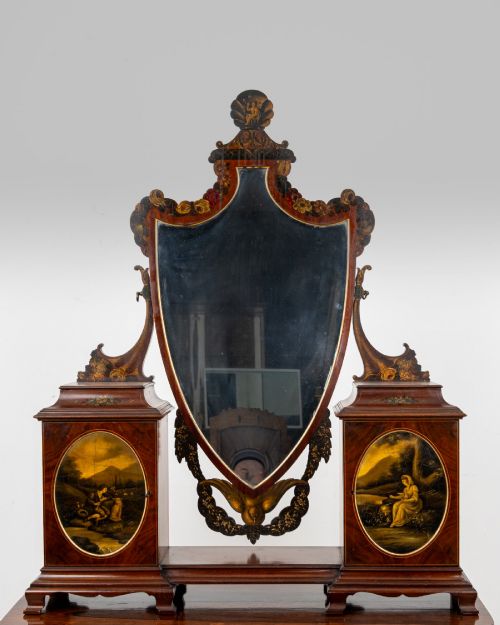
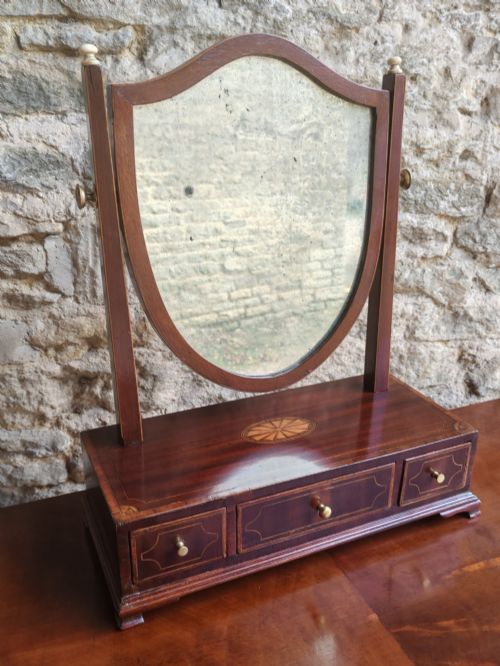
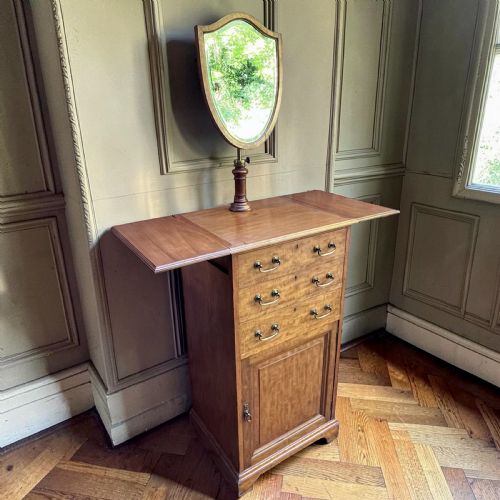
When you search for an antique shield mirror, you encounter pieces designed primarily as table-top dressing accessories or compact wall items. The form draws heavily on Georgian and Victorian traditions, often mounted on delicate swing frames or fitted with small drawer bases.
Mahogany dominates the selection, frequently paired with satinwood inlay, brass fittings, or giltwood finishes. Surviving examples span the eighteenth and nineteenth centuries, including Edwardian interpretations and revival styles such as Sheraton.
How they were made
Cabinetmakers constructed these frames using dense timbers like mahogany and walnut, often shaping the distinctive pointed outline with hand saws before applying fine veneers. Crossbanding and stringing in contrasting light woods added decorative border detail.
Reflective surfaces relied on early manufacturing methods, sometimes featuring original mercury plates with gentle foxing. Brass brackets, pivots, and copper mountings secured the swinging plates to their stands.
Antique Shield Mirror Retail Price Guide 2026
Typical asking prices for shield mirror among the pieces listed under this phrase on Sellingantiques today, from the lower quarter to the upper quarter. They describe what is for sale here now, not the wider market.
Some dressing mirrors include hidden compartments beneath the tiny drawers for secreting love letters.
What varies in quality
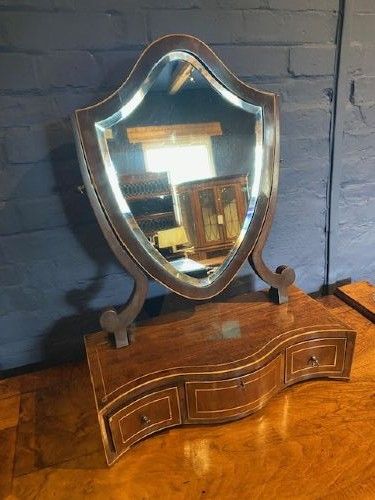
Quality rests in the precision of the timber selection and the subtlety of the serpentine shaping. Fine pieces display balanced proportions where the sweep of the frame complements the supporting horns and drawer box.
The integrity of the timber joints and the retention of original brass hardware distinguish superior examples from later utility pieces. Finer mirrors maintain crisp inlay work without crude repairs to the pivot mechanisms.
The Antique Shield Mirror Glossary
- Foxing
- Age-related spots and discoloration within the silvered backing of old mirror glass. This chemical change creates distinctive dark patches that confirm considerable age.
- Swing mirror
- A plate mounted on vertical pivots allowing the glass to tilt. This mechanism sits either on a dressing chest or a dedicated table stand.
- Serpentine
- A front contour characterised by a convex centre flanked by concave curves. This flowing line appears frequently on eighteenth-century toilet mirror drawer bases.
- Crossbanding
- A narrow strip of veneer laid across the grain direction along the border of a panel. It frames the central timber figure with a neat contrasting band.
- Cheval mirror
- A full-length freestanding swing glass supported on four legs. These larger variants permit a complete view of attire.
Antique Shield Mirror: Frequently Asked Questions
How do I date an antique shield mirror?
Dating relies on timber choice, construction methods, and secondary woods visible inside the drawer boxes. Earlier pieces from the eighteenth century typically employ hand-cut dovetails and native woods.
Later Victorian and Edwardian iterations show machine assistance and different internal linings. Examining the fixing screws and the backing boards provides further chronological clues.
Where should I place a table mirror?
These pieces sit comfortably atop low chests of drawers, dressing tables, or sturdy sideboards. Their compact proportions allow them to add depth and light to smaller reception rooms.
Ensure the surface supports the weight of the supporting frame and that the mirror plate is positioned safely away from heavy foot traffic.
Are mercury glass plates original?
Many eighteenth and nineteenth-century mirrors retain their original silvered plates, which often exhibit characteristic foxing. This mottled appearance results from chemical breakdown over generations of exposure.
While some plates have been replaced due to damage, surviving original glass remains desirable for authenticity.
What is the difference between a toilet mirror and a dressing mirror?
Toilet mirrors historically refer to smaller table-top swing glasses designed for powdering and personal grooming. They frequently incorporate small trinket drawers beneath the pivot supports.
Dressing mirrors encompass a broader category that includes larger cheval styles and integrated cabinet pieces.