





Antique Sherry Glass
An antique sherry glass brings a touch of historical ceremony to the table, offering tactile weight and historic clarity that modern stemware simply cannot match.
Antique Sherry Glass
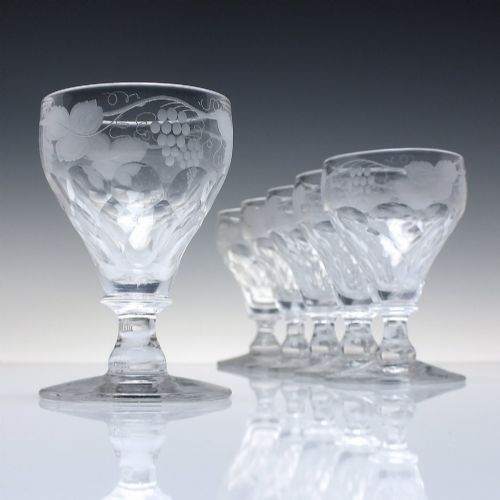
When you search for an antique sherry glass, you are looking at small drinking vessels designed for fortified wines, most frequently encountered in Victorian, Edwardian, and Georgian forms on this page. These pieces span centuries of domestic dining and social rituals, reflecting the changing tastes in table glass from the Regency era through to the early twentieth century. You will find that many listings group these drinking vessels alongside related items such as port glasses, cordial glasses, and decanter sets.
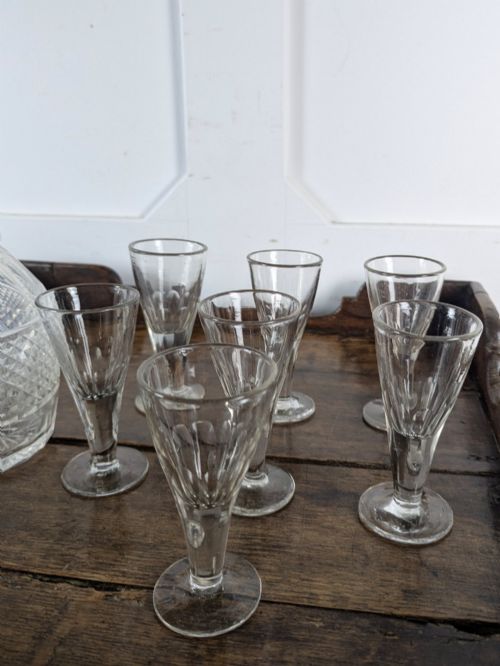
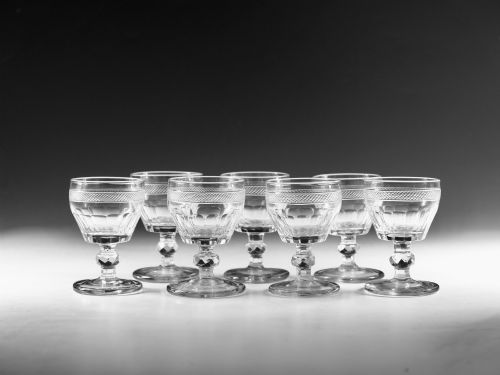
The varieties on this page range from modest, hand-blown nineteenth-century examples to decorative matched sets featuring cut glass or coloured glass. While individual glasses appear, collectors frequently encounter them grouped as sets of six, seven, or eight, alongside larger matching decanters and silver-plated trays. Understanding these groupings helps collectors identify whether they are looking at a true matched suite or a gathered assembly of similar period pieces.
How they were made
The manufacture of these glasses relies heavily on traditional glassblowing techniques, producing pieces that often show the subtle irregularities and pontil marks characteristic of early production methods. Makers shaped the molten material by hand before employing cutting wheels to carve geometric patterns, thumb-cuts, and flutes into the hardened surfaces. Clear glass and lead crystal formed the foundation of most pieces, whilst coloured variants achieved their hues through the addition of metallic oxides to the molten batch.
Beyond the glass itself, certain vessels incorporate secondary materials such as silver plate for collars, necks, and carrying trays, combining metalwork with blown glass forms. Etched glass pieces utilise acid-resist techniques or wheel engraving to apply delicate floral and geometric motifs across the bowls. Each method leaves distinct physical traces under magnification, pointing directly to the workshop practices of the period.
Antique Sherry Glass Retail Price Guide 2026
Typical asking prices for sherry glass among the pieces listed under this phrase on Sellingantiques today, from the lower quarter to the upper quarter. They describe what is for sale here now, not the wider market.
Some Victorian glasses hide a radioactive secret, glowing an unmistakable bright green under UV light thanks to traces of uranium in the mix.
What varies in quality
The distinction between ordinary and superior pieces rests on the crispness of the cutting, the weight and clarity of the metal, and the overall harmony of the set. High-quality examples display deep, sharp facet cutting that catches the light cleanly, whereas lower-tier pieces often feature soft, shallow grinding with visible surface striations. In matched sets, uniformity in bowl thickness and stem height marks the difference between standard domestic ware and superior production.
Material choice and colour saturation also dictate the upper tiers of the market, particularly where scarce hues or heavy lead crystal are involved. Pieces that retain pristine rims without excessive polishing or chips command greater attention from discerning collectors. Ultimately, the survival of a complete, matching set in sound condition represents the pinnacle of quality for this category.
The Antique Sherry Glass Glossary
- Lead crystal
- Glass containing a significant proportion of lead oxide, which increases the weight, refractive index, and ringing sound of the vessel.
- Pontil mark
- The rough scar left on the base of a hand-blown glass where the pontil iron was detached after shaping.
- Thumb-cut
- A decorative shallow concave indentation ground into the exterior of a glass bowl or decanter, designed to improve grip.
- Uranium glass
- Glass containing small amounts of uranium dioxide, which glows a vivid green under ultraviolet light.
Antique Sherry Glass: Frequently Asked Questions
Were these glasses only used for sherry?
Historic drinking vessels served multiple fortified wines interchangeably, meaning pieces designated for sherry were frequently used for port, Madeira, and cordials.
Households adapted their glassware according to availability and the specific style of the gathering, rather than adhering to strict modern rules of beverage service.
How can I date my glasses?
Examine the base for pontil marks, check the weight of the metal, and look at the forming style, as Georgian pieces generally feel heavier and show different proportions to Edwardian ones.
Comparing the cut patterns and silhouette against known period examples helps narrow down the decade of manufacture.
Can I use them every day?
Many collectors enjoy using their antique glassware for special occasions, provided they handle the delicate stems and thin rims with appropriate care and attention.
Hand-washing is essential, and storing them away from high-vibration areas ensures these fragile historical items remain intact for future generations.