


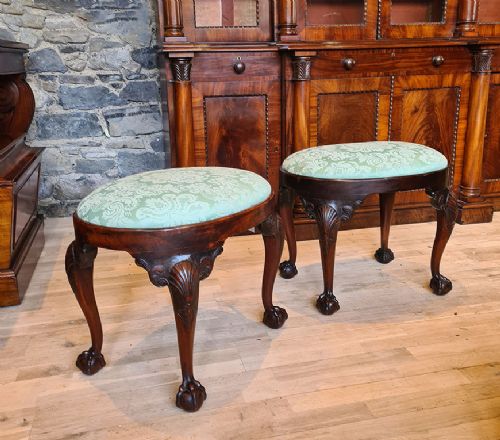


Antique Shell Stool
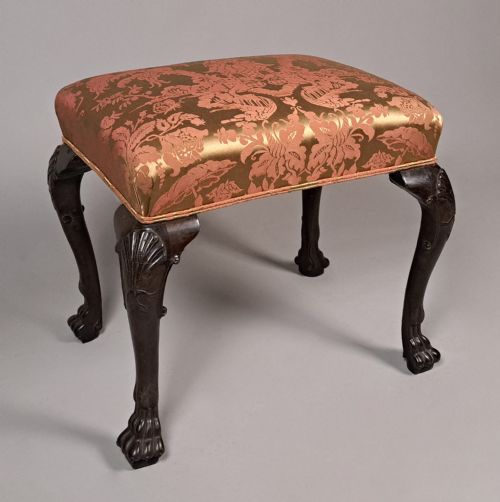
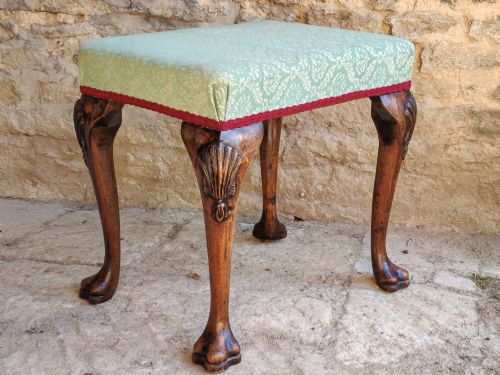
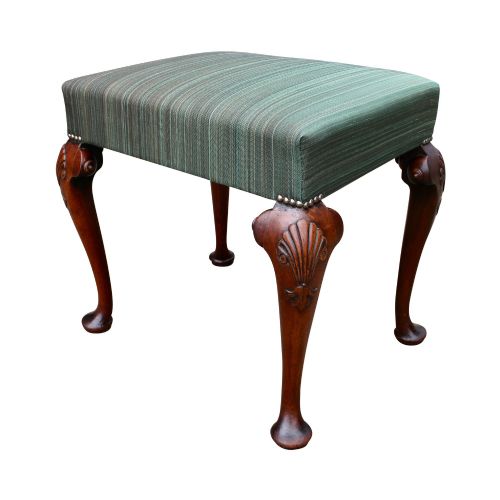
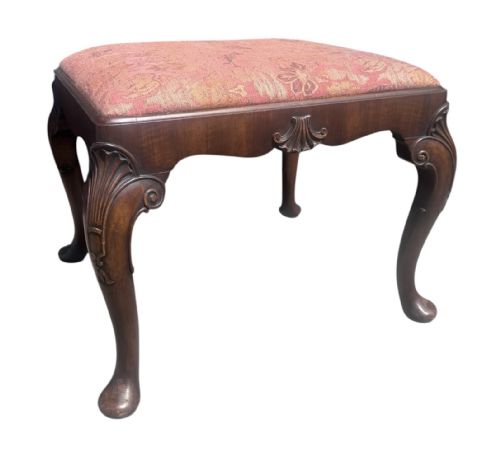
An antique shell stool brings tactile texture and curved, organic form to a room through carved woodwork or delicate papier-mâché.
Antique Shell Stool
When people search for an antique shell stool, they are looking for seating forms that incorporate shell motifs into their carved wooden frames or papier-mâché surfaces. The examples recorded here span from the eighteenth century through to the Edwardian period, capturing both Georgian revivals and Victorian fancies.
You will most commonly meet nineteenth-century walnut and mahogany pieces on this page, often styled after earlier Queen Anne or George II designs. These range from simple footstools to revolving music stools and pairs of decorated seats.
The materials and origins vary from English walnut frames to Irish mahogany footstools and Continental painted pieces. Forms include low stools, music stools, and oval benches upholstered in various textiles and fabrics.
Materials and construction
The makers of these stools relied heavily on solid walnut and mahogany for their structural frames, often carving the timber into cabriole legs that terminated in pad or claw feet. Brass tacks frequently secure the upholstered textile seats to the wooden rails.
Victorian makers also utilised papier-mâché combined with mahogany, sometimes adding gilt and paintwork to create ornate revolving music stools. Continental pieces introduce painted and gilded finishes to softwood or hardwood carcasses.
Antique Shell Stool Retail Price Guide 2026
Typical asking prices for shell stool among the pieces listed under this phrase on Sellingantiques today, from the lower quarter to the upper quarter. They describe what is for sale here now, not the wider market.
Listings feature walnut, mahogany, and papier-mâché spanning the eighteenth, nineteenth, and early twentieth centuries.
Judging the work
The distinction between standard examples and finer pieces lies in the crispness of the woodcarving and the depth of the shell motif itself. Hand-carved walnut frames with deep relief work show significantly more artisan effort than later, simpler production pieces.
The integrity of the construction, such as the joinery in the legs and the smooth mechanical action of revolving music stools, separates utilitarian seating from more ambitious workshop output.
Jennens and Bettridge
The Antique Shell Stool Glossary
- Papier-mâché
- A composite material made from paper pulp or layers of paper mixed with glue, pressed and dried to form rigid objects that could be lacquered and painted.
- Cabriole leg
- A furniture leg that bends outward in a convex curve and tapers inward in a concave arc, frequently ending in a shaped foot.
- Gilt
- A thin layer of gold leaf or powder applied to wood, papier-mâché, or metal surfaces to provide a decorative golden finish.
- Revolving stool
- A seat featuring a mechanical screw or pivot beneath the top, allowing the user to adjust height or rotate while seated at a piano or harp.
Antique Shell Stool: Frequently Asked Questions
What is an antique shell stool?
An antique shell stool is a small seat or footstool featuring carved shell details, such as a scallop motif on the knees of cabriole legs. These pieces date from the eighteenth century into the early twentieth century.
They appear in various forms including piano stools, music seats, and low footstools made from walnut, mahogany, or papier-mâché.
How do I date an antique stool?
Dating relies on examining the timber species, secondary woods, and stylistic revival periods like Queen Anne or George II. Eighteenth-century pieces typically show hand-cut joinery and dense, patinated mahogany.
Later Victorian and Edwardian examples often use machine-prepared timbers or incorporate papier-mâché and brass mechanisms for revolving music seats.
Were these stools used for music?
Many surviving examples function specifically as music stools for pianos or harps. These often feature revolving tops to let the player adjust their height.
Other pieces served simply as footstools or low decorative seats placed near firesides and in drawing rooms.
How do I clean wooden frames?
Maintain antique wooden frames by dusting gently with a dry, soft cloth to prevent abrasive particle buildup. Avoid modern chemical polishes that can degrade historical surface patinas.
Nourish dry timber occasionally with a traditional microcrystalline wax applied sparingly and buffed out completely.