


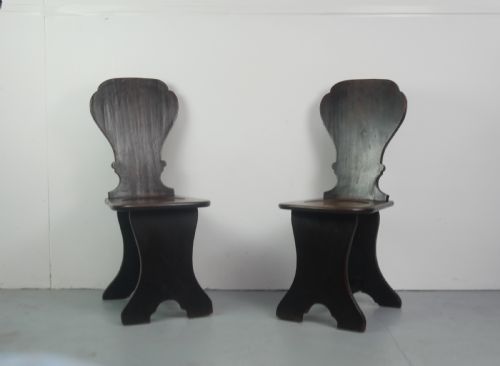
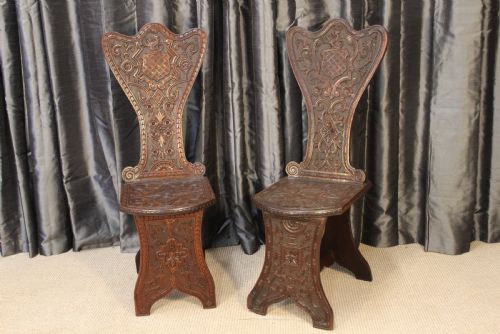


Antique Sgabello Seat
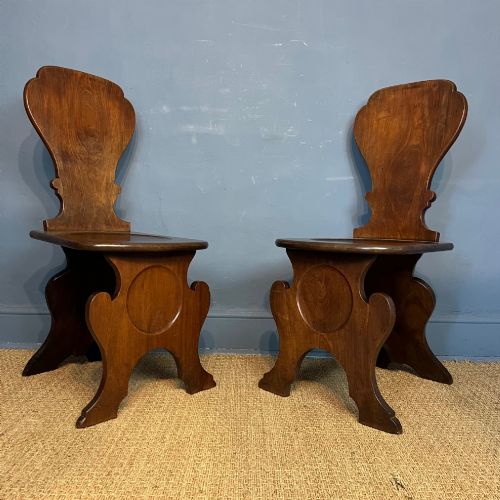
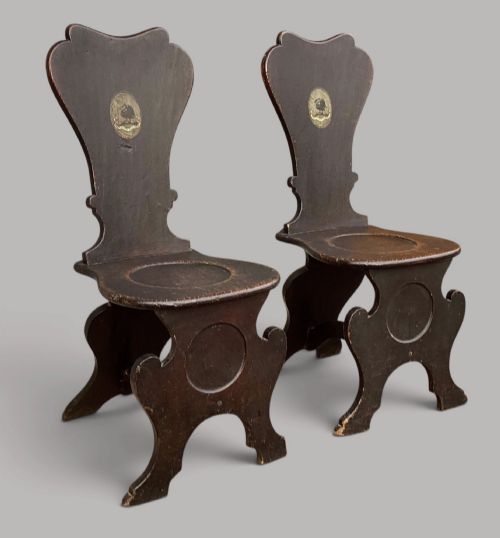
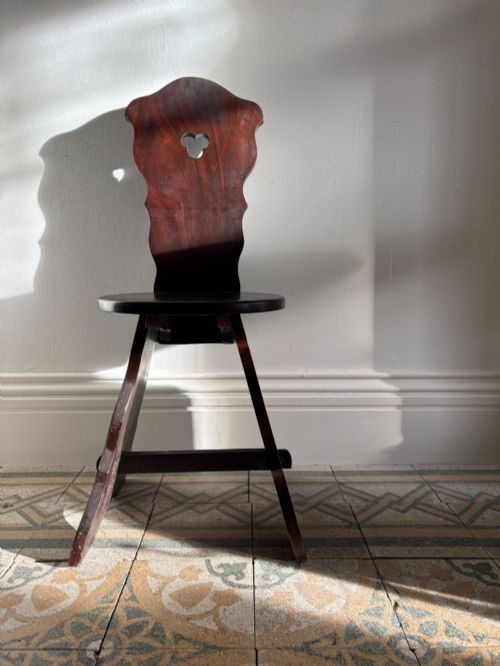
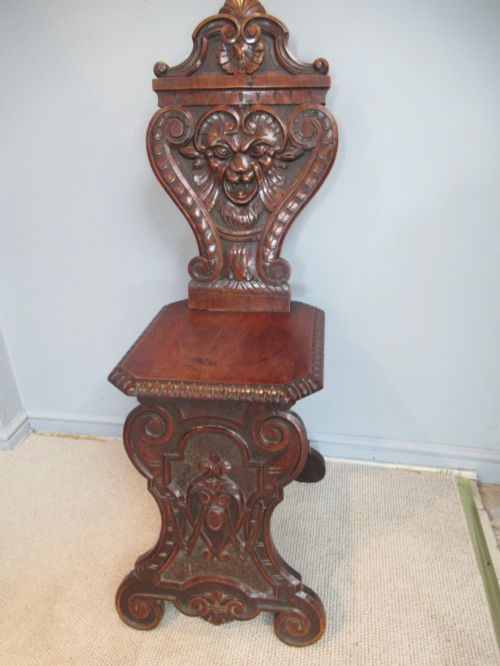
These antique sgabello seat pieces are striking hall chairs and benches designed to anchor an entrance with architectural presence and historical carved detail.
Antique Sgabello Seat
An antique sgabello seat is a distinctive form of hall chair or hall bench rooted in the Italian Renaissance and revived across later British and European periods. Buyers searching for an antique sgabello seat encounter solid wooden forms designed primarily for display and transient seating in grand hallways.
The versions met most frequently on this page span the Georgian era and the nineteenth century, including Revival interpretations and Flemish walnut designs. These pieces often function as hall chairs or accent chairs, bringing carved armorial painted backs or figural woodwork to domestic spaces.
How they were made
Cabinetmakers constructed these sgabello chairs using dense hardwoods like oak, walnut, and mahogany, selected for their structural stability and capacity to hold deep relief carving. Stock timbers were shaped into characteristic high backs and solid trestle supports.
Decoration relied on chisel work, bone inlay, and painted armorial details applied directly to the wooden panels. Workshops utilised traditional joinery to unite the upright back to the plank seat and sturdy base trestles without modern metal fasteners.
Antique Sgabello Seat Retail Price Guide 2026
Typical asking prices for sgabello seat among the pieces listed under this phrase on Sellingantiques today, from the lower quarter to the upper quarter. They describe what is for sale here now, not the wider market.
Listings span oak, walnut, and mahogany, with styles crossing Georgian, Victorian, and Italian Renaissance Revival periods.
What varies in quality
The distinction between standard and superior pieces rests in the crispness and depth of the carved ornament on the back and legs. Finer examples display masterly hand chiselling that commands the eye, whereas lesser pieces rely on shallow or mechanical stamping.
Proportion and material selection also define the hierarchy, with high-status items utilising rich figured walnut or mahogany paired with intricate bone inlay and heraldic paintwork. The architectural harmony of the trestle base dictates whether a piece holds its visual weight in a grand interior.
The Antique Sgabello Seat Glossary
- Sgabello
- A light, portable Italian Renaissance wooden chair featuring a solid back and two carved board supports instead of legs. This form serves as the primary archetype for the hall chairs listed here.
- Armorial
- Bearing a coat of arms or family crest. This painted or carved heraldry frequently appears on the wooden backrests of hall chairs.
- Trestle
- A structural support consisting of a horizontal beam fixed to two splayed vertical feet. Sgabello chairs utilise this arrangement in place of four conventional legs.
- Renaissance Revival
- A nineteenth-century design movement that copied sixteenth-century Italian and Flemish motifs. Pieces from this era draw heavily on historic architectural elements.
Antique Sgabello Seat: Frequently Asked Questions
Where were sgabello chairs placed?
These chairs stood primarily along the walls of grand entry halls and corridors rather than around dining tables. Their primary purpose was visual impact for arriving guests.
Because they offered firm, upright seating, occupants used them briefly while waiting to be received by the household.
How do I spot a revival piece?
Nineteenth-century revival pieces often feature machinery marks alongside hand carving, alongside different patination on the timber. Makers of this era freely combined Italian Renaissance motifs with Flemish influences.
Examining the underside and the interior joinery reveals the mechanical sawing techniques typical of the eighteen-eighties rather than the eighteenth century.
Are these chairs comfortable for daily use?
Sgabello seating is rigid and upright, designed for short periods of rest in a hallway. The wooden seats and high backs prioritize architectural display over ergonomic comfort.
Most owners utilise them as accent pieces or hall furniture rather than lounge seating.
What woods were used for sgabellos?
Cabinetmakers relied on durable hardwoods capable of supporting heavy surface carving. Oak, walnut, and mahogany appear frequently across these listings.
Selected timbers often received dark stains or polish to mimic earlier centuries of wear and oxidation.