


Antique Sewing Table Claw Feet
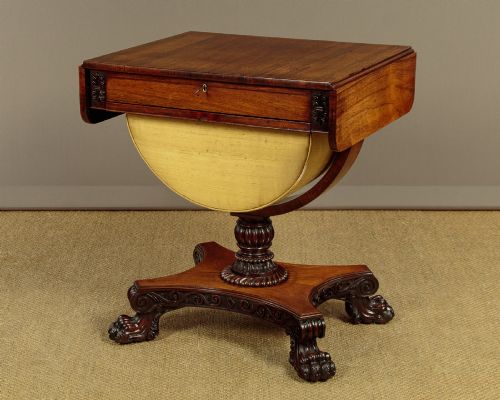
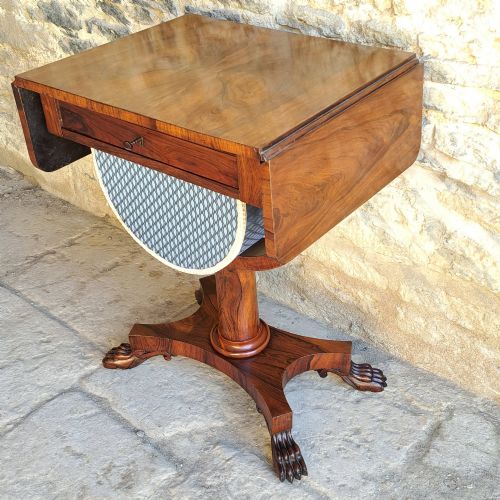
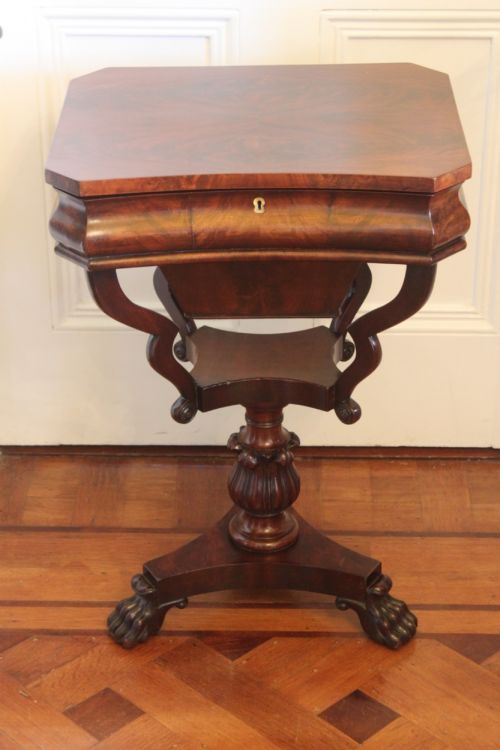
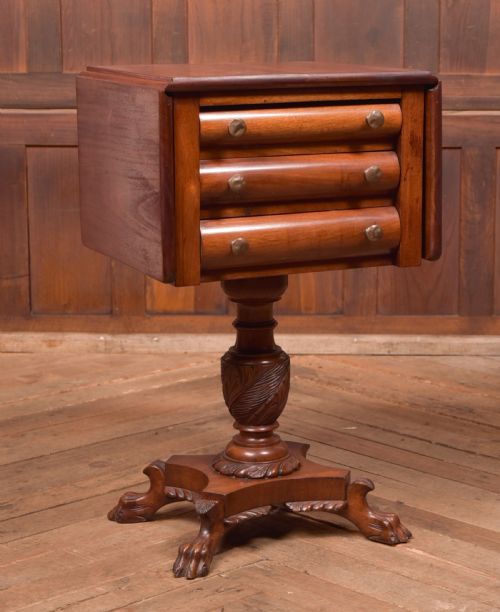
These antique sewing table claw feet pieces are practical tables raised on carved supports, offering drawers and compartment interiors for needlework.
Antique Sewing Table Claw Feet
An antique sewing table claw feet search brings up work tables and occasional pieces designed for needlework and domestic crafts. You meet these primarily in Regency, William IV, and Victorian periods.
The form typically combines a top surface with drop leaves or a hinged lid over fitted interior compartments and a fabric bag or solid box below. Mahogany, flame mahogany, and rosewood form the main timber choices across these listings.
Makers utilised brass fittings and set the pedestals upon carved supports with distinct claw feet. Side tables, games tables, and pedestal work tables share these structural characteristics.
How they were made
Cabinet makers constructed these pieces using solid timbers and veneered surfaces such as flame mahogany, rosewood, and satinwood over secondary woods. Turners shaped central pedestals while carvers detailed the lower supports and brass claw terminals.
Interiors incorporated silk and fabric compartments designed to hold threads and sewing implements securely. Drop leaves operated on hinged brackets to extend the surface area when required.
Many tables conceal velvet lined compartments for stray thimbles and silk threads beneath their drop flap lids.
What varies in quality
The distinction between standard domestic pieces and top examples lies in the selection of timber figures and the crispness of the carving. Figured mahogany and richly grained rosewood indicate higher workshop standards.
Attribution to documented makers such as Gillows elevates a piece through superior joinery and refined proportions in the pedestal and claw feet. The internal fittings and complexity of the work box compartments also reflect the grade of the piece.
Gillows of Lancaster
The Antique Sewing Table Claw Feet Glossary
- Regency
- A British design period spanning the early nineteenth century defined by classical revival motifs and refined cabinetwork.
- Drop leaf
- A hinged flap on the side of a table that raises to extend the top surface.
- Flame mahogany
- A veneer cut from timber that produces a distinct flickering flame pattern across the grain.
- Work table
- A small domestic table equipped with drawers and compartments specifically intended for sewing and needlecraft.
- Palisander
- A dense tropical timber often referred to as rosewood in nineteenth century cabinetmaking.
Antique Sewing Table Claw Feet: Frequently Asked Questions
What is an antique sewing table?
An antique sewing table is a small nineteenth century piece designed with internal compartments and sometimes a fabric bag to hold needlework supplies.
These tables frequently feature drop flaps and pedestal bases supported by carved feet.
How do I date a work table?
Dating relies on stylistic markers such as Regency classical lines or Victorian proportions combined with timber choices like rosewood and mahogany.
Cabinet construction methods and the presence of specific brass or carved details help narrow the period.
What woods were used?
Mahogany and rosewood dominate these pieces, often utilised as flame mahogany veneers over solid carcase timbers.
Satinwood and other decorative hardwoods appear occasionally for interior crossbanding and details.
Were these tables only for sewing?
While primarily built as work tables for needlework, many designs incorporated drop leaves and reversible tops for games or general side table use.
Interiors often served multiple domestic purposes in the nineteenth century parlour.