







Antique Settle with Box
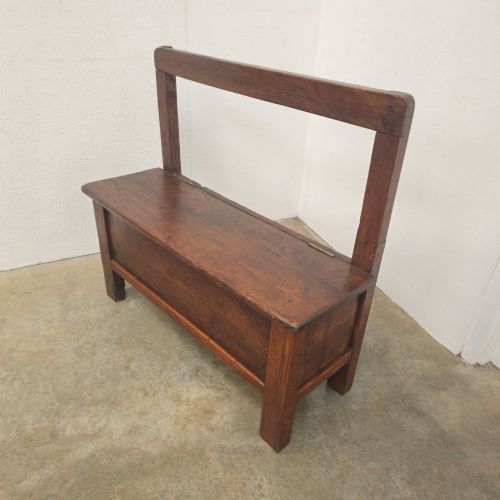
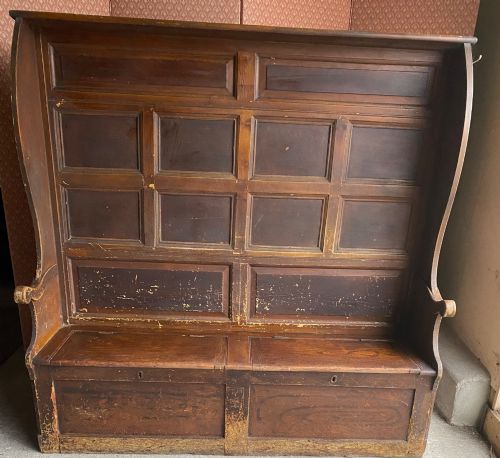
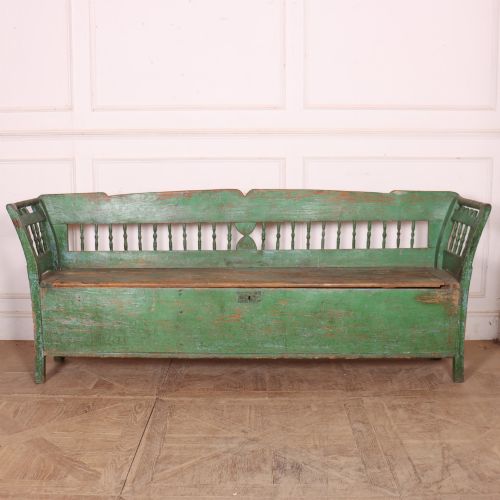
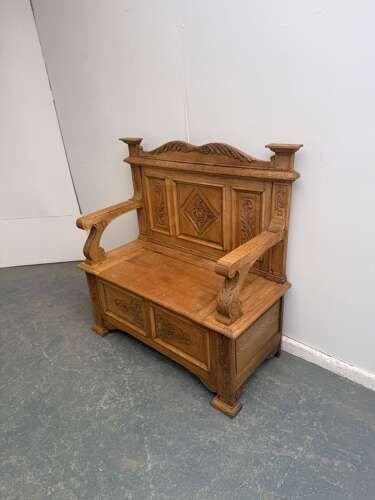
An antique settle with box is a heavy timber bench combining a high back and a lidded seat for storage.
Antique Settle with Box
An antique settle with box serves primarily as a dual-purpose seating unit and a deep chest for household storage. Buyers searching this phrase encounter examples ranging from vernacular country pieces to refined revival designs intended for hallways and living spaces.
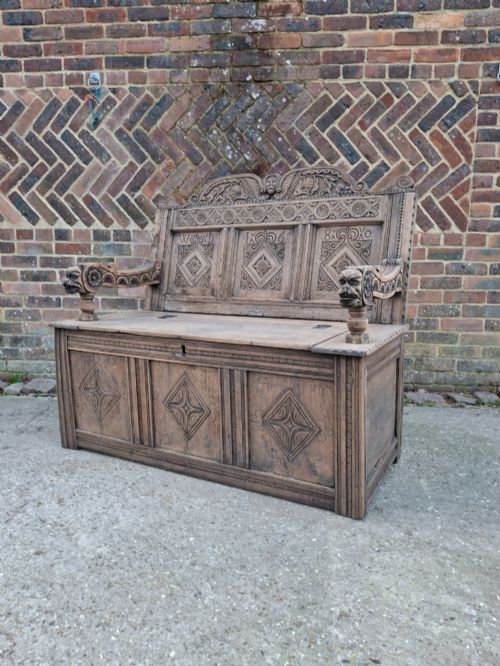
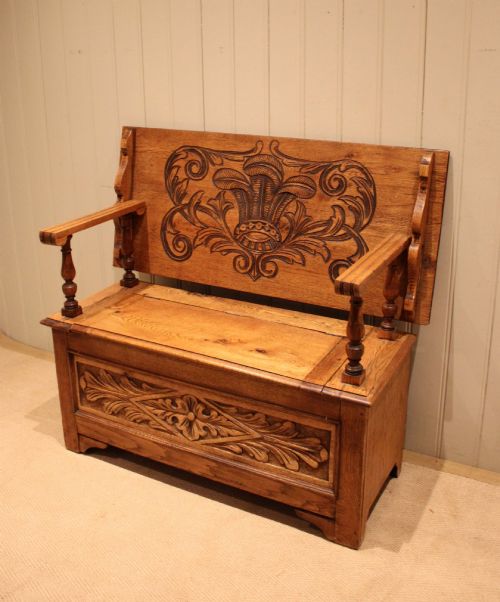
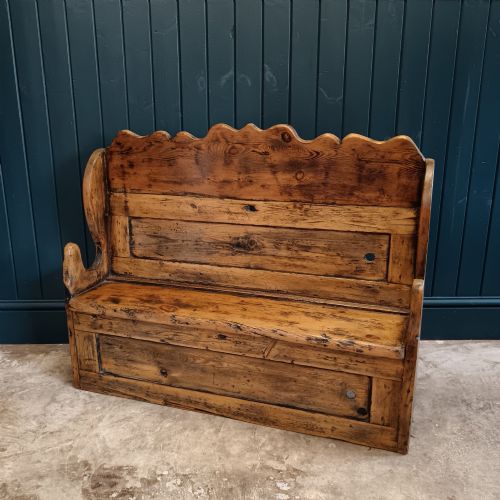
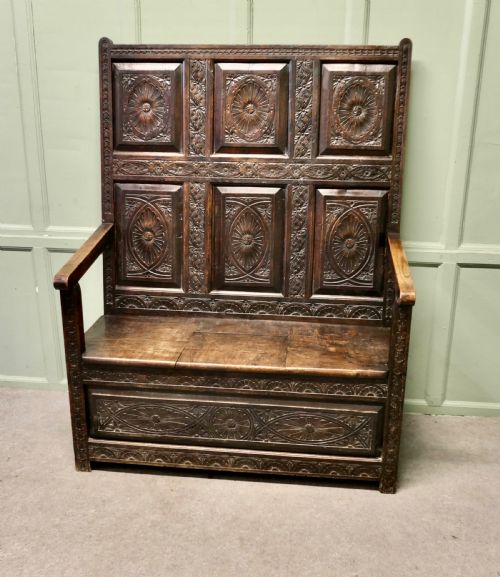
The materials and construction reflect regional traditions, spanning heavy oak constructions alongside waxed pine examples originating from Hungary and Wales. Many pieces incorporate folding mechanisms, panelled backs, and hinged seats that reveal storage compartments beneath.
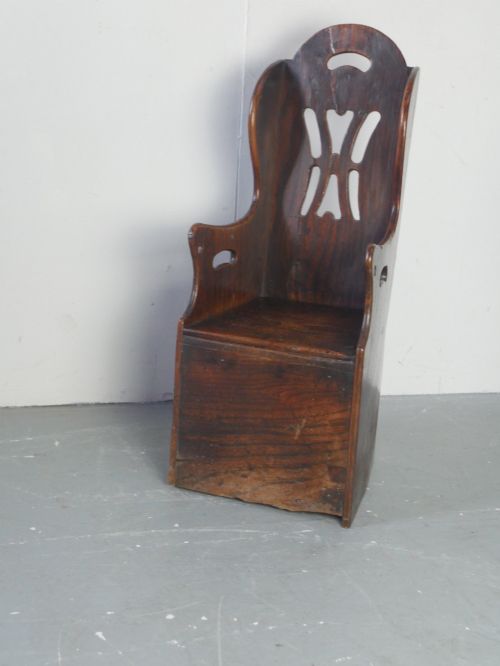
Forms vary from high-backed examples designed to block draughts in older homes to smaller hall benches intended for compact entryways. The selection includes specific regional variants such as Welsh settles and elm bacon settles alongside revival pieces.
Materials and construction methods
Carpenters constructed these settles predominantly using solid hardwoods and softwoods including oak, pine, elm, and mahogany. Structural joinery typically relied on traditional pegged mortise and tenon joints to withstand heavy daily use.
Surface decoration frequently involved wax finishing, applied paint finishes, or carved elements such as Green Man motifs and panelled detailing. Some Edwardian and later pieces incorporate marquetry and boxwood inlay alongside brass hardware and leatherette upholstery.
Antique Settle with Box Retail Price Guide 2026
Typical asking prices for settle with box among the pieces listed under this phrase on Sellingantiques today, from the lower quarter to the upper quarter. They describe what is for sale here now, not the wider market.
Some antique settles doubled as indoor sledges when winter snow piled high against the cottage door.
Factors determining quality and craftsmanship
Quality rests upon the selection of timber and the integrity of the original joinery, particularly around the heavily stressed lid hinges and arm joints. Pieces retaining their original unstripped painted finishes or natural waxed patination command greater interest among collectors.
Proportion and decorative restraint distinguish vernacular utility work from deliberate stylistic expressions like Arts and Crafts or Art Nouveau adaptations. Intricate carving, integrated inlay, and structural crispness mark out the finer examples within any period.
James Shoolbred & Co.
The Antique Settle with Box Glossary
- Box settle
- A wooden bench featuring a concealed storage compartment beneath a hinged seat and a high back. This design protected occupants from floor draughts while keeping blankets or household goods close at hand.
- Bacon settle
- A specialised regional form featuring a high panelled back traditionally fitted with interior hooks or rails for curing meat. These vernacular pieces date predominantly to the eighteenth century in rural districts.
- Monks bench
- A convertible form featuring a folding top that pivots to transform the high back into a table surface. It combines the functions of a seat and a small table within a single piece of furniture.
- Vernacular furniture
- Objects made by local tradesmen using regional traditions and available materials rather than following high-style metropolitan pattern books. These pieces prioritize utilitarian strength and simple construction.
- Marquetry inlay
- Decorative patterns formed by fitting contrasting veneers into prepared recesses within the wooden surface. This technique appears on later revival pieces to provide visual enrichment.
Antique Settle with Box: Frequently Asked Questions
Where were settles used?
These pieces traditionally stood near hearths in kitchens and living halls to shield occupants from cold draughts coming off stone floors. Their high panelled backs trapped heat from the fire while providing a secure seat.
Later Victorian and Edwardian examples moved into entrance hallways as functional furniture for putting on boots and storing outdoor garments out of sight.
How do I check the storage?
Lift the hinged seat carefully to inspect the interior timber boards and the condition of the pivot points or original strap hinges. The box cavity should show honest wear consistent with the exterior age of the bench.
Check that the lid sits flush when closed and operates smoothly without binding against the armrests or the back panelling.
Are painted finishes original?
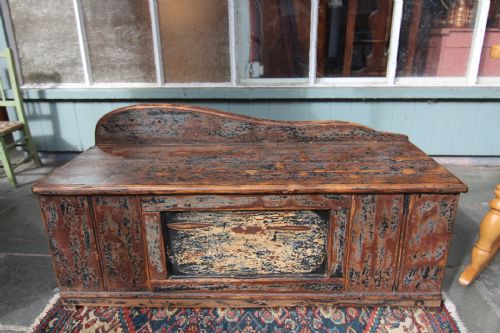
Many pine and regional settles retain early or original painted surfaces that have developed a soft chalky patina through generations of cleaning. These historic finishes add considerable character and historical value to country pieces.
Examine the paint under natural light for signs of underlying preparation layers and consistent wear patterns around the high-contact areas like the seat edges and armrests.
How do I date an oak settle?
Early examples from the seventeenth and eighteenth centuries rely on pegged frame-and-panel construction, hand-split boards, and substantial timber thicknesses. Tool marks left by pit saws and adzes indicate manual production methods predating industrial standardisation.
Later nineteenth-century and Edwardian revivals often feature machine-cut components, standardised screws, and applied decorative styles such as Arts and Crafts carving or Art Nouveau inlay work.