
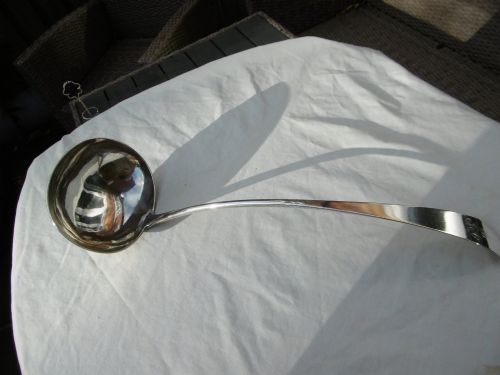
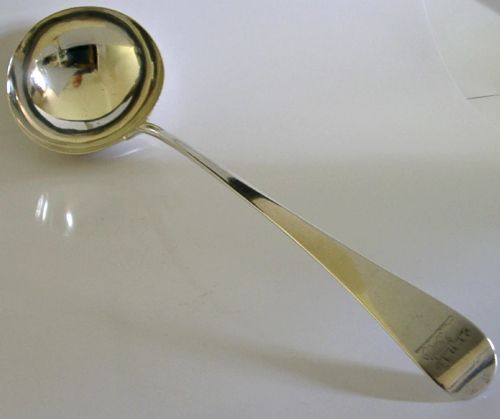
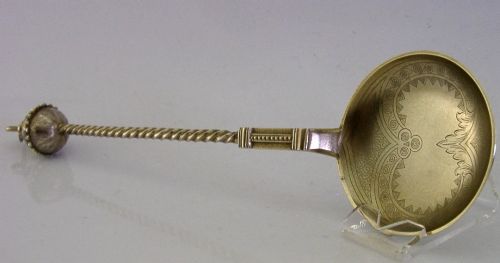
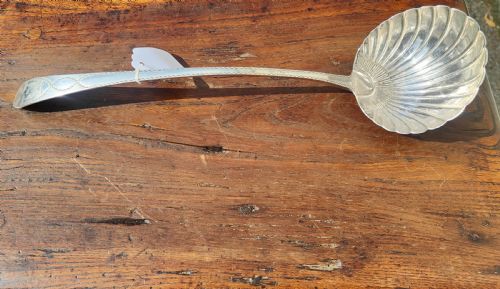
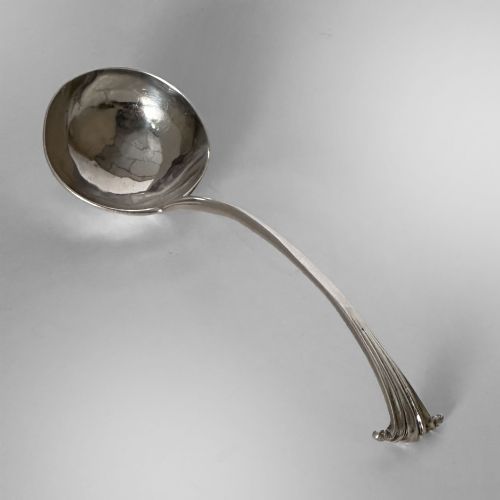


Antique Serving Ladle
When you handle an antique serving ladle, you hold domestic history in sterling silver, pewter, and horn, crafted to bring soup and punch to the table.
Antique Serving Ladle
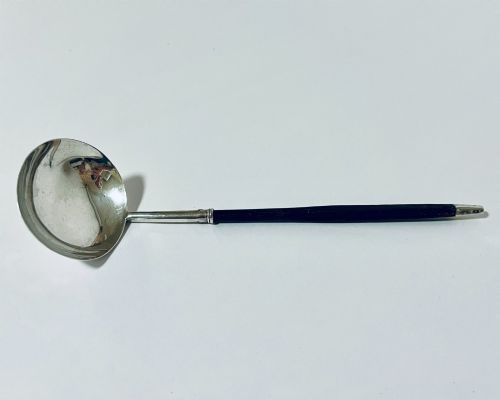
An antique serving ladle is a deep-bowled utensil designed for portioning liquids like soup, gravy, and punch from a central tureen or bowl. You will most frequently encounter sterling silver and silver-plated examples from the Georgian and Victorian eras, alongside robust pewter and occasional regional woods or horns.
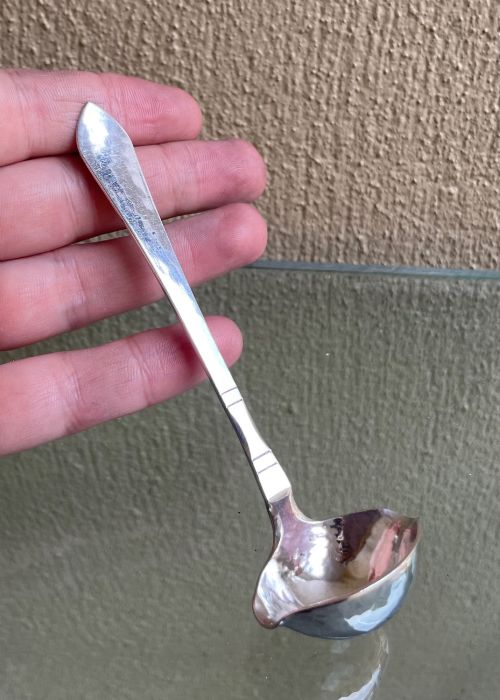
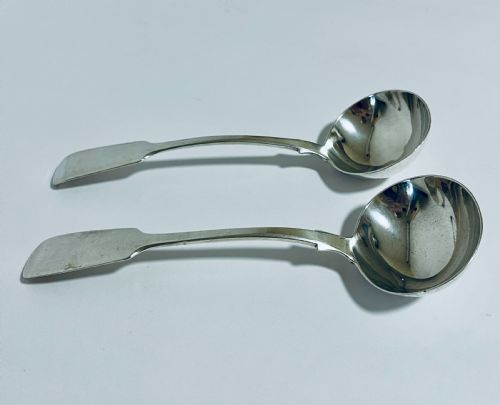
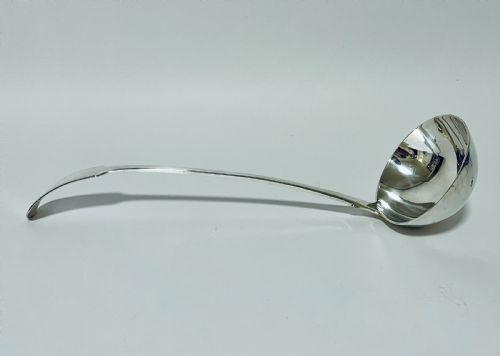
Forms on this page range from small sauce ladles and toddy ladles to large soup and basting ladles with deep bowls and long handles. Makers shaped these implements for formal dining tables, domestic kitchens, and communal gatherings across Britain, Ireland, continental Europe, and Scandinavia.
The material dictates the context of use, with bright silver reserved for formal dining rooms while pewter and horn served utilitarian roles in country houses and taverns. Each period brought distinct handle patterns and bowl depths, reflecting changing dining habits from the eighteenth century into the twentieth.
Materials and Making
Silversmiths hammered and shaped sterling silver, solid silver, and silver gilt into balanced handles and capacious bowls, often applying cast decorative crests and threaded borders by hand. Electroplated nickel silver and silver plate provided an accessible alternative for larger domestic services during the nineteenth century.
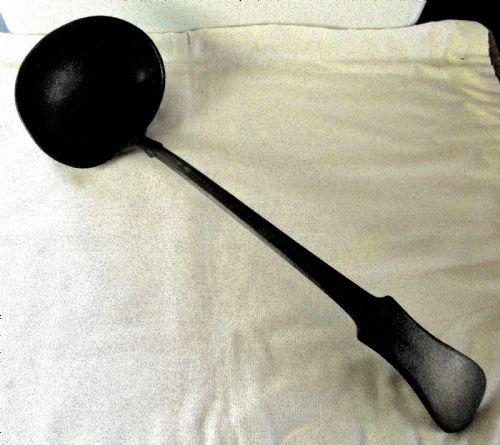
Pewterers cast tin-alloy mixtures in moulds to produce sturdy everyday ladles, while craftsmen carved beechwood, horn, and antler into organic serving spoons with deep receptacles. Makers marked their metalwork with town marks, maker stamps, and period hallmarks to record origin and silver standard.
The inventory includes provincial Scottish and Irish pieces alongside Scandinavian and German designs.
Distinctions in Quality
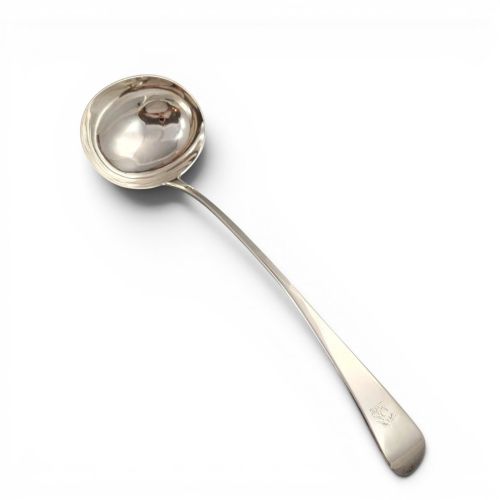
The standard of an antique serving ladle rests on the weight of the metal, the crispness of engraved family crests, and the original balance of the handle. Heavy gauge sterling silver maintains structural integrity in the bowl and stem, whereas thinner metal bends under the weight of thick stews.
Renowned makers and provincial silversmiths contributed superior hand-finishing, evident in smooth joins between handle and bowl and well-defined decorative patterns like Old English or Queen's. Pieces retaining sharp hallmarks and unblemished gilding or transfer-printed ceramic pairings demonstrate careful preservation over centuries.
Hester Bateman·John Yates·Dixon And Son·Michael Smith·Georg Jensen·Mappin And Webb·Mary Chawner·Daniel And Arter·Jamieson And Naughton
The Antique Serving Ladle Glossary
- Hallmark
- Official stamps struck into precious metals to guarantee purity and origin. These marks identify the maker, assay office, and year of production.
- Basting ladle
- A large spoon used to scoop juices from a roasting pan to moisten meat. They share similar proportions to soup ladles but often feature longer handles.
- Toddy ladle
- A small vessel designed for mixing and serving hot alcoholic drinks. Their twisted whalebone or wooden stems prevented heat transfer to the hand.
- Sugar sifter
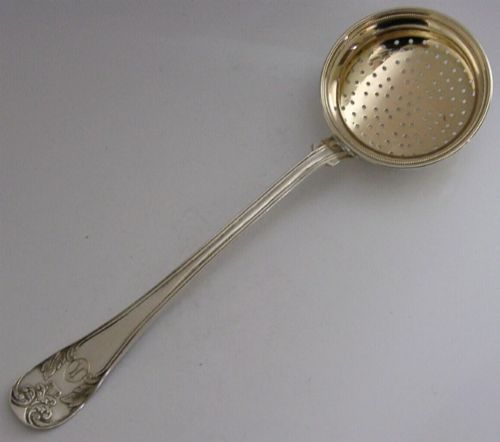
- A pierced spoon used for sprinkling powdered sugar over food or drinks. The bowl contains decorative perforations to strain lumps.
- Tureen
- A deep covered bowl used for serving soup at the table. Many period examples are accompanied by a matching ladle.
Antique Serving Ladle: Frequently Asked Questions
What is the difference between a sauce ladle and a soup ladle?
Sauce ladles are scaled down for smaller vessels like gravy boats and butter jugs, typically measuring under twenty centimetres in length.
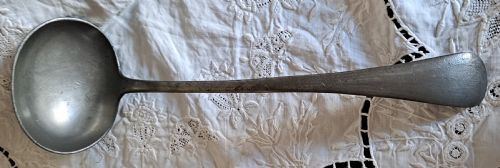
Soup ladles feature much larger bowls and longer stems designed to reach deep into large ceramic or silver tureens.
How do I clean silver ladles safely?
Wash silver ladles gently in warm soapy water using a soft cloth, avoiding harsh abrasive dips that strip away natural patination.
Dry them immediately with a lint-free towel to prevent water spots and store them away from rubber or damp environments.
Can I use pewter ladles for daily serving?
Historic pewter contains lead in varying amounts depending on the alloy mixture and period of manufacture. Modern testing is advised if you intend to serve acidic foods.
Many collectors prefer to display antique pewter or limit its use to dry goods and decorative display.
How do I date an unmarked silver ladle?
Examine the handle style, bowl shape, and engraved crest against known period designs such as the upturned Old English pattern or thread borders.
Maker stamps and provincial town marks often provide clues to the region and decade of production even without a full date letter.