
Antique Serviette Rings
Antique serviette rings are table accessories for holding dinner napkins, combining domestic utility with the distinct metalwork and design periods of the late nineteenth and twentieth centuries.
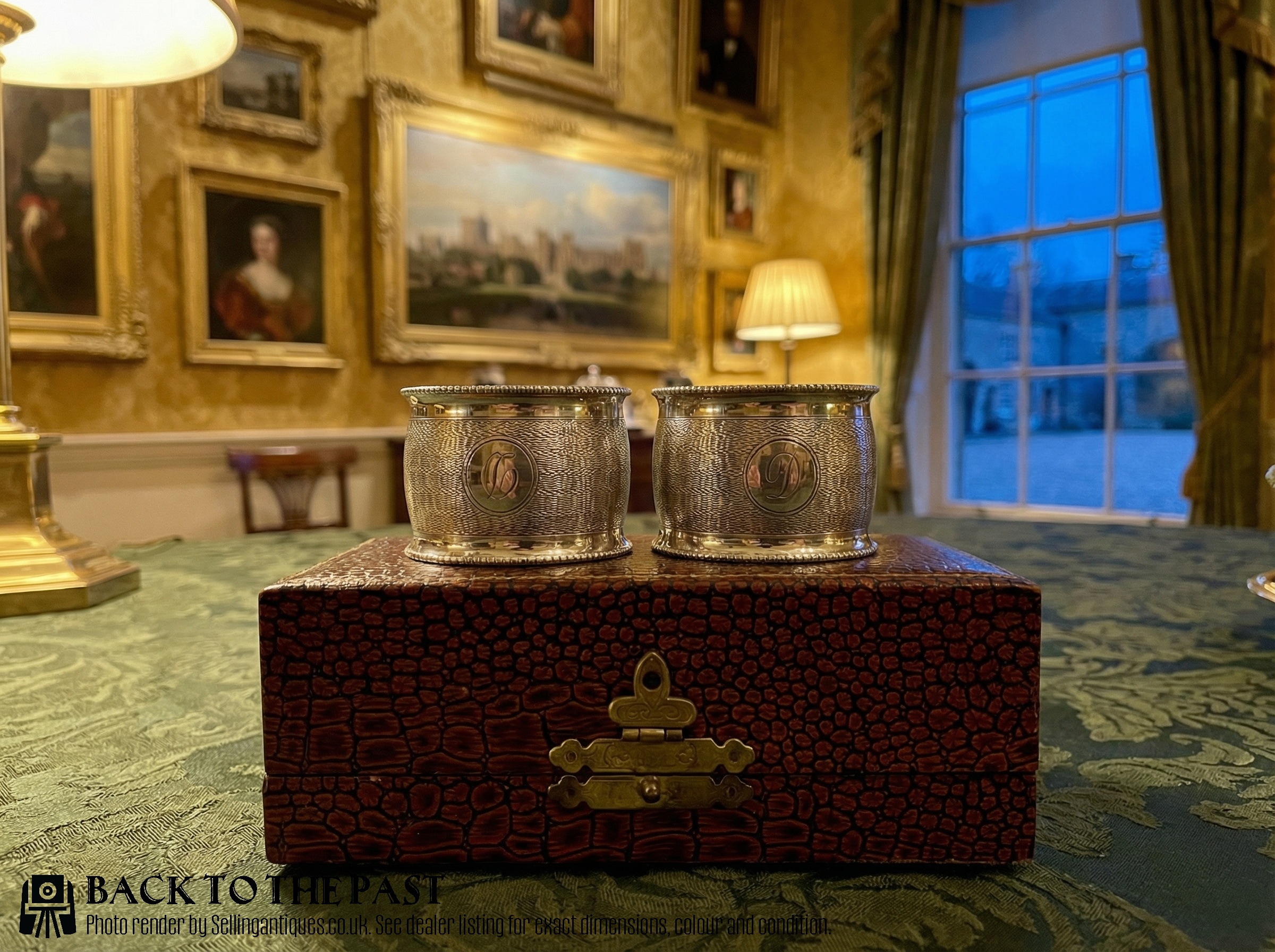
Antique Serviette Rings
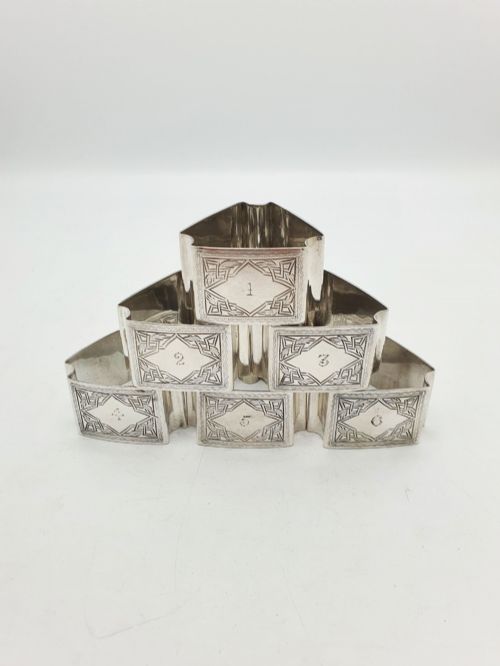
When you search for antique serviette rings, you encounter small personal tableware items designed to identify napkins at the dining table during multi-course meals. These pieces function as individual markers, often engraved with initials or numbered to keep household linens organised between uses.
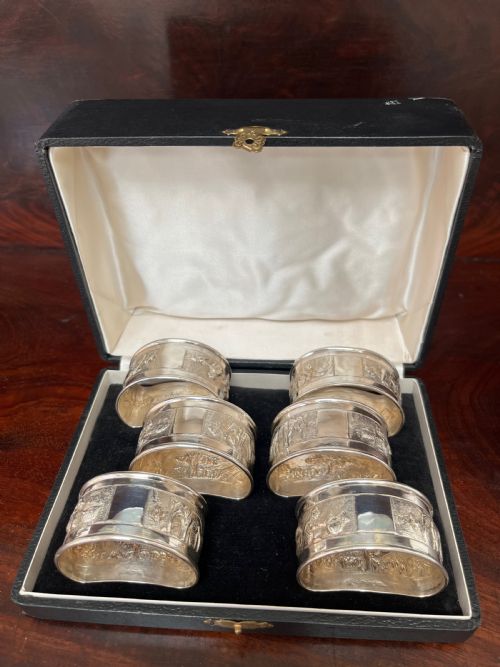
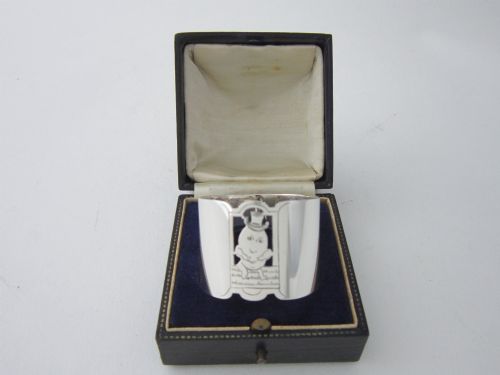
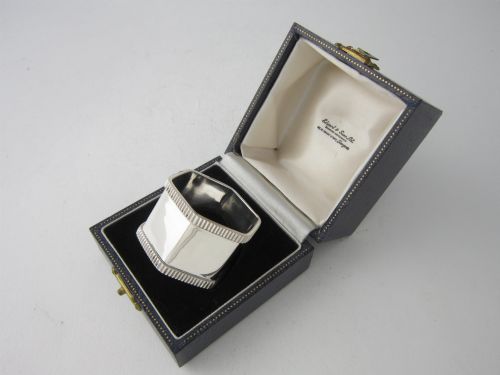
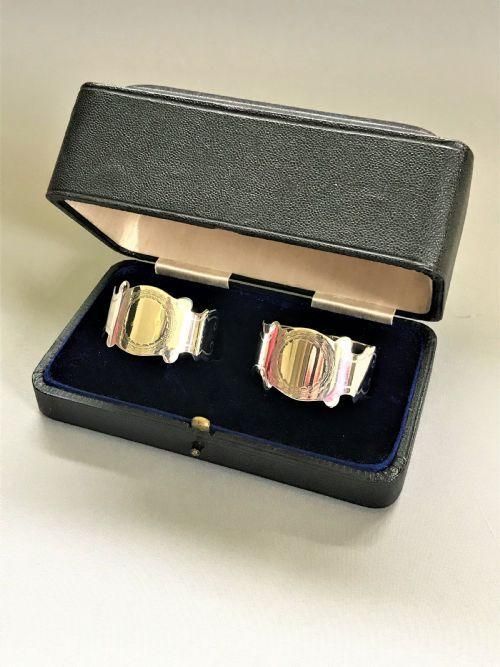
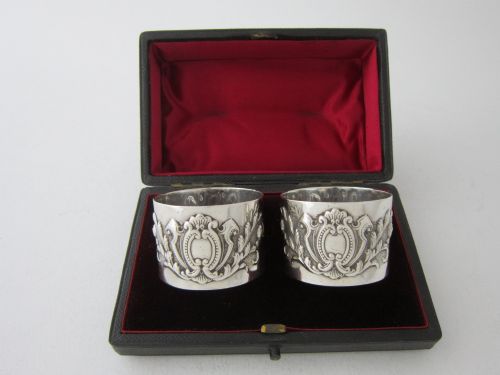
The selections available here span from Victorian designs through Edwardian and George V eras into Art Deco and Mid-Century Modern periods. Most examples appear as matched sets housed in original silk or velvet lined presentation cases, though single specimens and pairs also surface regularly.
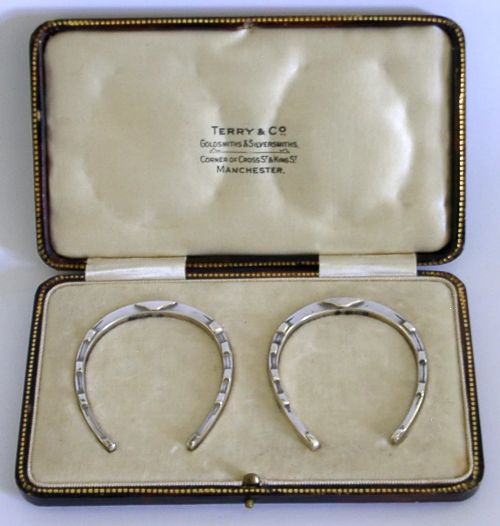
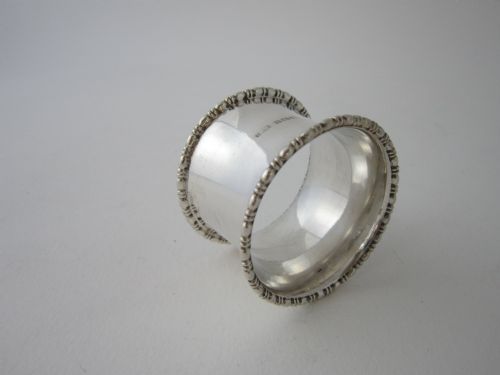
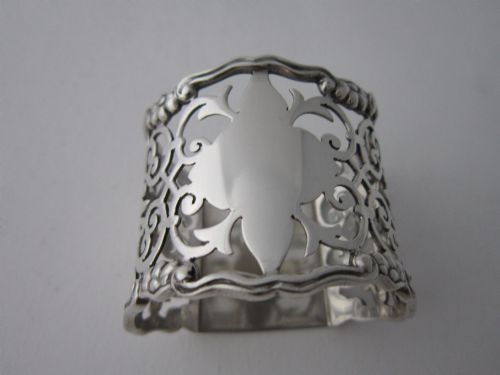
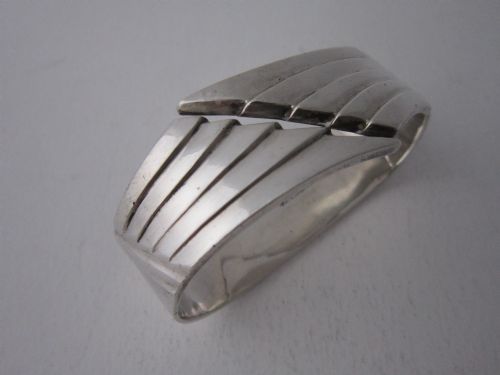
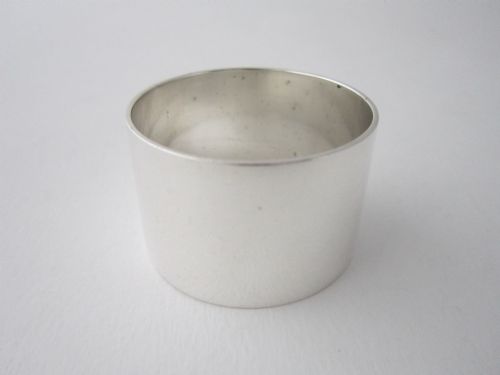
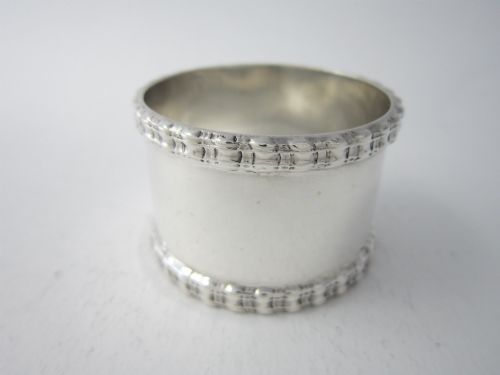
Makers utilised various formats, ranging from plain cylindrical bands to novelty shapes modelled as belt buckles, horse shoes, stirrups, and charioteers. Regional British assay offices, particularly Birmingham and Chester, stamped many of these items with standard hallmarks confirming their metal purity and date.
How they were made
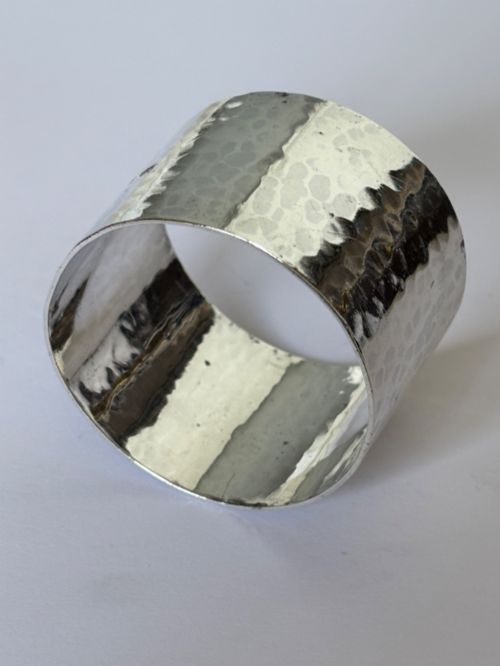
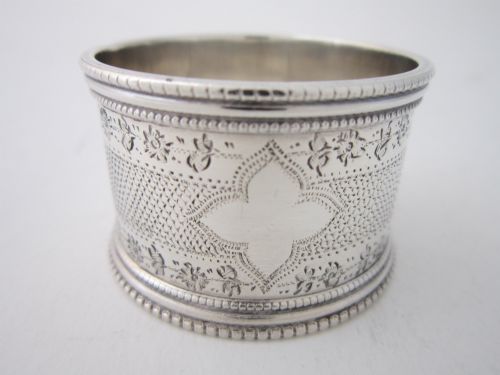
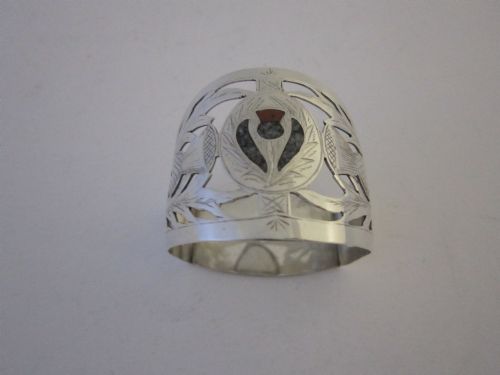
Silversmiths and manufacturers constructed these items primarily from sterling silver, silver plate, and pewter, shaping metal sheets into cylinders or casting novelty forms. Artisans applied decorative treatments such as hand hammering, surface engraving, and the integration of colourful enamel panels.
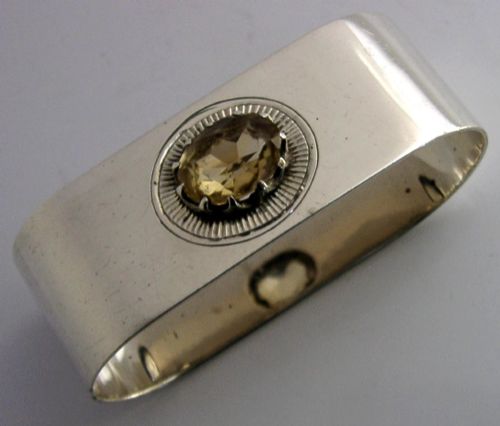
The Arts and Crafts movement brought hand-worked surfaces and distinct construction methods, as seen in pieces by specific guilds and designers using pewter and silver with semi-precious stones like agate and citrine. Cased sets often required fitted interiors lined with leatherette, silk, or velvet to protect the polished metal during storage.
Dining tables of the past gained individual character through novelty napkin rings shaped precisely as tiny horse shoes, belt buckles, and stirrups.
What varies in quality
Quality in these table accessories rests on the weight of the metal utilised, the crispness of the hallmarks, and the presence of original fitted presentation boxes. Heavy gauge sterling silver retains its structural integrity better over decades of use compared to thinner silver plate.
Design complexity also distinguishes standard domestic items from high-art examples, such as those featuring hand-applied enamel work, specialised gemstone settings, or distinct Arts and Crafts and Art Deco styling. Complete matched sets housed in their original silk-lined cases achieve a higher degree of preservation than stray single pieces.
Albert Edward Jones·R. E. Stone·C.T. Burrows & Sons·Liberty & Co·Archibald Knox·Mappin & Webb·Guild of Handicraft
The Antique Serviette Rings Glossary
- Hallmark
- Official marks stamped into precious metals indicating the maker, assay office, and year of manufacture. These stamps provide definitive evidence of origin for British silver.
- Sterling Silver
- An alloy containing ninety-two point five percent silver by mass, with other metals added for durability. This material forms the primary body for the majority of these domestic pieces.
- Silver Plate
- A base metal layer coated with a thin layer of pure silver through electroplating or older techniques. Items produced this way offer the appearance of solid silver at a different cost level.
- Cymric
- A trademarked name used by Liberty & Co for their Celtic-revival silver and enamel work. Pieces bearing this designation incorporate distinct artistic styling from the early twentieth century.
- Mauchline Ware
- Wooden items decorated with photographic transfers or turned from hardwoods, often associated with Scottish production. These provide an alternative material texture to standard metal table wares.
Antique Serviette Rings: Frequently Asked Questions
What is the difference between a serviette ring and a napkin ring?
There is no functional or material difference between the two terms, as both describe the same table accessory. Serviette is simply the traditional British term for a table napkin.
Collectors and dealers use both words interchangeably when describing these nineteenth and twentieth-century silver and metal table items.
How do I date a silver serviette ring?
Dating relies heavily on the assay office hallmarks stamped directly onto the metal surface. These tiny punched symbols typically include a date letter corresponding to a specific year of testing.
Stylistic cues such as Edwardian restraint, George V heft, or Art Deco geometric forms also help narrow down the period of manufacture when hallmarks are worn.
Were these items always sold in sets?
Original retail distribution varied according to the household requirements and the purchasing power of the original buyer. Many high-end pieces emerged from workshops in fitted presentation boxes containing pairs or matched sets of six.
Other examples were purchased individually over time or became separated from larger dining collections through decades of domestic use.
How should I clean antique silver napkin rings?
Maintenance requires gentle cleaning with a specialised silver cloth to remove natural tarnishing without scrubbing away delicate engravings or surface details. Avoid harsh chemical dips, particularly on items featuring enamel, agate, or fabric-lined presentation cases.
Proper storage in dry, acid-free environments helps preserve the polished finish and prevents rapid re-tarnishing between uses.