


Antique Serpent Band
An antique serpent band wraps the finger in Victorian and Edwardian symbolism, offering entwined coils set with diamonds and sapphires.
Antique Serpent Band
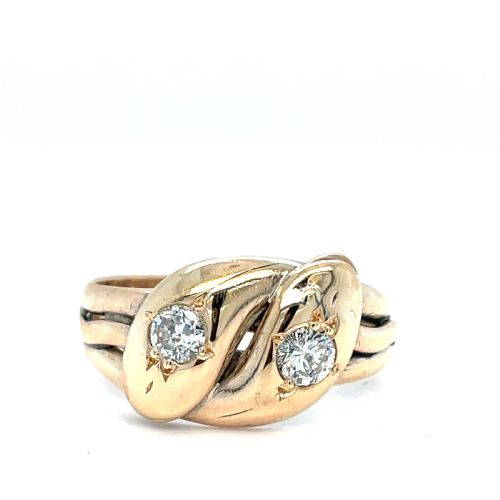
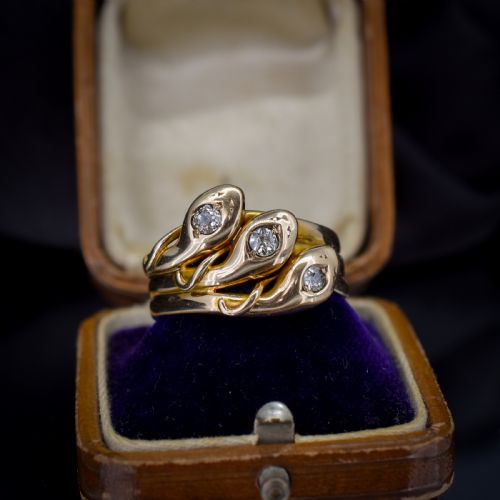
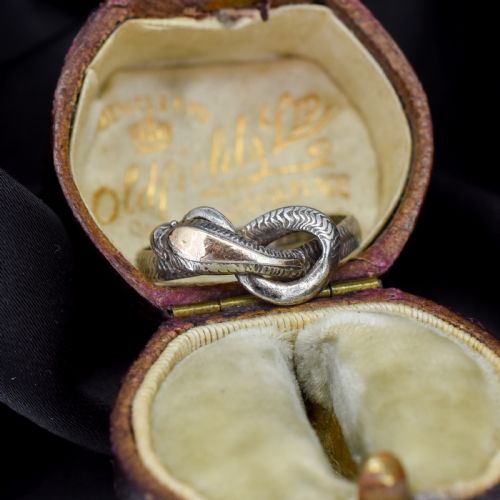
When you search for an antique serpent band, you are looking at rings and earrings shaped as coiled snakes from the Victorian and Edwardian periods. These pieces appear most frequently as gold finger rings, often featuring single, double, or triple serpents.
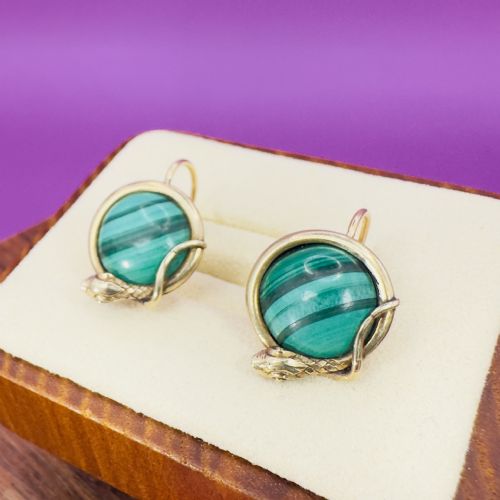
The materials and forms recorded in these listings span yellow gold in various carats alongside silver, paired with gemstones like diamonds, sapphires, and malachite. Alongside finger rings, the selection includes dangling drop earrings from the 1870s.
Originating primarily within the nineteenth and early twentieth centuries, these jewels carry the distinct aesthetic of their era, symbolising eternal love and devotion. You will encounter hallmarked examples from assay offices in London and Chester dating across several decades.
Construction and materials
Goldsmiths constructed these serpent bands utilising 9ct, 15ct, and 18ct gold, as well as silver, shaping the metal into supple, coiled bodies that wrap the finger. Artisans formed detailed scales and flexible bands to mimic the natural movement of a snake.
Gemstones such as old-cut diamonds and rose-cut diamonds are flush-set or grain-set into the heads to serve as sparkling eyes, occasionally accompanied by blue sapphires. In drop earrings, malachite provides a smooth, patterned contrast to the surrounding yellow gold framework.
Many of these serpentine bands stare back at you with tiny rose-cut diamond eyes.
Quality factors in serpent jewellery
The standard of a serpent band depends on the precision of the goldsmith's hand in carving the scales and shaping the serpent's head. Superior examples display crisp, defined chasing that retains its depth across the coils.
Gemstone selection and setting work also separate pieces, with well-matched old-cut diamonds or vibrant sapphires indicating higher workshop production. Clear hallmarks from assay offices like London and Chester provide definitive markers of origin and metal purity.
The Antique Serpent Band Glossary
- Old-cut diamond
- A diamond cut by hand before modern machinery, featuring a smaller table, higher crown, and open culet. These stones exhibit a softer, candlelit sparkle characteristic of antique jewellery.
- Rose-cut diamond
- A gemstone cut with a flat base and a domed, faceted top resembling an unopened rosebud. This style lets light pass through the stone to create a gentle, shimmering effect.
- Hallmark
- An official stamp applied by an assay office to guarantee the purity of precious metals. British marks frequently include date letters, maker's marks, and symbols denoting gold or silver standards.
- Malachite
- An opaque, green copper carbonate mineral displaying distinct banded patterns. Victorian jewellers polished this stone into cabochons for drop earrings and statement jewels.
Antique Serpent Band: Frequently Asked Questions
What do snake rings symbolise?
Victorian serpent jewellery represents eternal love, wisdom, and rebirth, popularised greatly after Queen Victoria received a snake engagement ring featuring an emerald.
This romantic symbolism made serpent bands enduring tokens of affection throughout the nineteenth and early twentieth centuries.
How do I date an antique serpent band?
Dating relies heavily on official assay office hallmarks stamped inside the band, which indicate specific years for London and Chester pieces.
Stylistic details like rose-cut diamond eyes and the specific carat of gold also help place a jewel within the Victorian or Edwardian eras.
What metals were used in these rings?
Goldsmiths utilised 9ct, 15ct, and 18ct yellow gold alongside silver for these serpentine designs. The varying gold carats reflect the changing regulations and workshop standards of the Victorian and Edwardian periods.