

Antique Seed Pearl Jewelry
Antique seed pearl jewellery comprises delicate Victorian and Edwardian brooches, pendants, and necklaces that collectors prize for their intricate goldwork and luminous tiny pearls.
Antique Seed Pearl Jewelry
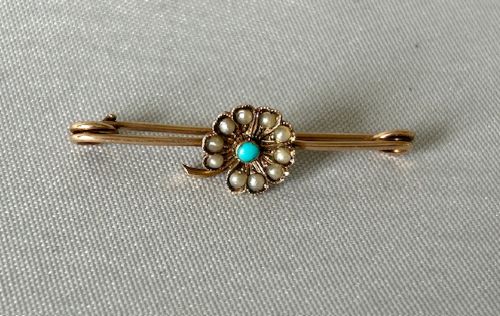
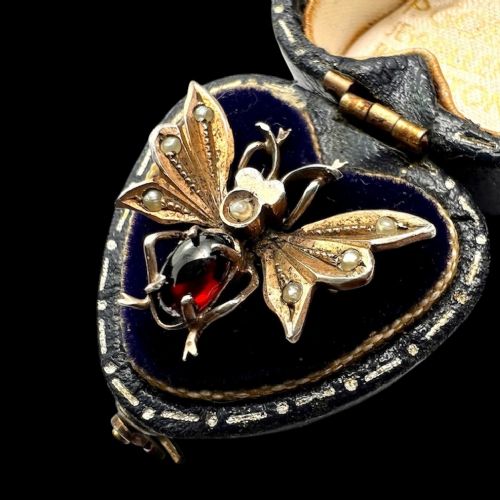
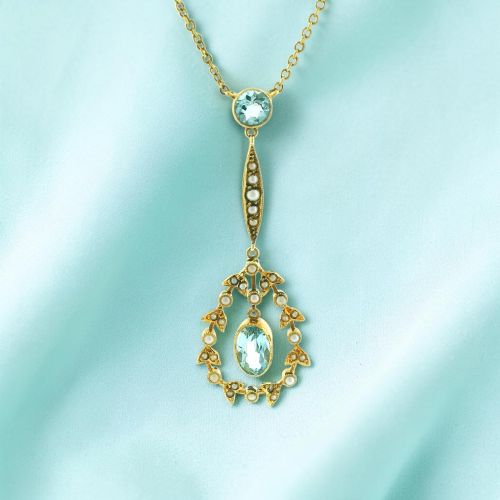
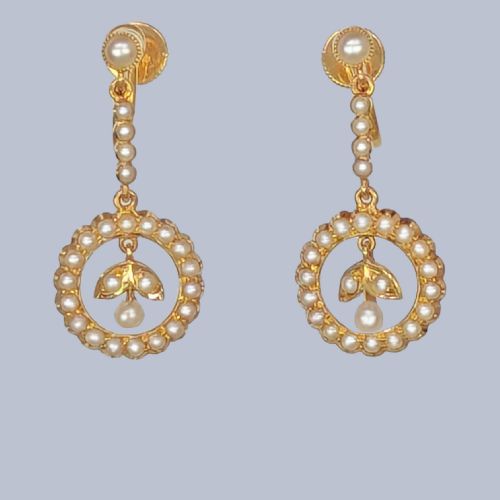
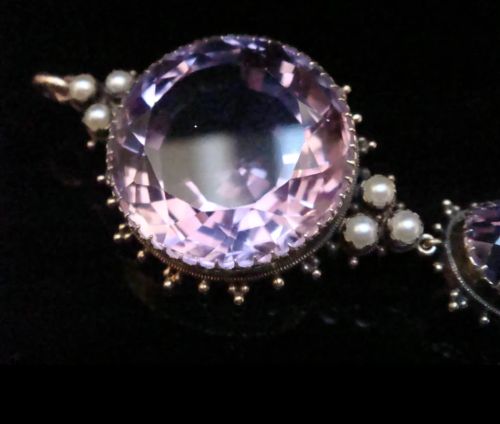
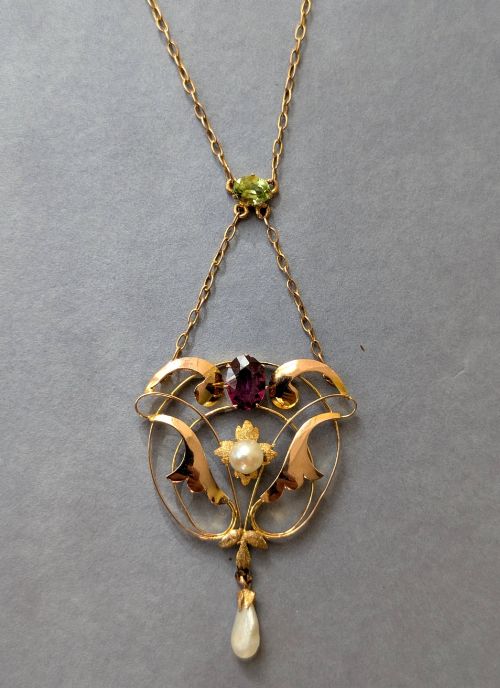
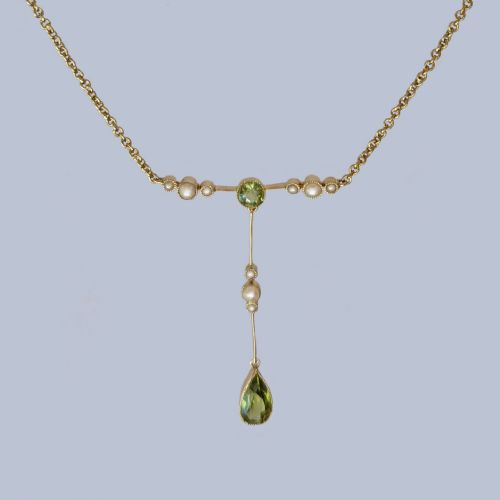
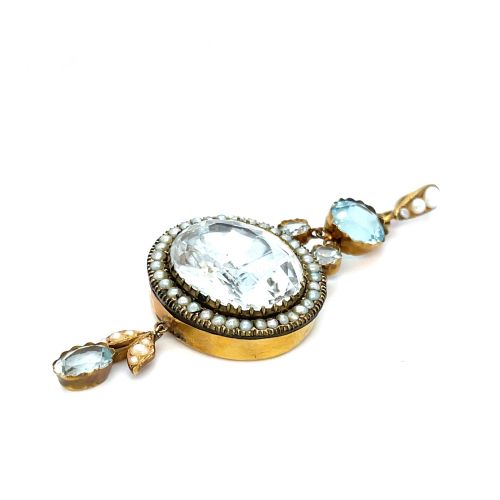
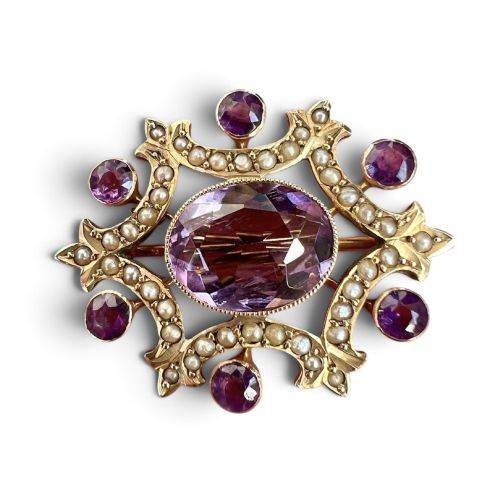
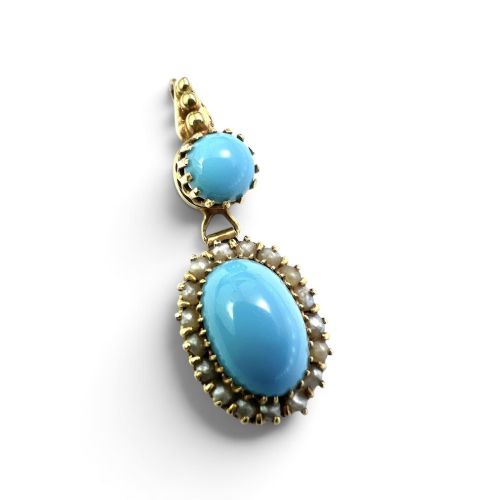
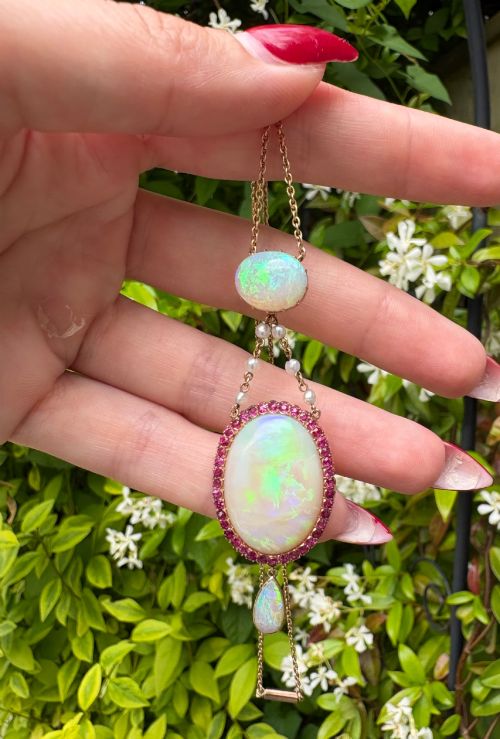
Antique seed pearl jewellery consists primarily of brooches, pendants, and necklaces originating from the Victorian, Edwardian, and Art Nouveau periods. These pieces frequently combine minuscule natural pearls with coloured gemstones such as amethyst, aquamarine, peridot, and turquoise set in yellow or rose gold.
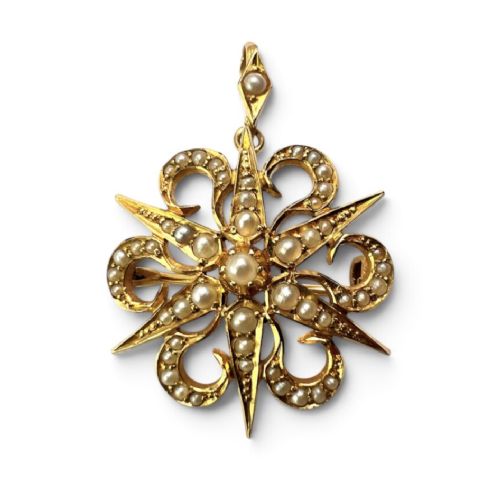
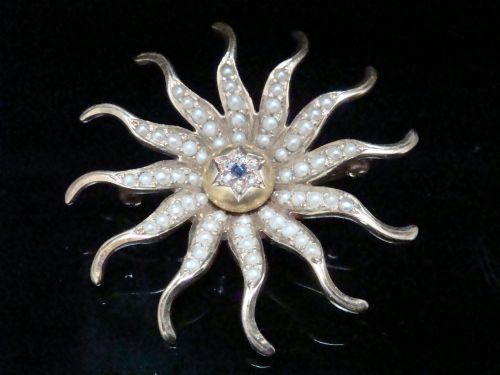
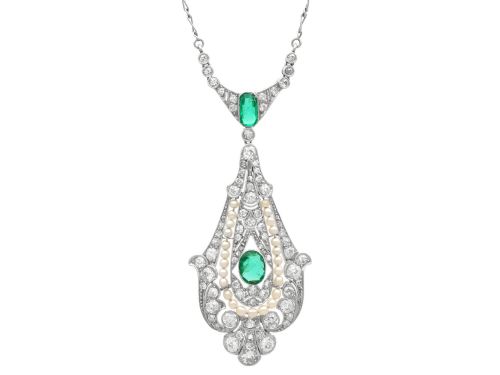
The pieces on this page lean heavily toward Edwardian and late Victorian designs, often incorporating convertible pendant-brooch configurations and starburst or floral motifs. Jewelers of these eras arranged tiny pearls closely together to form continuous shapes, crescents, and halos around central stones.
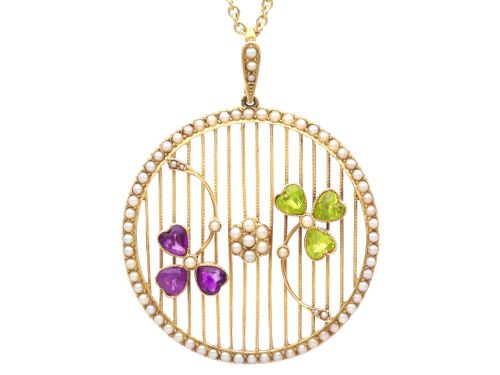
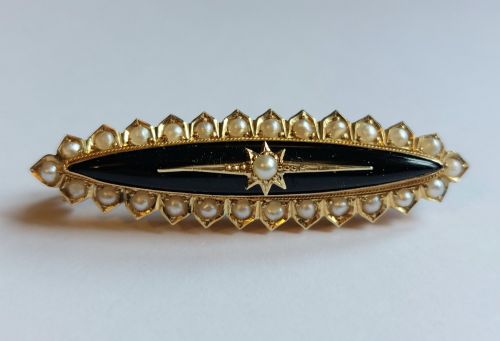
Mourning and commemorative pieces also appear, utilising seed pearls alongside black onyx or hair compartments to mark remembrance. Alongside these, suffragette-associated designs bring together peridot, violet amethyst, and white seed pearls in distinct symbolic colour arrangements.
Materials and Construction
Goldsmiths constructed these items using 9ct and 15ct gold, along with platinum in later Edwardian examples, shaping the metal into hollow or wire-work frames to support the minute pearls. Seed pearls were meticulously drilled and threaded onto fine silk or wire threads, or secured individually with tiny gold pins and prongs.
Gemstones such as almandine garnet, tourmaline, and sapphire were frequently foil-backed or open-set within gold wire galleries to catch the light behind or beneath the seed pearl clusters. Art Nouveau pieces utilised flowing, organic gold casting techniques, while Victorian iterations favored structured starbursts, clusters, and bezel settings.
Antique Seed Pearl Jewelry Retail Price Guide 2026
Typical asking prices for seed pearl jewelry among the pieces listed under this phrase on Sellingantiques today, from the lower quarter to the upper quarter. They describe what is for sale here now, not the wider market.
Victorian mourning jewellery often concealed a tiny compartment for human hair beneath the seed pearl arrangement, keeping departed loved ones close.
Assessing Quality and Craftsmanship
Quality in seed pearl items rests on the uniformity, matching, and lustre of the pearls themselves, alongside the structural integrity of the gold setting. Top-tier examples maintain an even, creamy or silvery sheen across every tiny pearl without discoloration, whilst lesser pieces may show mismatched pearl sizes or dull surfaces.
The complexity and weight of the goldwork also divide standard production from superior artistry. Fine pieces employ substantial 15ct gold frames with complex hand-wrought galleries and secure multi-point prong work, whereas lower-tier examples utilise thinner 9ct stampings that offer less rigidity.
The Antique Seed Pearl Jewelry Glossary
- Seed Pearl
- A very small, naturally formed pearl, typically measuring under two millimetres, used in clusters or pavé settings. These tiny spheres form the defining decorative element of Edwardian and Victorian cluster jewellery.
- Sunburst
- A radial design motif radiating outward from a central gemstone, highly popular during the late Victorian and Edwardian eras. This geometric layout allows seed pearls to form shimmering rays surrounding a focal diamond, sapphire, or garnet.
- Convertible Pendant-Brooch
- An item engineered with a detachable pin stem and a hidden loop, permitting the wearer to use the piece interchangeably as a brooch or a necklace pendant. This versatile setting style is frequently encountered in Edwardian goldwork.
- Suffragette Chain
- Jewellery incorporating the symbolic colour triad of green peridot, white seed pearls, and violet amethyst, representing give-women-votes. These pieces date primarily from the early twentieth century.
- Foil Backing
- A thin sheet of reflective metallic foil placed beneath a gemstone to enhance its colour and brilliance within a closed gold setting. This technique appears in nineteenth-century aquamarine and paste pieces.
Antique Seed Pearl Jewelry: Frequently Asked Questions
Were these pieces worn as brooches or pendants?
Many items from this era were designed to serve both purposes, featuring retractable or removable pin stems alongside concealed suspension loops.
This dual functionality allowed Edwardian wearers to pin the piece to a lace collar or suspend it from a fine gold chain.
What does a starburst design signify?
Starburst motifs gained immense popularity during the late nineteenth and early twentieth centuries, drawing inspiration from celestial observations and natural symmetry.
In these designs, seed pearls form sparkling rays that draw the eye toward a central garnet, amethyst, or diamond.
How can I tell an Edwardian piece from a Victorian one?
Victorian pieces often display heavier gold weights, darker garnet or amethyst stones, and structured geometric or mourning motifs.
Edwardian examples tend to utilise lighter lacy goldwork, platinum highlights, and flowing Art Nouveau botanical curves.