


Antique Seaside Oil Painting
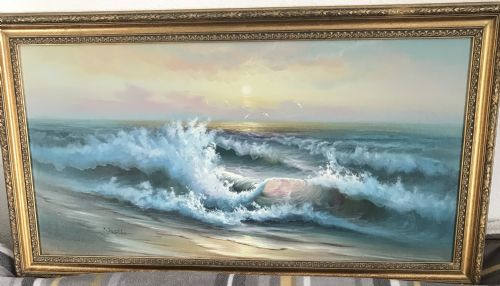
An antique seaside oil painting captures the salt air and shifting light of the coast, bringing the open shore directly into a room.
Antique Seaside Oil Painting
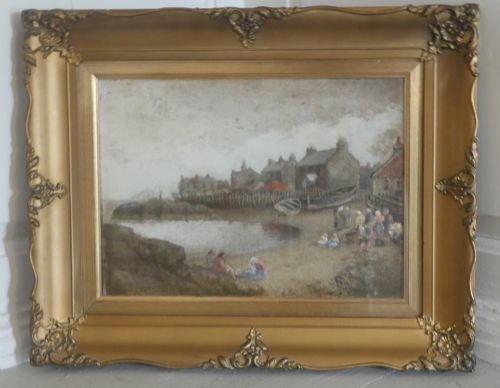
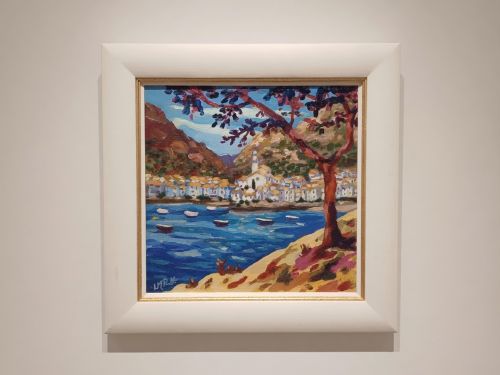
An antique seaside oil painting brings together coastal views, harbour scenes, and beach life executed across the nineteenth and twentieth centuries. These works range from Victorian pleasure piers and genre scenes of fisher folk to Impressionist and Post-Impressionist interpretations of the shore.
The buyer meets coastal scenes spanning the Victorian era through the nineteen-fifties, with works originating from British and European schools. Village harbours, chalk cliffs, and sandy beaches recur frequently across the selection.
Subjects include children playing in the surf, donkeys on the beach, and gatherings by the water. These compositions record coastal leisure and working shorelines through distinct regional lenses including the Newlyn School and East Anglian traditions.
Materials and methods
Artists painted primarily in oil on canvas or board, utilising oil paint to capture the luminosity of water and sky. These surfaces are frequently housed within gilt wood frames.
The application of paint varies from the detailed realism of the nineteenth century to the looser brushwork of Impressionism, Fauvism, and Post-Impressionism. Pigments are handled to render the texture of sand, water, and atmosphere.
Regional styles represented include the Newlyn School, East Anglian coastal traditions, and broader European Impressionist schools.
Distinctions in quality
Quality rests in the fidelity of atmosphere and the sureness of the brushwork in capturing light and movement on the water. Superior examples demonstrate a confident handling of pigment that evokes salt air and open space without overworking the canvas.
The integration of the frame with the period of the painting and the strength of provenance elevate certain works above standard topographical records. The distinction lies between a mere coastal record and a canvas that conveys the genuine mood of the shore.
Edward Mills·Norman Lloyd·William Raymond Dommersen·Alfred Henry Vickers·John Sanderson Wells·Robert Macaulay Stevenson·William Greaves·James Watson·William Shayer·Harry John Pearson·John Duvall
The Antique Seaside Oil Painting Glossary
- Oil on canvas
- Pigment suspended in a drying oil applied to a stretched woven fabric support. This traditional combination allows for rich blending and textured brushwork.
- Gilt wood
- Timber frames finished with a thin layer of gold leaf or metallic gilding. These surrounds enhance the visual weight of the artwork.
- Newlyn School
- An art movement based in Cornwall focusing on plein air painting of local fisher folk and coastal life. Members sought natural light and genuine rural subjects.
- Genre seascape
- A painting depicting ordinary people engaged in everyday activities along the shore. These works record social history alongside maritime views.
- Post-Impressionism
- A French art movement extending Impressionism while rejecting its limitations, favouring bolder colours and distinct symbolic forms. Artists used expressive brushwork to convey emotional resonance.
Antique Seaside Oil Painting: Frequently Asked Questions
How should I hang an oil painting?
Hang the piece away from direct sunlight and fluctuating heat sources to protect both the canvas and the oil pigments over time.
Ensure the wall fixings match the weight of the frame, particularly for heavier gilt wood mouldings common in nineteenth-century works.
What periods do these paintings cover?
The selections span from the Victorian era through the mid-twentieth century, encompassing nineteenth-century realism, Impressionism, and later modernist movements.
Dates range from Victorian pieces through nineteen-sixty works, reflecting changing approaches to coastal subjects.
How do I identify a Newlyn School painting?
Look for subjects depicting Cornish coastal life, local fishermen, and harbour scenes painted with a strong regard for natural outdoor light.
These works often combine realist observation of rural labour with the atmospheric techniques of plein air painting.
Are these works cleaned or restored?
Many antique canvases retain their original surfaces, while others may have undergone professional conservation to stabilise the paint layer or varnish.
Review individual listings for specific details regarding the condition of the canvas, board, and frame.