



Antique Scroll Back Settee
An antique scroll back settee brings sweeping architectural lines and generous upholstery to a room, offering deep comfort paired with historic character.
Antique Scroll Back Settee
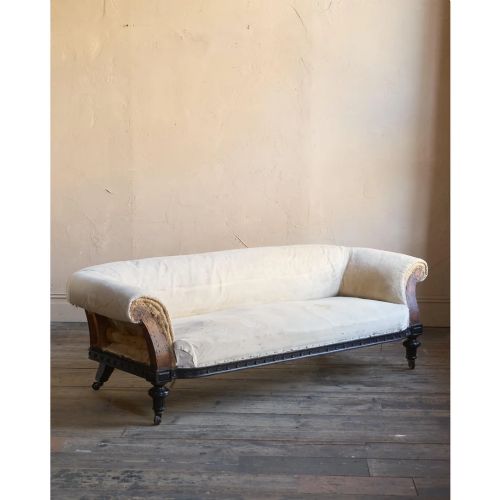
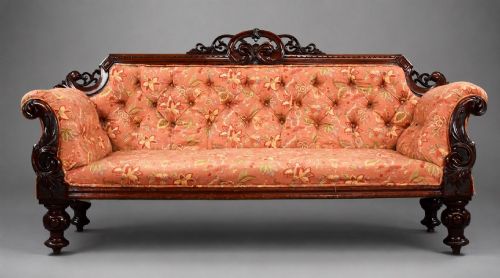
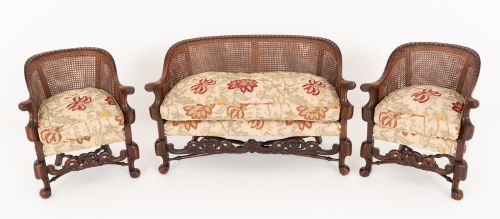
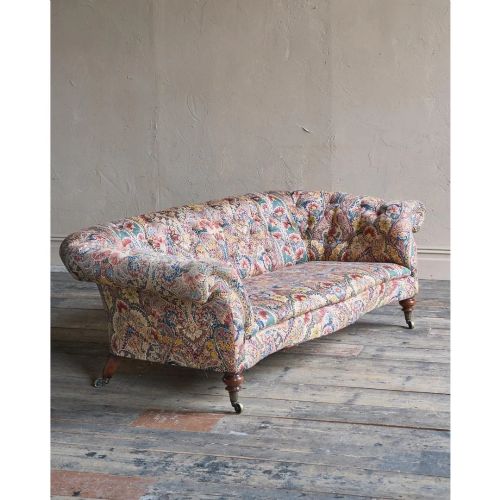
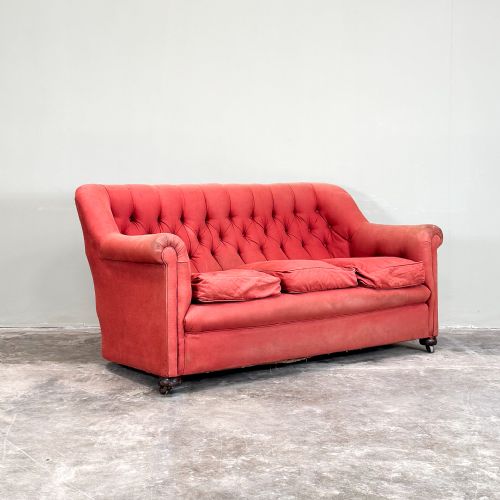
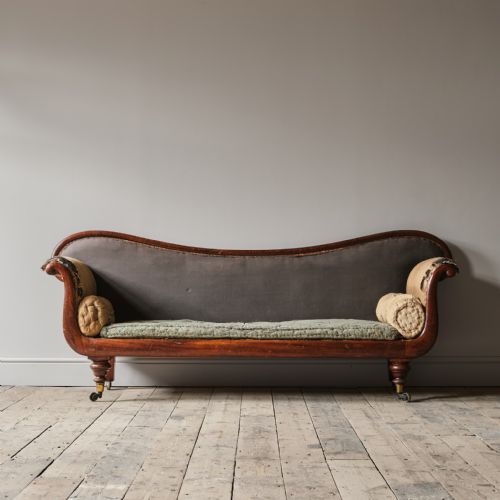
An antique scroll back settee encompasses substantial seating options ranging from Victorian chesterfields to Regency library sofas and Carolean style bergere suites. These pieces combine wooden frames in mahogany, walnut, rosewood, and timber with varied upholstery including velvet, fabric, leather, and woven textiles.
The selection on this page draws primarily from nineteenth century and Victorian origins, alongside early twentieth century revivals. Buyers encounter forms including large country house sofas, salon settees, chaise longues, and benches.
Makers such as Howard and Sons and Holland & Sons appear alongside uncredited country house pieces and continental work. The unifying feature remains the distinctive curved or scrolled framework supporting deep seating.
Materials and construction
Frames rely on dense hardwoods such as mahogany, walnut, and rosewood, often featuring carved wooden elements or exposed timber supports. Joinery methods reflect traditional cabinet making, giving the structural rigidity required for heavy daily use.
Upholstery combines supportive internal stuffing with surface coverings in velvet, leather, and woven fabric. Brass accents sometimes appear on castors or decorative detailing, anchoring the textile elements to the wooden base.
Antique Scroll Back Settee Retail Price Guide 2026
Typical asking prices for scroll back settee among the pieces listed under this phrase on Sellingantiques today, from the lower quarter to the upper quarter. They describe what is for sale here now, not the wider market.
Listings feature mahogany, walnut, rosewood, and timber frames paired with leather, velvet, and woven fabric upholstery across the nineteenth and early twentieth centuries.
Assessing quality in seating
Quality rests in the integrity of the timber frame and the sophistication of the carving. Heavier woods and fluidly shaped scroll arms demonstrate superior craftsmanship compared to simpler or more rigid constructions.
The grade of upholstery materials and the retention of original maker signatures or stamps elevate a piece. Finer examples maintain structural balance across expansive forms like country house sofas and library seating.
Howard and Sons·Holland & Sons
The Antique Scroll Back Settee Glossary
- Bergere suite
- A matching set of seating featuring enclosed cane or upholstered wooden frames. These suites typically date to revival periods.
- Chesterfield sofa
- A deep buttoned upholstered sofa featuring arms and back of the same height. This form offers traditional upright seating.
- Chaise longue
- An upholstered long chair designed for reclining, combining a sofa back with an extended seat. They emerge frequently in nineteenth century inventories.
- Scroll back
- A framing style where the wooden or upholstered ends curve outward and downward in a spiral formation. This silhouette defines the profile of the settee.
Antique Scroll Back Settee: Frequently Asked Questions
What is a scroll back settee?
A scroll back settee is an upholstered seat featuring outward-curving arms or backrests shaped like scrolls. These pieces combine wooden frames with traditional textiles to create statement seating for living spaces.
Originating across multiple centuries, they appear in styles ranging from Regency library seating to Victorian country house sofas. Their distinctive silhouette provides both decorative presence and comfortable support.
How do I place an antique sofa?
Positioning an antique settee requires balancing its visual weight within the room. Placing it away from direct sunlight protects vulnerable fabrics like velvet and leather from fading.
Allow sufficient space around the piece to showcase carved wooden frames and scroll arms. They function effectively as central room dividers or focal points against panelled walls.
How do I identify a Victorian sofa?
Victorian sofas often feature dense mahogany or walnut frames paired with heavy upholstery like velvet or woven fabric. They lean towards generous proportions designed for formal reception rooms.
Look for stylistic clues such as button tufting, carved wooden flourishes, and sprung seating. Maker stamps from firms like Holland & Sons provide definitive period attribution.
Were these settees used daily?
These settees served as primary seating in country houses, libraries, and formal drawing rooms. Their robust timber construction accommodated active household use.
Over generations, many pieces underwent reupholstery while retaining their foundational wooden frames. This continuous use explains the mix of original timbers and later textile coverings found today.