


Antique Scottish Flatware
Antique Scottish flatware brings distinctive provincial character to the table, offering solid silver spoons, tongs, and trays shaped by generations of regional makers.
Antique Scottish Flatware
When you search for antique scottish flatware, you encounter silver and wooden items spanning the Georgian, Victorian, and Art Deco periods. These pieces range from intimate condiment spoons and sugar tongs to substantial hash spoons, serving spoons, and fitted cutlery trays.
The objects most frequently met on this page are silver spoons originating from historic manufacturing centres and provincial towns across Scotland. Alongside these flatware pieces, wooden trays fashioned from pine, sycamore, and fruitwood occasionally appear to hold the cutlery.
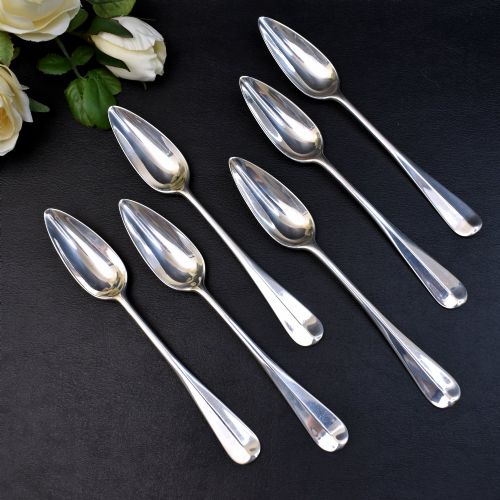
The selection reflects both urban elegance from Edinburgh and Glasgow and the distinct output of regional silversmiths working in smaller Scottish burghs. Buyers encounter everything from early eighteenth-century rat tail tablespoons to twentieth-century grapefruit spoons.
How they were made
The metalwork relies predominantly on sterling silver and standard silver, shaped by hand hammering and casting into forms such as dognose, rat tail, and provincial fiddle patterns. Silversmiths utilised traditional forging techniques to produce durable spoons, sugar tongs, and gravy spoons designed for daily dining use.
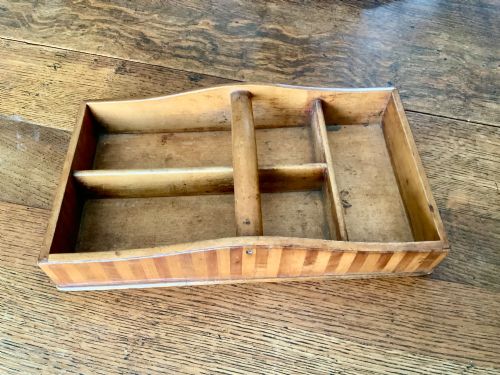
Wooden items in this category, including cutlery trays, rely on domestic timbers such as pine, sycamore, and fruitwood. Joinery and surface shaping on these wooden pieces match the utilitarian domestic requirements of eighteenth and nineteenth-century households.
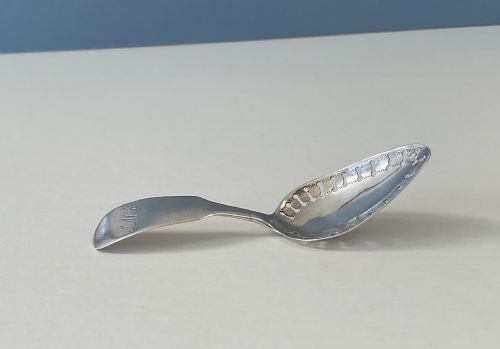
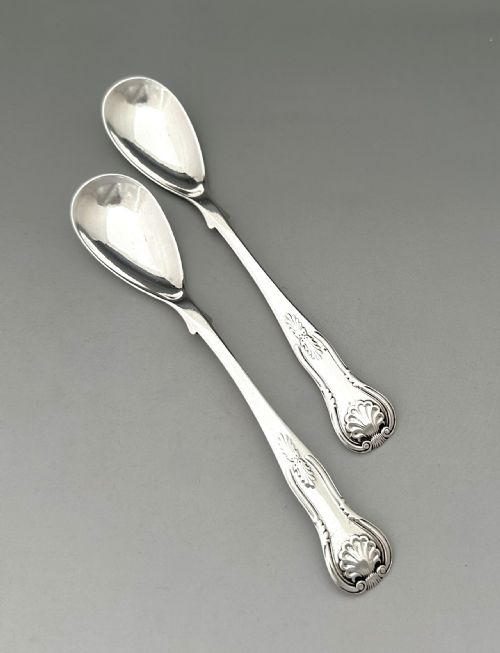
Object forms range from heavy hash spoons and serving spoons down to mustard spoons, caddy spoons, and sugar tongs.
What varies in quality
The distinction between ordinary and exceptional pieces often rests upon the maker and the townmark, with provincial items bearing marks from smaller burghs carrying particular historical interest. Pieces produced by recorded makers demonstrate superior balance and crisper striking of hallmarks against domestic utilitarian equivalents.
Weight and gauge of silver separate standard domestic flatware from substantial serving pieces and heavy hash spoons. Preservation of original bowl shape, distinct hallmarks, and the integrity of engraved crests or private dies dictate the standing of individual pieces within the range.
Hamilton & Inches·R Grey for Edmonstone·James Tait·Robert Gordon·Richard Rae·Alexander Henderson
The Antique Scottish Flatware Glossary
- Provincial
- Silverwork produced outside the main assay towns of Edinburgh and Glasgow, bearing unique maker and town marks. These regional pieces reflect local traditions and restricted production runs.
- Rat tail
- A prominent tapering spine running down the back of a spoon bowl from the handle stem. This feature provides structural reinforcement and marks early eighteenth-century manufacture.
- Dognose spoon
- An early form of flatware featuring a spatulate, notched terminal pointing upward, popular during the Queen Anne period. This profile evolved into the Hanoverian pattern.
- Private die
- A custom die commissioned by a family or institution to impress specific crests or ciphers onto flatware. This personalises the silver beyond standard maker marks.
- Hash spoon
- An exceptionally large serving spoon designed for dishing out stews or hash at the table. These heavy pieces date primarily to the eighteenth century.
Antique Scottish Flatware: Frequently Asked Questions
What is a dognose spoon?
A dognose spoon is an early form of flatware characterised by a spatulate terminal with a central notch, which emerged around the turn of the eighteenth century. The handle curves upward away from the table surface.
This design represents an early phase in British spoon development before the upturned Hanoverian pattern became standard practice.
What were hash spoons used for?
Hash spoons are exceptionally large serving implements created to ladle out portions from communal serving bowls during the eighteenth century. Their substantial weight and capacity suited the heavy dining customs of the period.
They appear less frequently than standard tablespoons and served a specific function at the dining table.
Are wooden cutlery trays contemporary with the silver?
Wooden cutlery trays fashioned from pine, sycamore, and fruitwood were built to house domestic flatware during the nineteenth century. They provided practical storage within sideboard drawers or on tabletop surfaces.
Their construction matches the domestic woodwork standards of the era in which the cutlery was used and stored.