

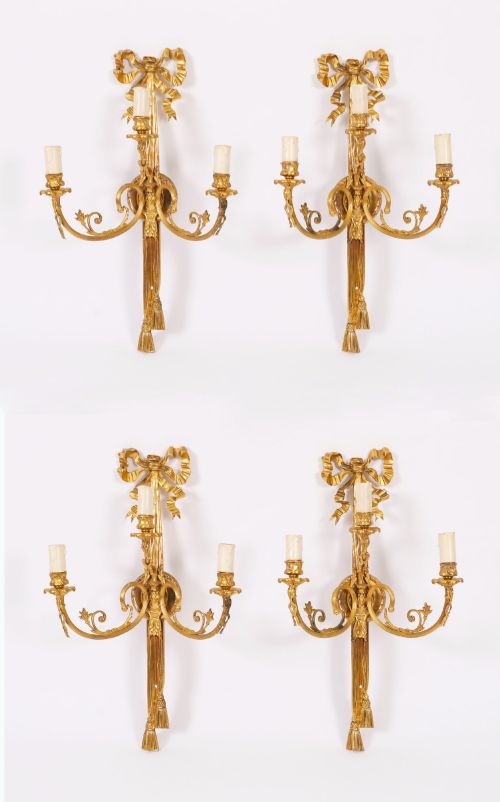
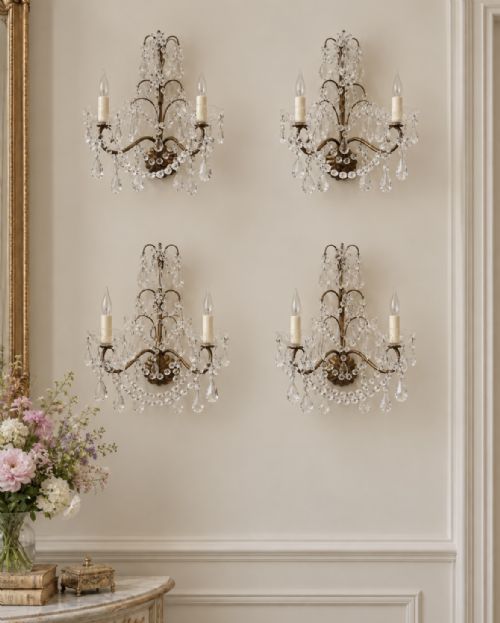
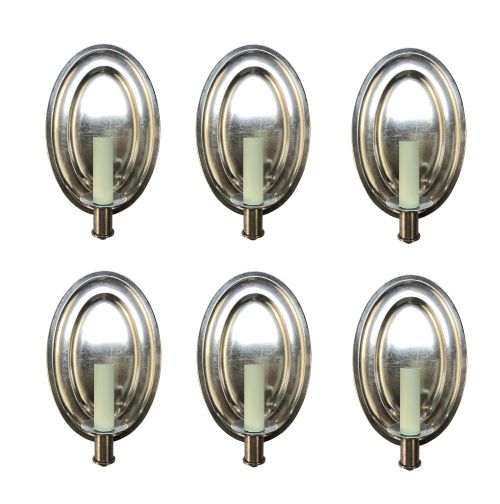
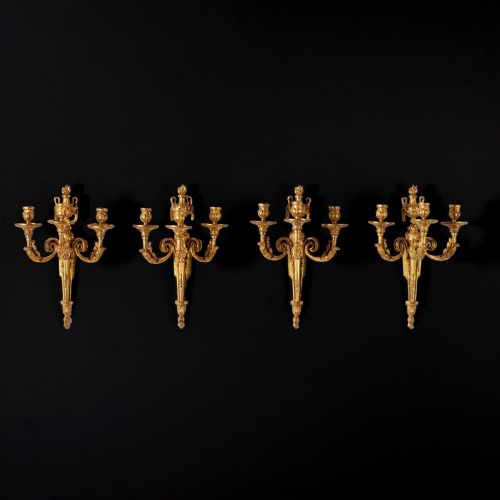
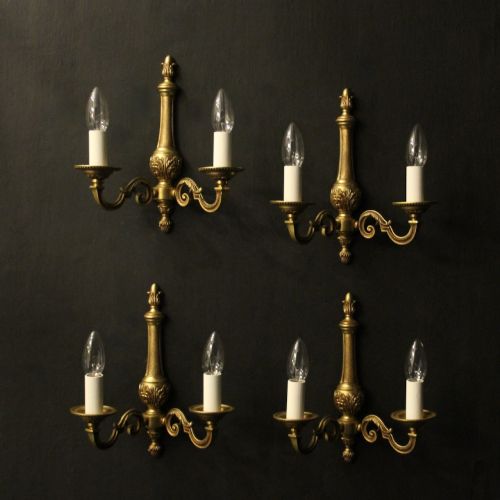
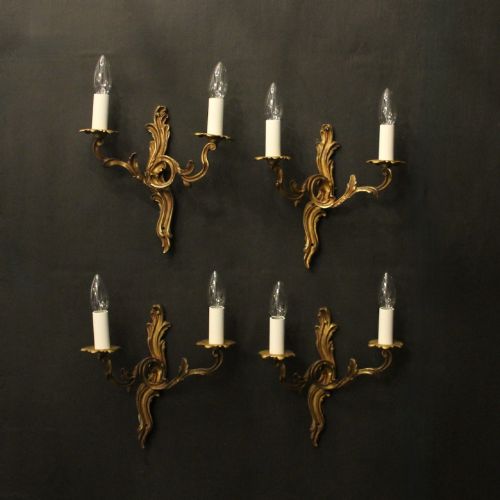
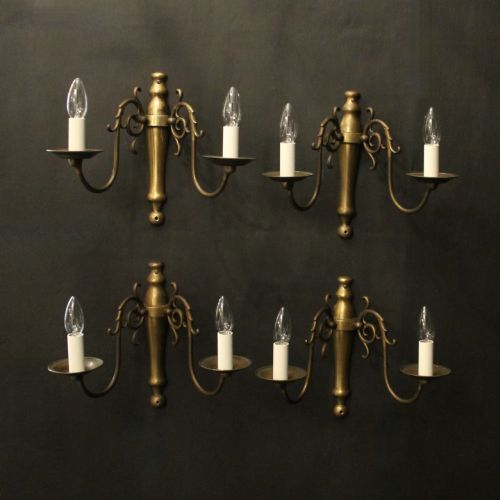
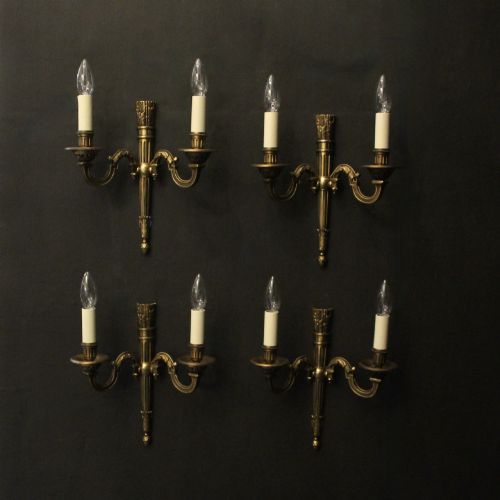
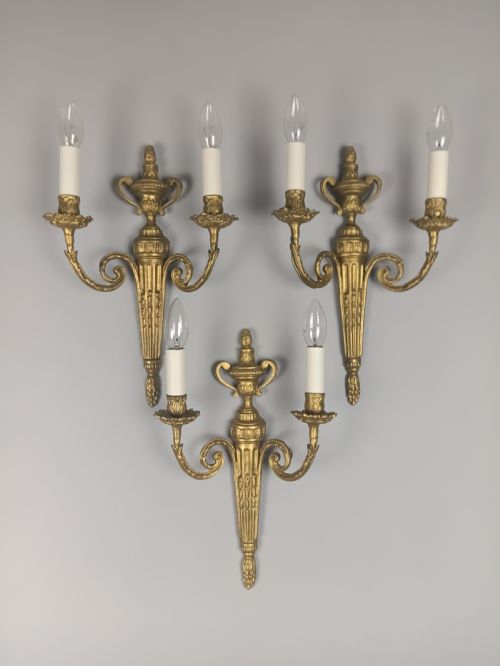
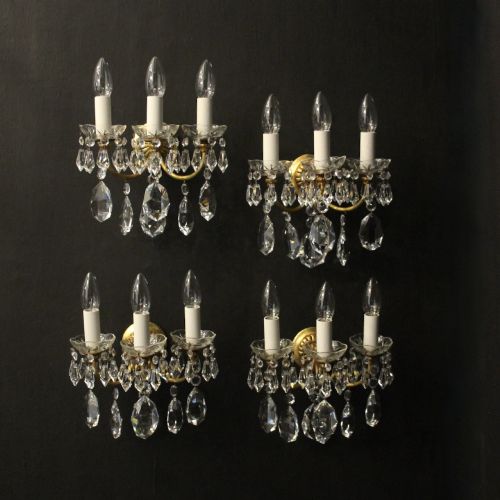
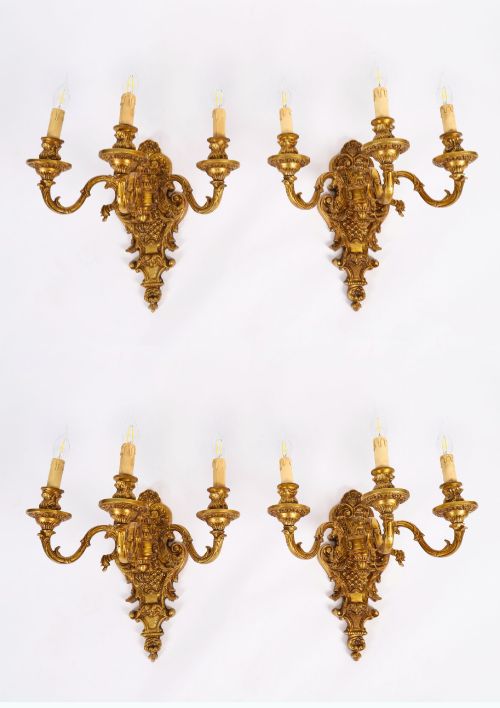
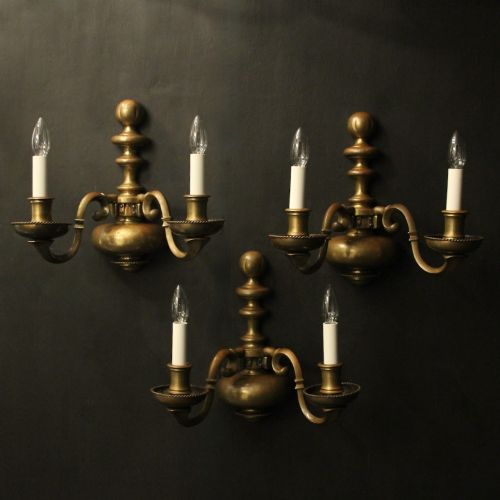
Antique Sconces Set
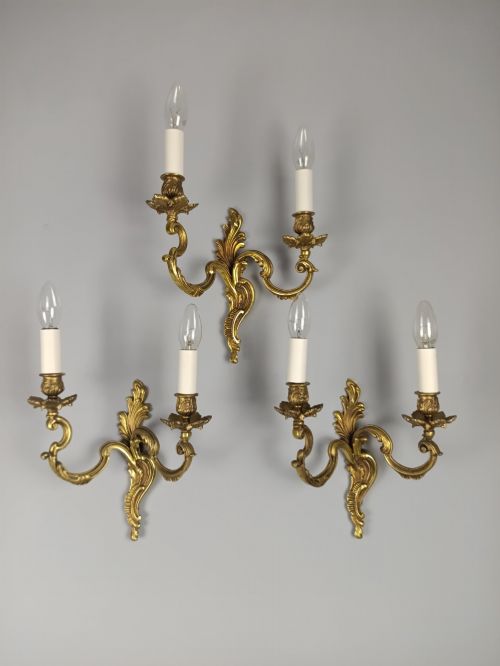
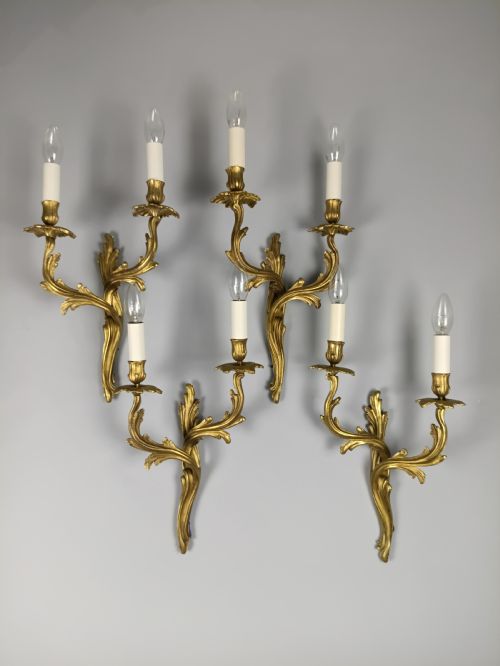
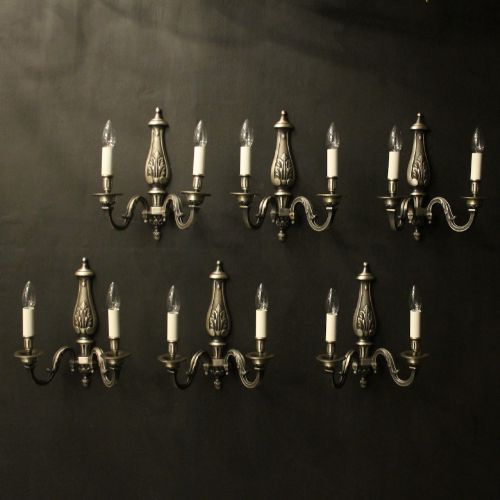
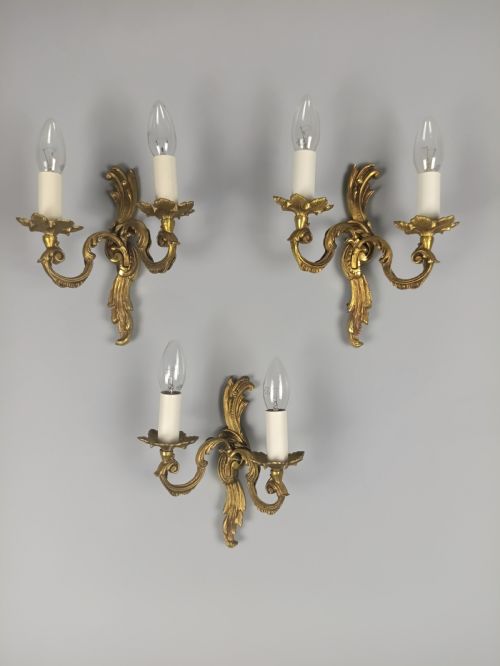
These antique sconces set options bring period illumination to a room, offering matched wall-mounted lighting for balanced interior schemes.
Antique Sconces Set
An antique sconces set provides matched pairs, trios, quartets, or larger groupings of wall-mounted lighting fixtures designed to distribute illumination evenly across a room. Buyers searching this phrase commonly encounter French and English pieces spanning the Victorian, Edwardian, and early twentieth-century periods, including the 1920s and 1930s.
The physical forms include twin-arm, triple-arm, and multi-branch light fittings alongside wall mirrors and chambersticks. Many examples originate from French workshops adhering to regional design idioms, while English variants tend to employ straightforward brass construction.
Matching sets range from small groups of three up to larger assemblies of six, seven, or eight units. These assemblies typically mount directly to living room, hallway, or dining room walls to function as primary or complementary light sources.
Materials and construction methods
Metal fabrication forms the foundation of these pieces, utilising brass, bronze, gilt bronze, ormolu, and silver plating over underlying base metals. Gilded brass and gilt bronze treatments involve applying thin layers of gold to metallic surfaces to create a lustrous reflective finish.
Glass and crystal elements frequently accompany the metal frames, taking the form of drops, shades, or moulded panels that refract the light. Wrought iron, pewter, and carved giltwood appear in specific regional styles, such as Florentine or rustic works, offering alternative surface textures.
Casting and chasing techniques shape the intricate floral, scroll, and figural motifs seen on Rococo and Neoclassical frames. Many fixtures undergo rewiring to meet contemporary electrical standards while retaining their original metallic structures.
Antique Sconces Set Retail Price Guide 2026
Typical asking prices for sconces set among the pieces listed under this phrase on Sellingantiques today, from the lower quarter to the upper quarter. They describe what is for sale here now, not the wider market.
Materials documented across the inventory include crystal, silver plating, wrought iron, and carved giltwood alongside traditional brass and bronze.
Distinctions in quality and execution
The depth and crispness of the chasing on bronze and ormolu surfaces separate finely finished items from simpler commercial castings. High-grade examples display sharp relief in acanthus leaves, cherubs, and urn motifs without softening of the fine lines.
Cohesion within the group dictates the integrity of a set, as matching patination and uniform wear across all pieces indicate they originated together. Mismatched components or replacement arms alter the visual balance when mounted on a wall.
The quality of the gilding and the weight of the cast metal components govern longevity and visual presence. Substantial brass and bronze mountings hold structural rigidity securely against the wall, whereas lighter alloys bend under tension.
The Antique Sconces Set Glossary
- Ormolu
- Gilded bronze produced by applying a mercury-gold amalgam to a bronze object and heating it to vaporise the mercury. This technique leaves a durable, rich golden coating characteristic of fine decorative metalwork.
- Applique
- A French term used interchangeably with wall sconce to describe a lighting fixture affixed directly to a vertical surface. These units often feature backplates designed to reflect candle or electric light.
- Rococo Revival
- A nineteenth-century design style drawing on mid-eighteenth-century French aesthetics, marked by asymmetrical scrollwork, shell motifs, and naturalistic curves. Sconces in this style display exuberant, flowing contours.
- Empire
- A Neoclassical design movement inspired by the art of classical antiquity and imperial Rome. Pieces from this vocabulary incorporate military trophies, sphinxes, laurel wreaths, and urns.
- Chamberstick
- A portable candle holder featuring a short shaft, a drip pan, and a handle for carrying from room to room. Some variants mount onto wall brackets to function as fixed sconces.
Antique Sconces Set: Frequently Asked Questions
How do I clean gilded brass wall lights?
Dust these fixtures gently with a soft, dry microfibre cloth to remove surface particles without disturbing the metallic finish. Avoid abrasive cleaning agents and chemical polishes, which strip away thin layers of gilding and vintage patination.
For stubborn grime, dampen the cloth slightly with plain water and dry the surface immediately afterwards. Regular gentle maintenance preserves the original lustre of the metal without harming historical finishes.
Can antique sconces be wired for electricity?
Many surviving pieces undergo professional rewiring to accommodate modern electrical standards and safe wall mounting. Electric lamp holders are integrated discreetly into the original candle nozzles or arms during the conversion process.
Qualified electricians should handle the installation to ensure the internal wiring safely matches household circuits. This adaptation allows fragile historical lighting to function securely in contemporary domestic settings.
What is the difference between ormolu and brass?
Brass is an alloy composed primarily of copper and zinc, valued for its warm metallic tone and workability. Ormolu specifically denotes bronze that has been coated with a layer of gold amalgam, producing a deeper and more radiant golden finish.
While solid brass can be polished to a bright shine, ormolu retains a specific historical surface depth achieved through mercury gilding. Sconces described as ormolu typically represent higher-end decorative production than standard brass alternatives.
How are wall sconces spaced in a room?
Spacing depends on the scale of the wall and the height of the ceiling, balancing visual weight across the room. Sconces in a set are usually mounted at eye level to prevent direct glare and to cast light evenly over surrounding furniture.
Pairs frame doorways, fireplaces, or large mirrors, while larger sets of four or six distribute evenly along extended wall expanses. Maintaining consistent height between each unit ensures a balanced composition.