

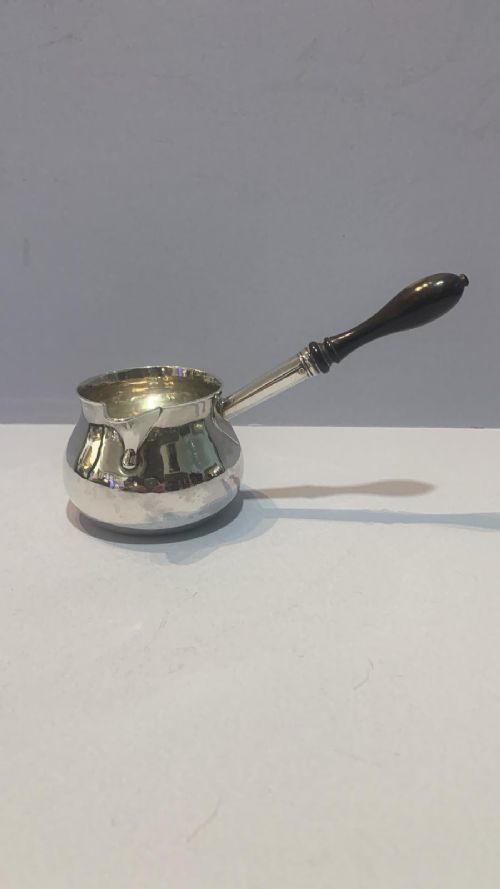


Antique Sauce Warmer
An antique sauce warmer is a clever table piece designed to keep gravies and sauces hot, and you are looking at practical vessels crafted for formal dining.
Antique Sauce Warmer
An antique sauce warmer encompasses specialised vessels like argylls, gravy warmers, brandy pans, and spoon warmers designed to maintain the temperature of table sauces during meals. When you browse this selection, you encounter forms ranging from Georgian brandy pans to Victorian silver plated argyles and novelty spoon warmers.
The material record spans sterling silver, solid silver, Old Sheffield plate, silver plate, copper, wood, and ebony, reflecting centuries of dining traditions. Many examples hail from the eighteenth and nineteenth centuries, displaying styles such as Georgian, George I, Victorian, and Arts and Crafts.
Serveware and tableware categories dominate the selection, offering functional objects that once sat on grand dining tables to serve hot gravy or warm brandy. These pieces showcase the evolution of domestic dining technology from the seventeen hundreds through to the early twentieth century.
Materials and construction methods
Silversmiths and metalworkers shaped these warmers using precious metals like sterling silver and solid silver, alongside early plating methods such as Old Sheffield plate and standard silver plate. Copper also appears in later Arts and Crafts pieces, bringing a warm reddish tone to the breakfast collection items.
Makers integrated insulating handles of ebony wood or standard wood to allow safe handling of heated metal vessels containing warm liquids. Complex forms like argylls required internal heating compartments or water jackets to keep sauces warm without scorching.
Antique Sauce Warmer Retail Price Guide 2026
Typical asking prices for sauce warmer among the pieces listed under this phrase on Sellingantiques today, from the lower quarter to the upper quarter. They describe what is for sale here now, not the wider market.
Victorian diners apparently required specialised heated vessels just for their spoons, proving that historical appetite for gadgetry knew no bounds.
Markers of distinction and craftsmanship
Quality rests in the crispness of heraldic crests engraved on plain bodies and the structural integrity of the internal heating chambers found in argyles. Pieces bearing clear hallmarks or attributed to known regional makers demonstrate superior workshop standards.
The choice of materials dictates the standing of the piece, with heavier gauge sterling silver and skillfully fused Old Sheffield plate commanding greater attention than later mass-produced plating. Well-preserved wooden and ebony handles secured tightly to metal bodies indicate careful preservation and superior original manufacture.
Padley Parkin And Staniforth·Samuel Blatchford
The Antique Sauce Warmer Glossary
- Argyle
- A specialised gravy warmer featuring an internal cylinder or jacket for hot water to keep sauces flowing smoothly. This design prevented the gravy from cooling and congealing during long meals.
- Old Sheffield plate
- A composite material made by fusing a thin sheet of silver to a thicker copper base. It was the precursor to electroplating and is identified by the subtle copper bleed visible at edges.
- Brandy warmer
- A small pan with a long handle used for heating spirits at the table. These vessels often accompanied desserts or medical drams in the eighteenth century.
- Spoon warmer
- A Victorian tableware vessel shaped like a shell, urn, or novelty form to hold hot water for warming silver spoons. Warm spoons prevented chilled desserts or sauces from dropping in temperature upon serving.
- Hallmark
- A stamp or series of stamps applied to precious metals indicating the maker, assay office, and year of testing. These marks provide definitive historical context for silver pieces.
Antique Sauce Warmer: Frequently Asked Questions
What is an argyll?
An argyll is a specific type of gravy warmer that utilises an internal chamber for hot water to keep sauces from cooling. This ingenious design ensured that rich gravies remained fluid throughout the course of a meal.
The name derives from the Duke of Argyll, who supposedly demanded his gravy be kept hot in this manner. They represent some of the most sophisticated engineering found in antique tableware.
How do you use a spoon warmer?
Victorian spoon warmers were filled with hot water to warm table spoons before serving chilled foods or sauces. This prevented the cold metal from cooling down delicate dishes upon contact.
They often took whimsical shapes such as nautilus shells or urns to add decorative flair to the sideboard. Today they make striking floral vases or desk tidies.
What is Old Sheffield plate?
Old Sheffield plate is an early technique where a thin layer of silver is mechanically fused to a copper core through heat and pressure. This method produces items with a rich warmth distinct from later electroplated wares.
Pieces made this way often reveal a faint line of copper along the rims where the silver sheet meets the base metal. This characteristic confirms the authentic fused plate process.
How do I clean antique silver warmers?
Cleaning antique silver and silver plate requires gentle polishing with a dedicated silver cloth to preserve the surface and any underlying plating. Avoid harsh abrasive dips that strip away historical patina and delicate engraving.
For pieces with wooden or ebony handles, keep moisture away from the joints to prevent the organic material from warping or splitting. Regular light dusting maintains the metal lustre safely.