





Antique Satire Art
Antique satire art brings biting social commentary and sharp wit onto the wall, offering a window into past political scandals and human folly.
Antique Satire Art
When you search for antique satire art, you encounter a range of framed prints, engravings, and original watercolours spanning the eighteenth, nineteenth, and early twentieth centuries. These works target political figures, societal trends, and human eccentricities with visual ridicule and clever caricature.
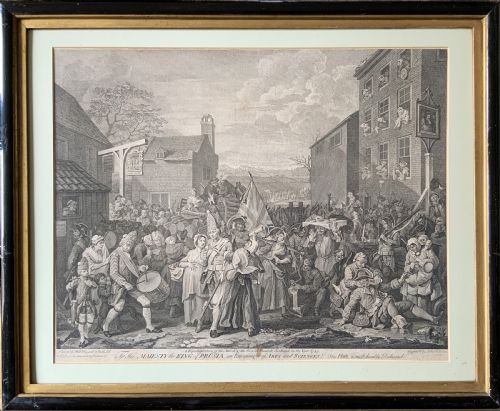
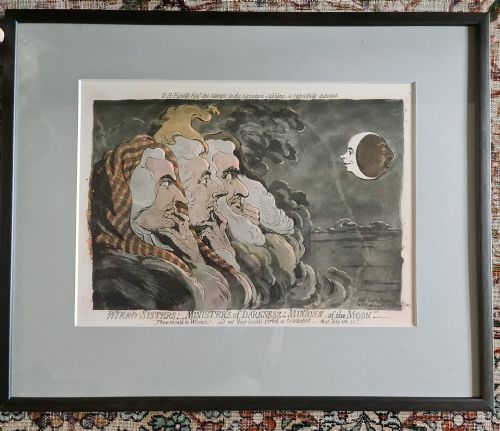
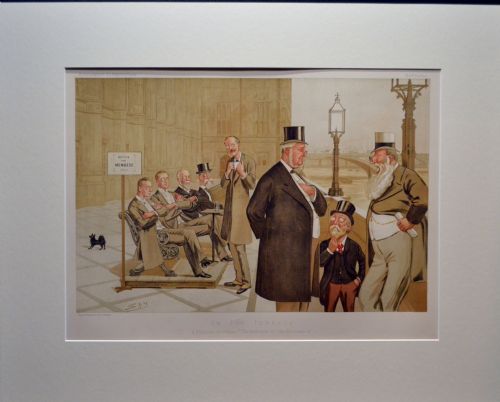
The pieces on this page are most commonly framed prints and copperplate engravings originating from the Georgian and Victorian eras. You will frequently find works by notable satirists like William Hogarth alongside Vanity Fair portraits and nineteenth-century political prints.
Subjects stretch from parliamentary politics and military commanders to everyday social observations, executed on paper and housed in period surrounds such as maple frames. Each piece captures the public humour and critical discourse of its specific decade.
Materials and Methods
The physical objects rely primarily on paper sheets carrying impressions made with carbon ink or copperplate engravings, occasionally enhanced with hand colouring. These are frequently paired with watercolour paints or ink sketches on paper.
Framing materials reflect the period of production, with wood and specifically maple frames providing the traditional boundary for display. The combination of durable ink on quality paper ensures these delicate social commentaries survive centuries later.
Antique Satire Art Retail Price Guide 2026
Typical asking prices for satire art among the pieces listed under this phrase on Sellingantiques today, from the lower quarter to the upper quarter. They describe what is for sale here now, not the wider market.
Listings feature works spanning from the eighteenth century through to the early twentieth century, utilising paper, ink, watercolour, and maple wood.
Assessing Quality
Quality rests on the crispness of the impression from the copperplate and the skill of any subsequent hand colouring. Sharp lines in an engraving distinguish a primary strike from a later, worn reproduction.
The significance of the subject matter and the reputation of the artist or engraver elevate certain pieces above standard pictorial records. Original watercolours and direct period impressions hold greater artistic weight than later copy prints.
William Hogarth·Luke Sullivan·E.L. Riepenhausen·Thomas Rowlandson·Thomas Worth
The Antique Satire Art Glossary
- Caricature
- A portrait that exaggerates or distorts a person's physical characteristics for comic or satirical effect. This form remains central to political commentary in graphic art.
- Copperplate engraving
- A printmaking technique where an image is incised into a copper sheet, which is then inked and pressed onto paper. It allows for exceptional fine detail in satirical prints.
- Hand colouring
- The application of watercolour or tint by hand onto a printed monochrome image. This adds vividness and individual character to published plates.
- Portfolio
- A collection of loose prints or engravings kept together as a set. Publishers often released satirical works in this format for subscribers.
Antique Satire Art: Frequently Asked Questions
What is antique satire art?
Antique satire art comprises prints, engravings, and original watercolours designed to mock contemporary politics, society, and human behaviour. These works utilise caricature and wit to document historical attitudes.
Produced largely during the eighteenth and nineteenth centuries, these pieces served as popular commentary and wall decoration. They capture the public debates and scandals of past eras through visual storytelling.
How were these satirical prints displayed?
Many of these pieces were framed for wall display in domestic or public spaces, often utilising wood or maple frames. Some originated as portfolio collections before being individually framed.
Framing protected the fragile paper from environmental damage while allowing the owner to showcase their wit and political alignment to visitors.
How do I care for paper satire art?
Paper and watercolour require protection from direct sunlight to prevent the fading of inks and pigments. Maintaining a stable indoor environment avoids moisture damage to both the paper and the frame.
Using conservation-grade mounting materials prevents acid transfer and preserves the integrity of the antique sheet over decades of display.
How do I distinguish eighteenth-century prints from later copies?
Eighteenth-century prints typically exhibit the plate mark indentation left by the copperplate during the printing press operation. The quality of the paper stock and the sharpness of the ink lines also indicate period production.
Later copies often lack the tonal depth of early impressions and may show modern printing dots under magnification, separating them from genuine period engravings.