
Antique Sapphire Ring 18ct
An antique sapphire ring 18ct brings together vibrant blue stones and durable gold in surviving Victorian, Edwardian, and Art Deco cluster and trilogy designs.
Antique Sapphire Ring 18ct
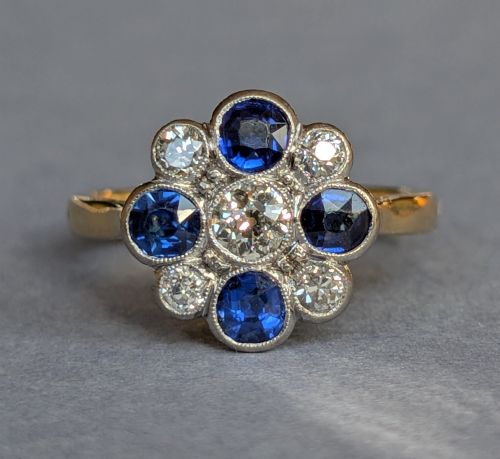
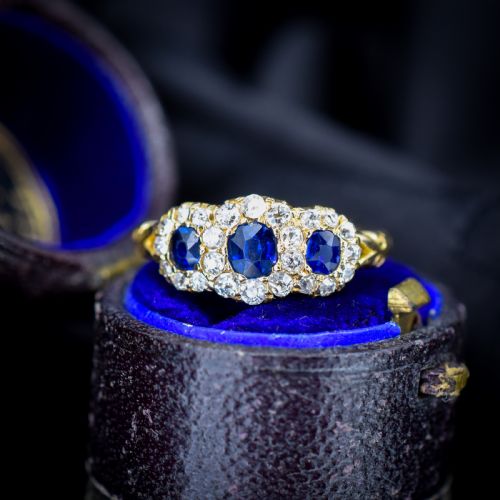
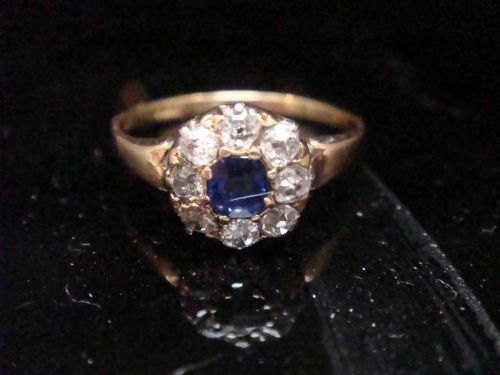
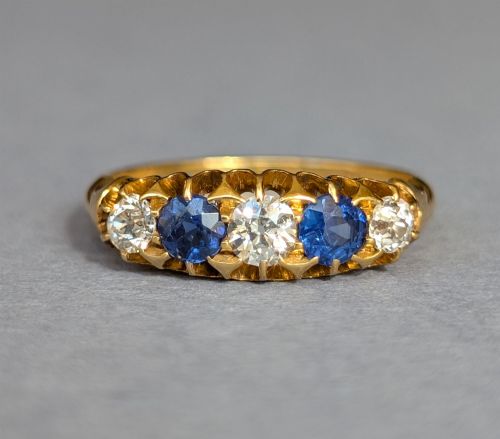
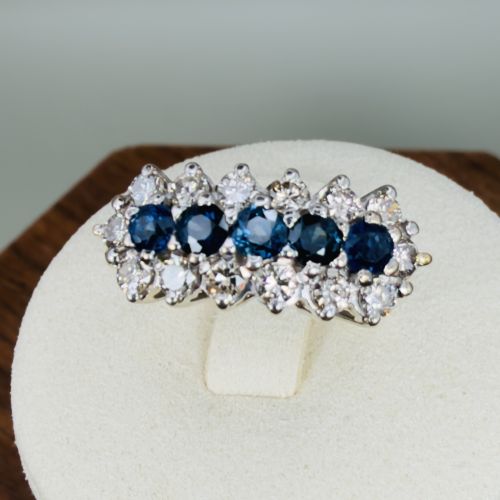
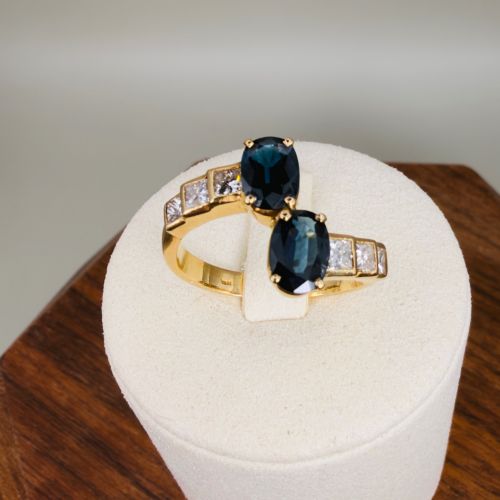
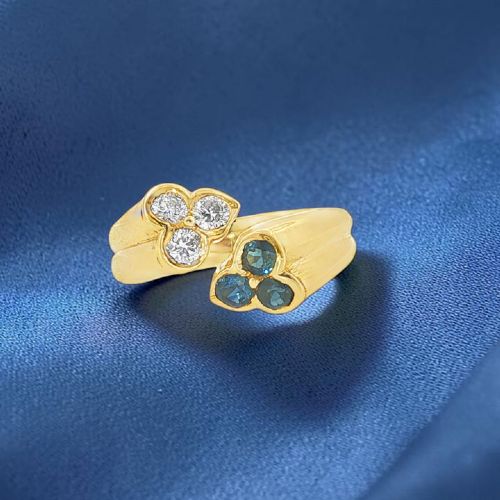
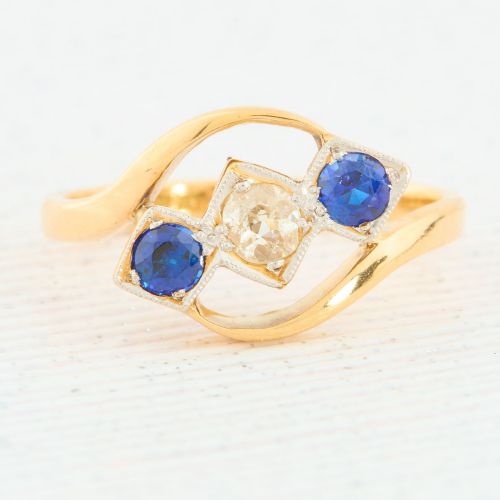
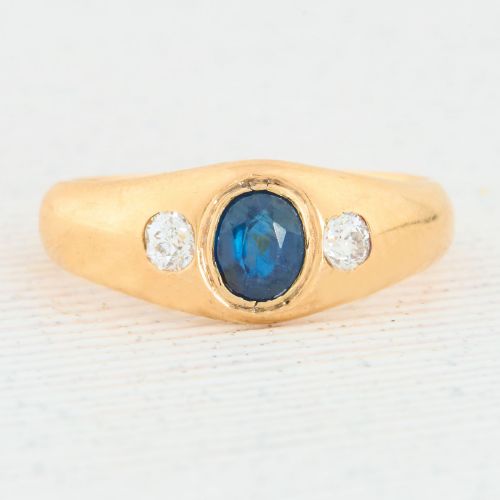
When searching for an antique sapphire ring 18ct, a buyer is examining hand-finished jewellery produced from the late Victorian period through the Edwardian era and into the Art Deco years. The surviving inventory spans multiple distinct forms including traditional cluster arrangements, multi-stone trilogy settings, boat-shaped mounts, and flush gypsy styles.
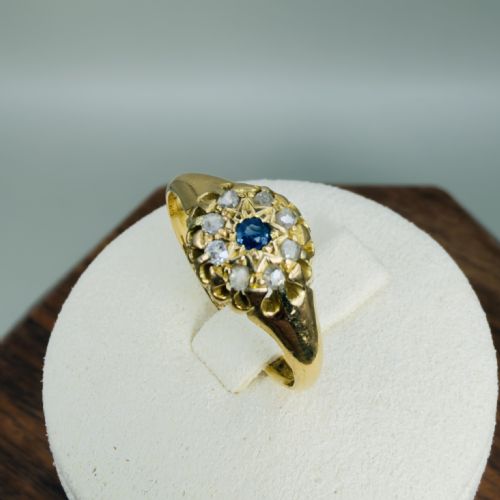
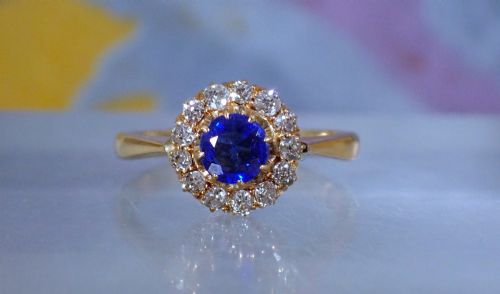
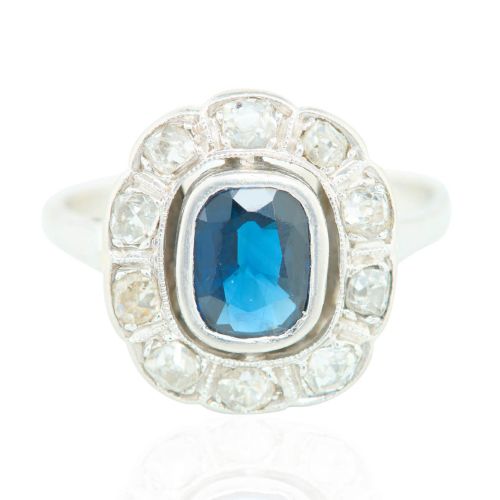
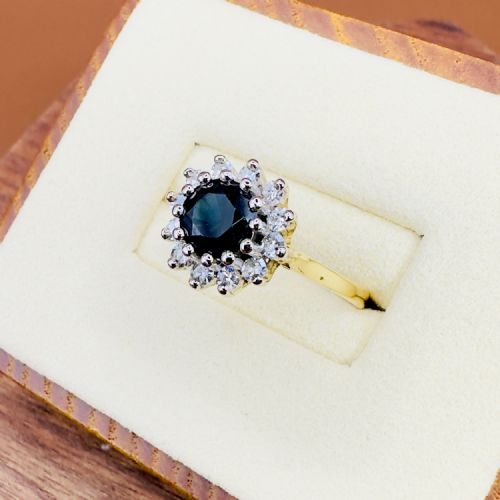
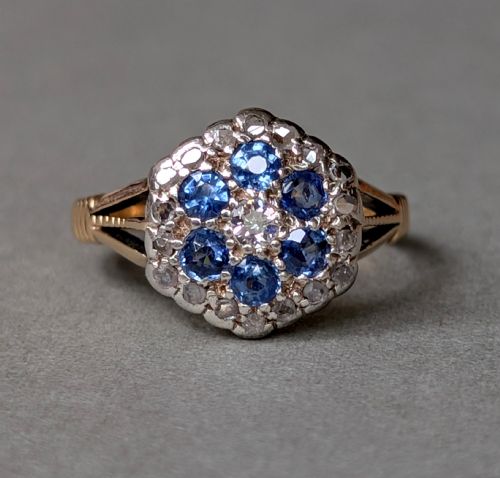
Cluster and daisy configurations dominate the selections available, bringing together central blue corundum stones surrounded by sparkling diamond borders. These designs reflect the changing aesthetic priorities of their original makers across the nineteenth and twentieth centuries.
Examples from the archive and current listings also incorporate rarer regional variations such as French white gold mountings and regional English assay office hallmarks. Buyers encounter pieces originating between the late nineteenth century and the mid twentieth century, illustrating the enduring popularity of this gemstone combination.
How they were made
The foundation of these pieces relies upon 18ct gold, utilised in both traditional yellow hues and bright white alloys, often paired with platinum sections in later Art Deco creations. Goldsmiths shaped the metal through casting and hand-working to secure intricate claw settings, bezel mounts, and pavé surfaces.
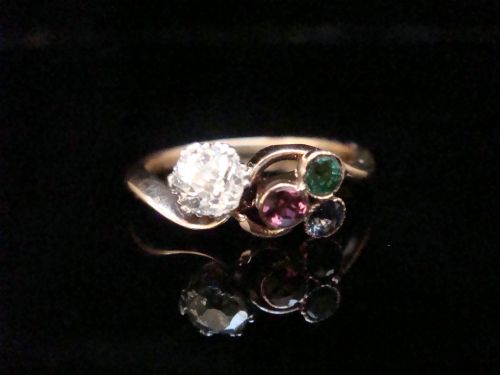
Gemstones incorporated into the mounts include natural sapphires alongside old mined cut diamonds, single cut stones, and accent gems such as rubies, emeralds, and tourmalines. Master lapidaries cut the central blue stones into oval, round, cushion, and calibre shapes to fit the geometric demands of each specific mounting.
What varies in quality
The standard of an antique sapphire ring 18ct depends fundamentally on the geological origin, clarity, and saturation of the central corundum. Stones displaying vivid blue hues without heavy inclusions sit at the upper end of the spectrum compared to darker basaltic varieties.
Craftsmanship in the metalwork and the precision of the diamond setting further dictate the overall merit of a piece. Delicate claw work, symmetrical cluster arrangements, and crisp hallmarks from recognised assay offices demonstrate superior historical manufacture.
The Antique Sapphire Ring 18ct Glossary
- Cluster ring
- A setting featuring a prominent central gemstone encircled by a ring of smaller accent stones, frequently diamonds. This layout maximises visual impact and light reflection.
- Old mined cut
- A vintage diamond cutting style characterised by a cushion outline, high crown, small table, and deep pavilion. These stones were shaped by hand before modern symmetrical standards were established.
- Gypsy ring
- A style where stones are flush-set directly into a thick, tapered metal band rather than held in raised claws. This technique provides durability for daily wear.
- Trilogy ring
- A mounting displaying three principal stones set in a row, traditionally representing the past, present, and future. They frequently combine sapphires with flanking diamonds.
- Calibre cut
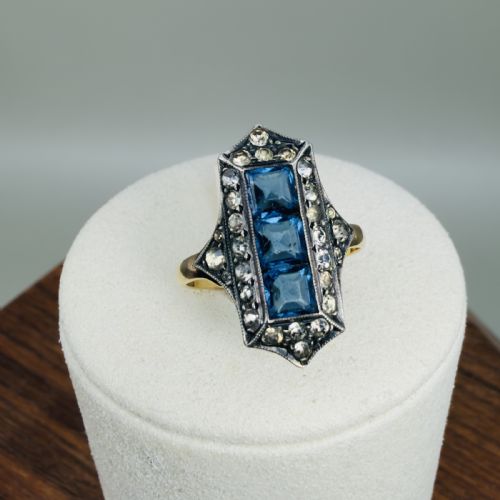
- Gemstones specifically shaped with flat edges to fit tightly together within a geometric channel or mosaic pattern. This technique is typical of Art Deco design.
Antique Sapphire Ring 18ct: Frequently Asked Questions
Are these rings suitable for daily wear?
Sapphire rates high on the Mohs hardness scale, making it durable enough for regular use when secured properly in sturdy gold or platinum settings. However, antique pieces require thoughtful care to protect delicate older claw work and surrounding accent stones.
Owners should remove jewellery during strenuous physical tasks and cleaning to prevent unnecessary wear. Periodic inspection by a professional jeweller ensures the security of the central gems.
What is the difference between Victorian and Art Deco styles?
Victorian designs often embrace romantic motifs such as floral daisy clusters, gypsy settings, and serpentine bands executed in warm yellow gold. These pieces highlight organic curves and traditional hand-carved detailing.
Art Deco creations shift toward strict geometric symmetry, utilising platinum and white gold to create sharp lines, target rings, and calibre-cut sapphire arrangements. This later aesthetic reflects the modernist movements of the 1920s and 1930s.
How should I clean my antique sapphire ring?
Gentle cleaning involves soaking the piece in warm water mixed with a mild dish soap and using a very soft brush to remove accumulated oils. Harsh ultrasonic cleaners can damage fragile antique settings or compromise treated stones.
Thorough rinsing and drying with a lint-free cloth restore the brilliance of both the gold and the faceted gems. Professional cleaning is recommended for delicate multi-stone clusters.