






Antique Rug Pouch
An antique rug pouch brings nomadic tribal artistry into the home through finely woven bags created for daily desert and mountain life.
Antique Rug Pouch
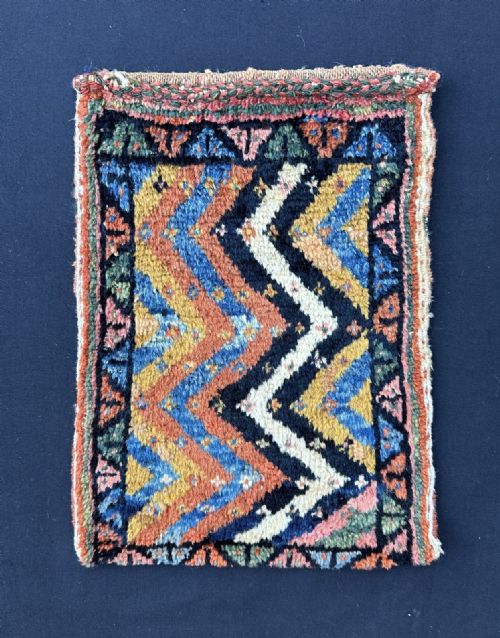
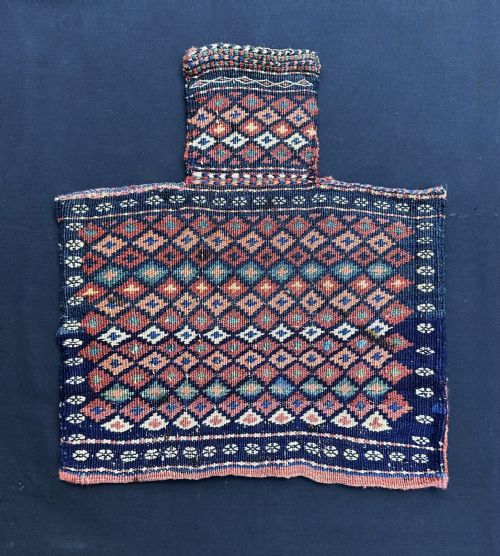
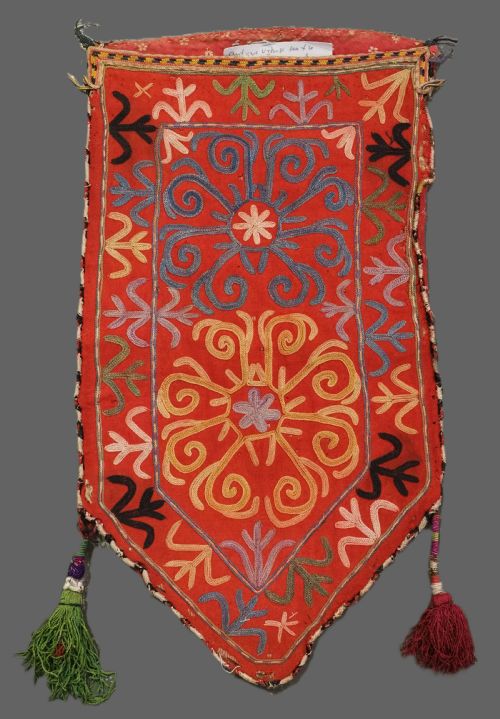
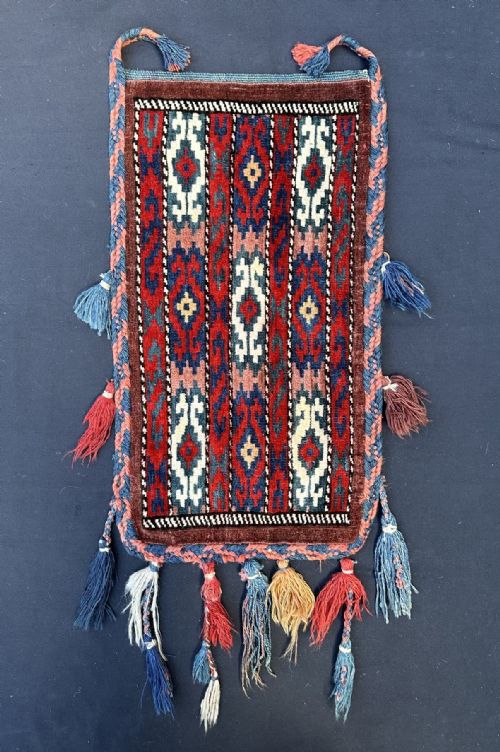
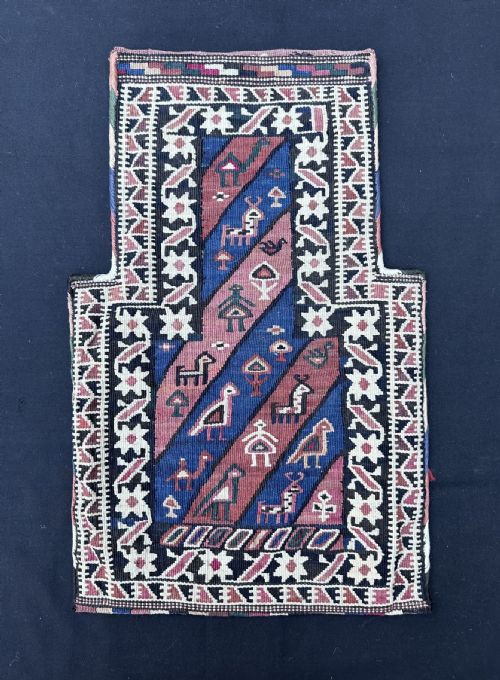
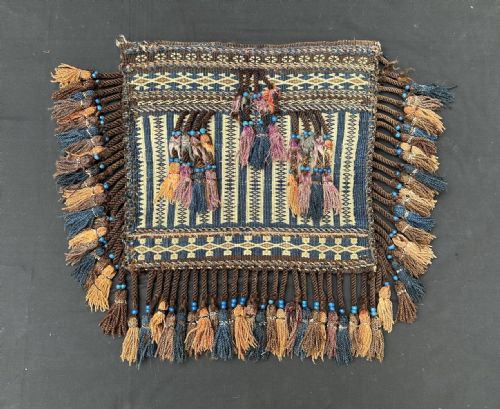
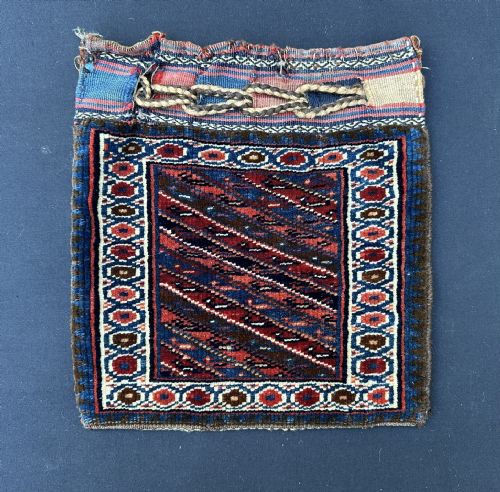
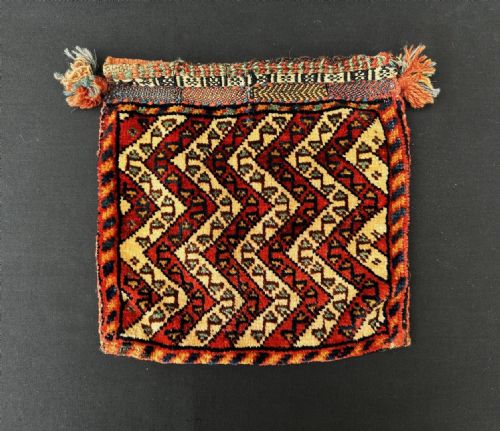
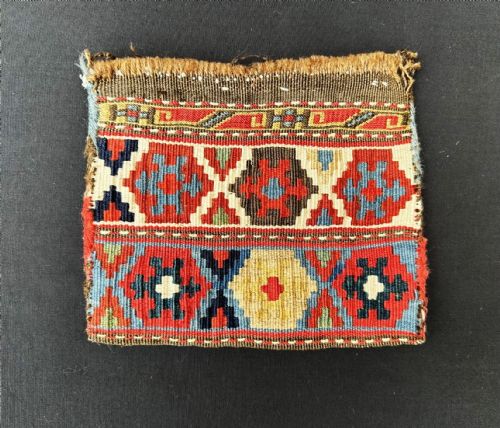
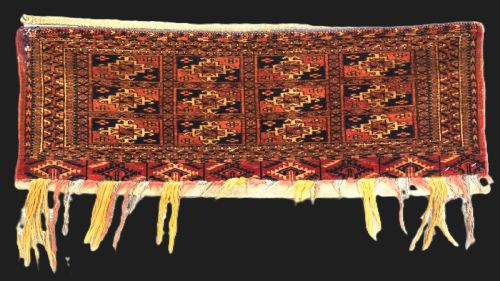
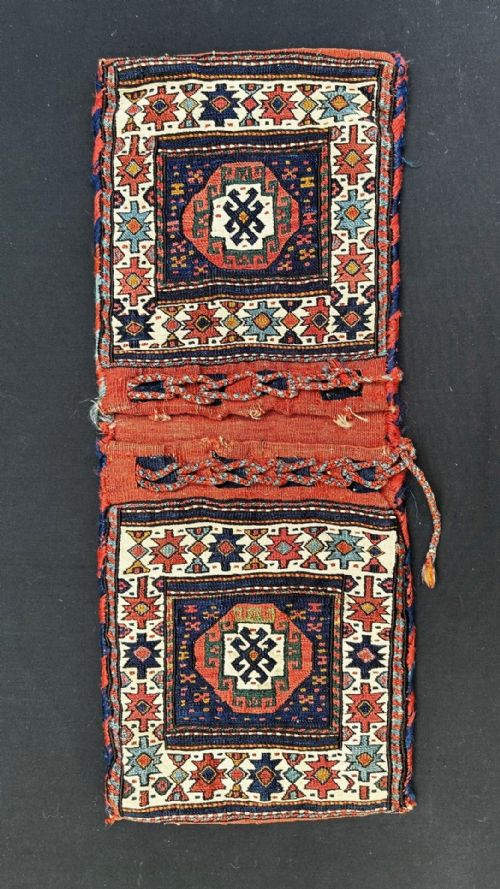
When you examine an antique rug pouch, you are looking at utilitarian textile containers woven by tribal and nomadic groups across Persia, Central Asia, and the Caucasus. These pieces include vanity bags, salt bags, spindle bags, and storage sacks produced to serve practical functions within tribal households and pastoral camps. The examples met on this page span from the mid nineteenth century through to the early twentieth century, reflecting distinct regional weaving traditions.
Tribal weavers from groups such as the Qashqa'i, Baluch, Afshar, Yomut, and Tekke created these textiles using traditional flatweave and pile techniques. Each format served a specific purpose, from holding salt or spindle equipment to storing personal items or small household possessions. Many survive with their original plain weave backs intact, offering a complete record of nomadic textile utility.
How they were made
Makers constructed these textiles predominantly from hand-spun wool and cotton foundations, often dyed with natural colourants that produced deep, enduring hues. Certain Central Asian examples integrate silk elements or incorporate decorative embellishments such as glass beads and cowrie shells into the textile structure.
Weavers utilised techniques including soumak work and banded weft designs alongside traditional knotting to build sturdy, functional containers. These methods ensured the bags could withstand daily handling during nomadic migrations while maintaining intricate tribal geometric and figurative patterns.
Antique Rug Pouch Retail Price Guide 2026
Typical asking prices for rug pouch among the pieces listed under this phrase on Sellingantiques today, from the lower quarter to the upper quarter. They describe what is for sale here now, not the wider market.
Some weavers stitched cowrie shells directly onto the textile, believing the bright shells protected the pouch contents from misfortune.
What varies in quality
The standard of an antique rug pouch rests on the fineness of the weave, the clarity of the tribal design, and the integrity of the natural dyes. Superior pieces demonstrate exceptional precision in structural execution and a balanced harmony of colour across the surface.
Another measure of quality is the survival of complete original elements, such as matching backs, braided hanging loops, and intact side finishes. Pieces that retain their full construction provide a truer representation of authentic tribal craftsmanship.
The Antique Rug Pouch Glossary
- Chanteh
- A small tribal vanity bag or container used by nomads for carrying personal possessions. These small bags often display sophisticated pile or flatweave designs.
- Torba
- A wide tribal storage bag traditionally hung on the walls of a yurt or tent. They frequently feature repeated guls or medallion motifs particular to Turkmen weavers.
- Soumak
- A flatweave technique involving wrapping weft threads over and under warp threads in a diagonal direction. This method produces a durable fabric with a textured, herringbone-like surface on the face.
- Igsalyk
- A specialised Turkmen spindle bag designed to hold spinning tools and wool. These narrow pouches often terminate in braided hanging cords.
- Gul
- A repeated octagonal medallion motif used extensively in Turkmen and Central Asian carpet and bag design. Each tribal group adapted these primary symbols with distinct variations.
Antique Rug Pouch: Frequently Asked Questions
What were antique rug pouches used for?
Nomadic tribes utilised these textile pouches for storing salt, transporting spindles, holding vanity items, and keeping small personal belongings secure during seasonal migrations.
They hung inside tents or served as pack bags on animals, combining everyday utility with distinctive tribal artistry.
How do I identify different tribal origins?
Distinguishing origins depends on recognising specific structural patterns, colour palettes, and knotting techniques characteristic of regional groups such as the Afshar, Baluch, or Qashqa'i.
Motifs and border arrangements often reflect the specific traditions passed down within distinct tribal confederacies.
How should I display an antique pouch at home?
These textiles can be mounted securely on a wall using a padded sleeve or displayed flat within a protective frame to prevent structural strain.
Keeping them away from direct sunlight preserves the natural dyes and integrity of the wool fibres.
What dates are typical for these pieces?
The pieces available generally date from the mid nineteenth century up to the early twentieth century, capturing a period before synthetic dyes became widespread.
Exact dating relies on examining material wear, dye types, and structural characteristics typical of specific decades.