



Antique Ruby Trilogy Ring
An antique ruby trilogy ring brings together three stones of rich red and diamond brilliance in gold or platinum settings.
Antique Ruby Trilogy Ring
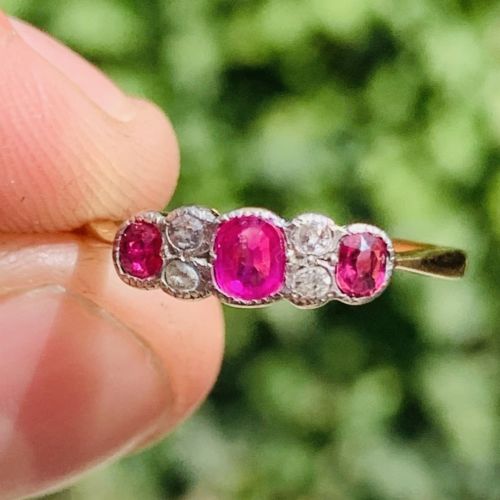
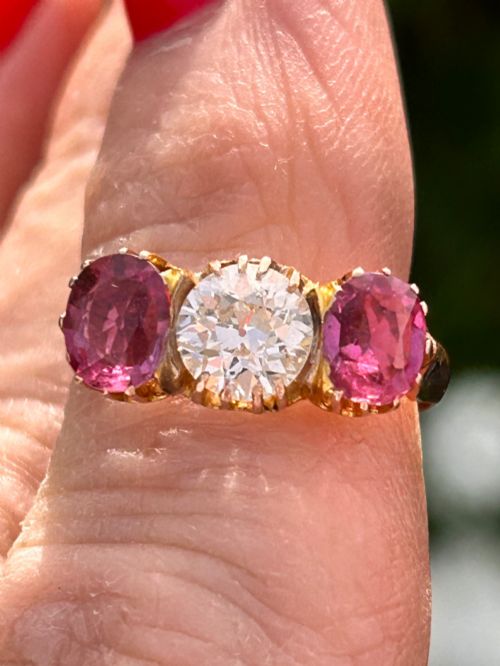
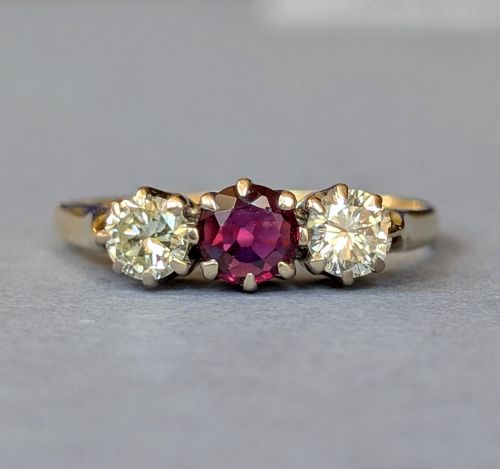
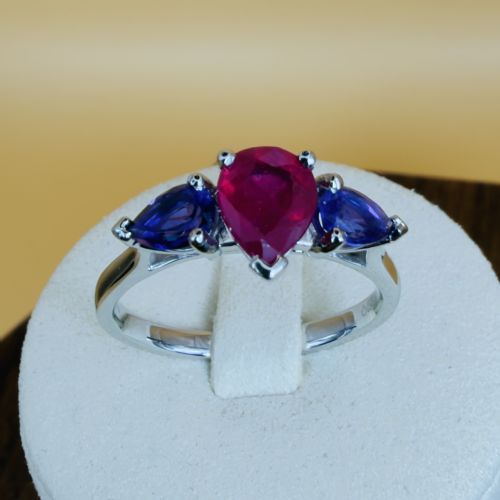
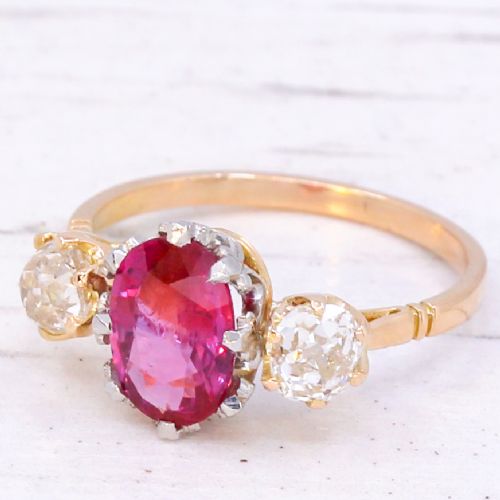
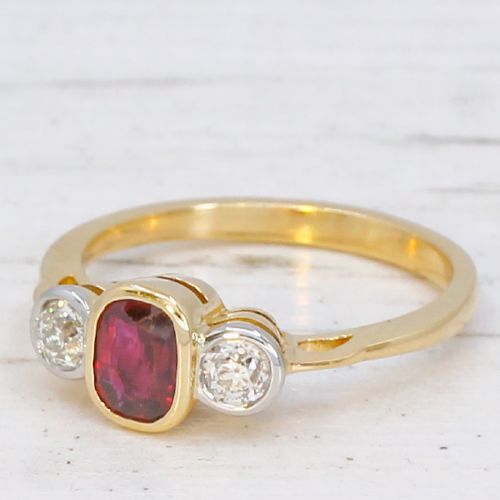
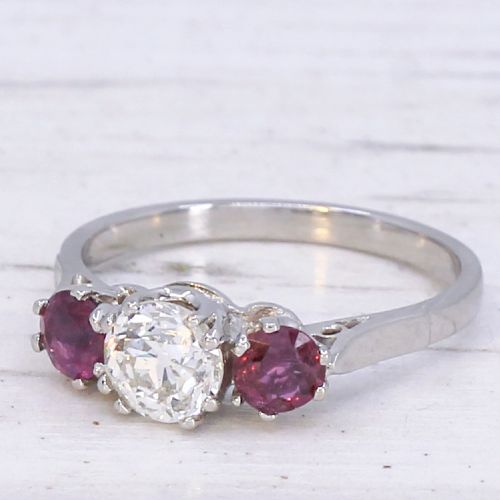
An antique ruby trilogy ring presents three stones set across the finger, traditionally signifying past, present and future. These pieces appear frequently in Victorian, Edwardian and Art Deco configurations.
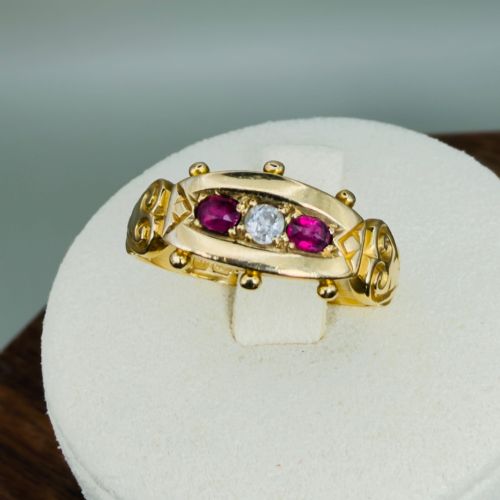
The most common form on this page pairs a central ruby with flanking diamonds, or vice versa, mounted on a polished metal band. Makers utilised traditional claw settings, starburst gypsy mounts and carved half-hoop designs.
Origins span the nineteenth century through the mid-century decades, encompassing Victorian, Edwardian and vintage periods. Birmingham and Chester assay offices frequently stamp these pieces on eighteen-carat gold and platinum.
How they were made
Goldsmiths worked primarily with eighteen-carat yellow gold, rose gold and platinum to house the gemstones securely. Metalwork often includes detailed shoulders, gypsy starburst engravings and robust band construction.
Gemstones feature old-cut diamonds alongside natural rubies, sometimes accompanied by unheated or Burmese stones. Cutters shaped these stones by hand to maximise light return within period-specific mounts.
Antique Ruby Trilogy Ring Retail Price Guide 2026
Typical asking prices for ruby trilogy ring among the pieces listed under this phrase on Sellingantiques today, from the lower quarter to the upper quarter. They describe what is for sale here now, not the wider market.
Assay offices in Birmingham and Chester appear frequently on these items, alongside unheated and Burmese gemstone origins.
What varies in quality
The distinction in quality rests upon the depth of the ruby colour and the lively brilliance of the old-cut diamonds. Finer stones display superior saturation and transparency without visible interruption to the crystal.
Construction standards differ between heavier carved half-hoop mounts and simpler bands. Substantial metal weight and crisp hallmark stamps indicate careful workshop origin and better preservation.
The Antique Ruby Trilogy Ring Glossary
- Trilogy ring
- A ring featuring three principal stones set in a row across the finger. This layout typically places rubies and diamonds side by side.
- Old cut
- A diamond facet style cut by hand before modern machinery predominated. These stones exhibit smaller tables and high crowns that catch candlelight effectively.
- Gypsy setting
- A mounting style where stones sit flush into the thickened band of the ring. Starburst engravings often radiate outwards from the flush metal.
- Half-hoop
- A ring design where stones span the upper arc of the finger. Carved half-hoops incorporate scrollwork or textured metal between the gems.
- Hallmark
- Official marks stamped into precious metal indicating the assay office, metal purity and year of manufacture. These stamps help verify the era of the piece.
Antique Ruby Trilogy Ring: Frequently Asked Questions
How do I identify a Victorian ruby ring?
Victorian rings often display eighteen-carat yellow or rose gold alongside old-cut diamonds and deep red rubies. Look for characteristic maker marks and Birmingham or Chester assay stamps.
Many nineteenth-century examples utilise gypsy settings or carved half-hoop structures. These methods of construction reflect the prevailing hand-working techniques of the period.
Can I wear an antique trilogy ring daily?
Daily wear is possible provided the ring receives sensible care and regular checks by a professional jeweller. Eighteen-carat gold and platinum offer good durability for everyday use.
Consider removing the ring during heavy manual tasks to protect the settings. Rubies and diamonds are hard minerals, but the surrounding metal benefits from careful handling.
What is an old-cut diamond?
An old-cut diamond is a vintage stone shaped by hand rather than by automated machinery. These stones possess smaller tables and deeper pavilions than modern brilliant cuts.
They produce a distinctive softer twinkle under ambient light sources. This optical characteristic helps date rings from the nineteenth and early twentieth centuries.