

Antique Rotating Stand
An antique rotating stand brings clever motion to everyday surfaces, offering instant access to books or dining dishes.
Antique Rotating Stand
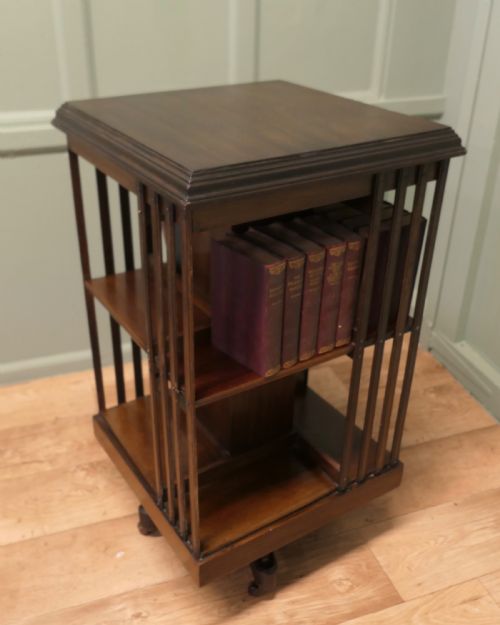
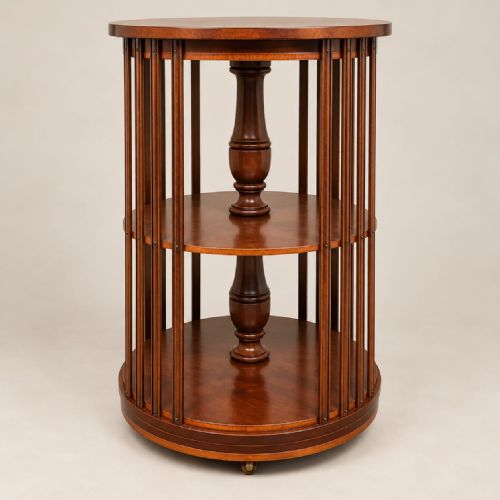
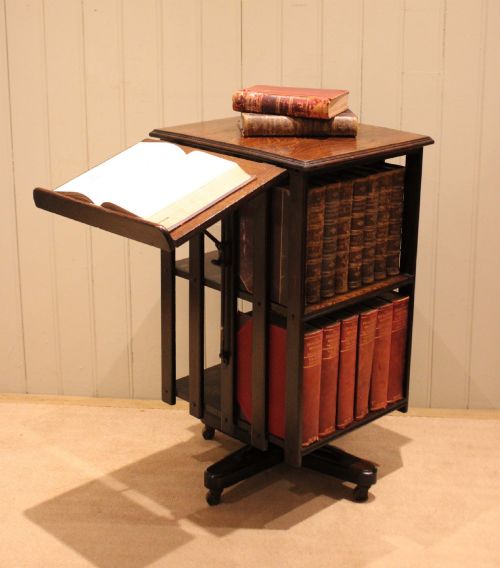
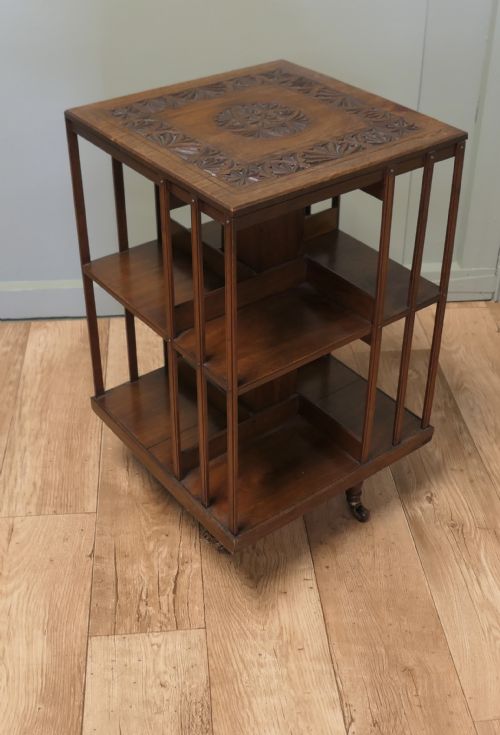
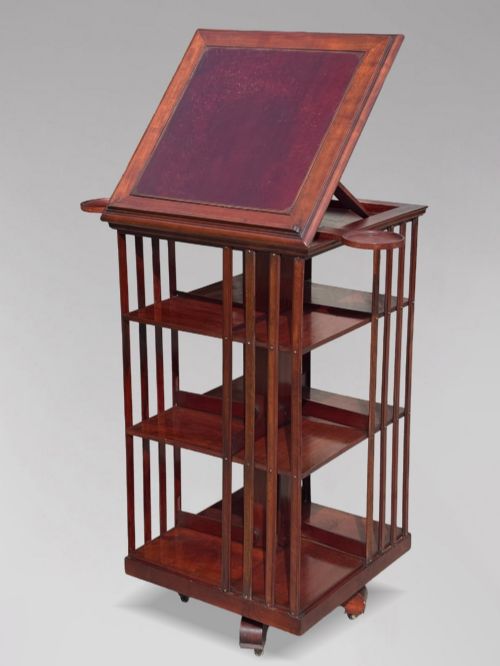
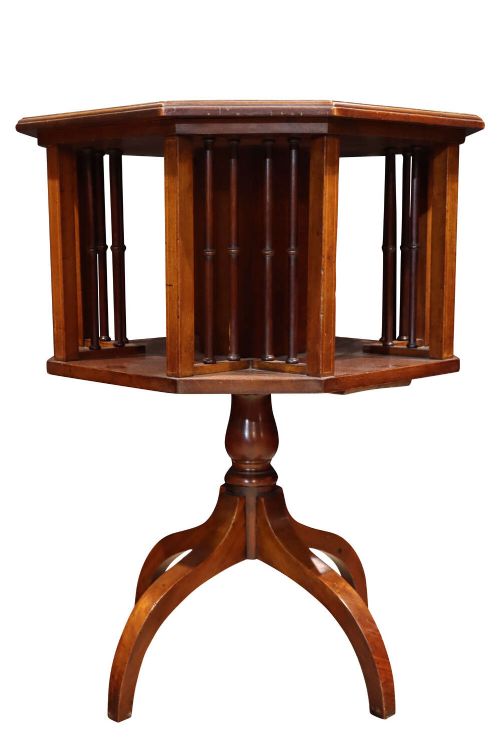
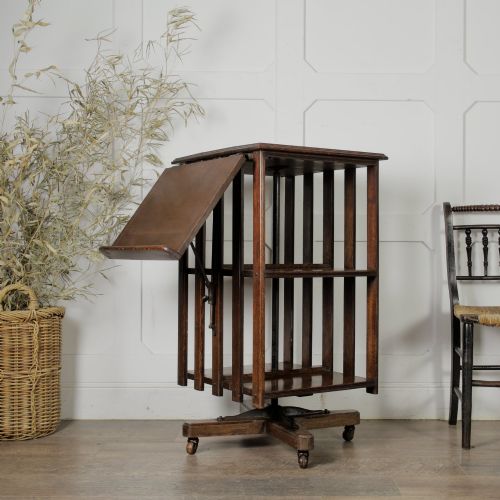
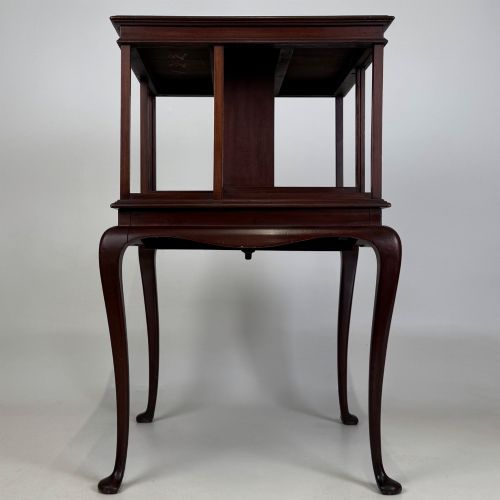
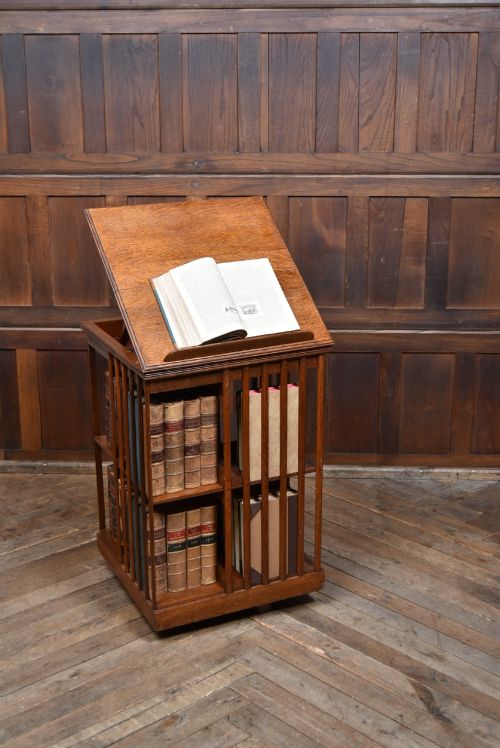
When you search for an antique rotating stand, you encounter a clever piece of furniture designed to turn smoothly on a fixed base. The selections here predominantly span the Victorian, Edwardian, and Georgian periods, showcasing practical ingenuity in domestic design.
Origins range from English workshops to French ateliers, with specific pieces displaying regional styles like Art Nouveau or Queen Anne. Each design translates rotational mechanics into domestic utility, whether for a library, a dining room, or a drawing room.
How they were made
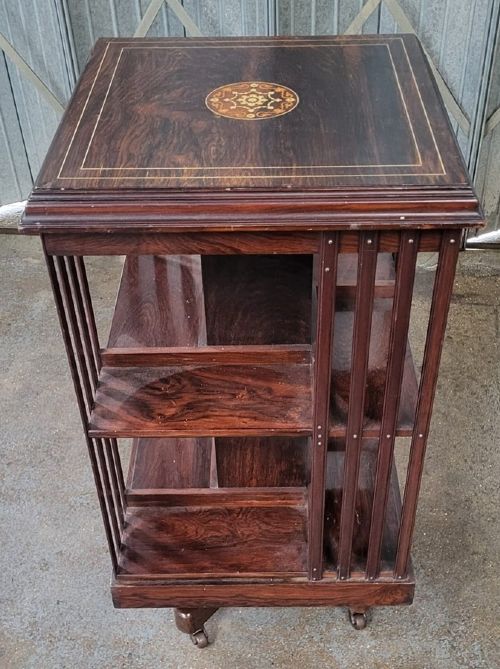
Cabinet makers utilised dense hardwoods like mahogany, oak, and walnut to build the primary structures, ensuring the framework could support heavy loads of books or serving dishes. Satinwood inlay and intricate marquetry frequently decorate the exterior surfaces, adding visual contrast through contrasting timber veneers.
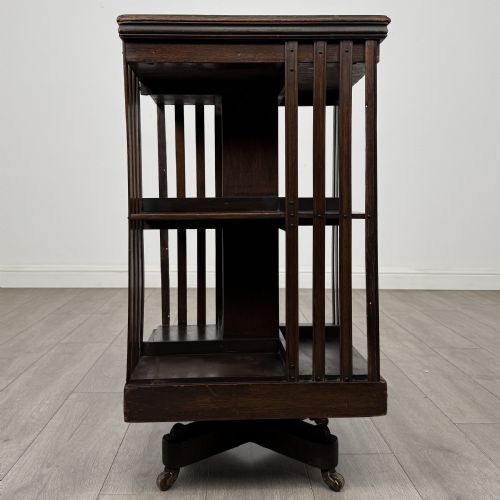
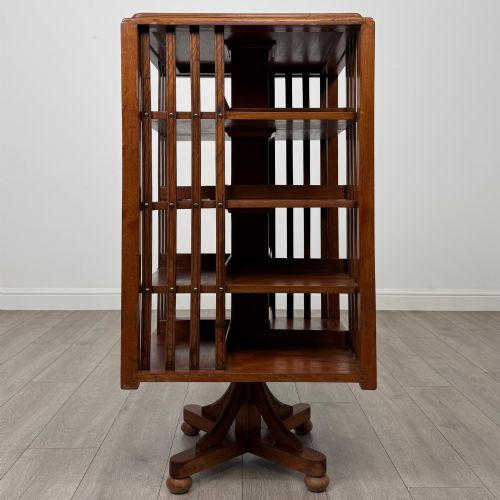
Internal rotating mechanisms often combined turned wood with brass and iron components to achieve a smooth, friction-free spin. Joinery techniques such as dovetailed drawers and slatted sides provided the necessary structural rigidity to withstand the constant torsion of turning.
Antique Rotating Stand Retail Price Guide 2026
Typical asking prices for rotating stand among the pieces listed under this phrase on Sellingantiques today, from the lower quarter to the upper quarter. They describe what is for sale here now, not the wider market.
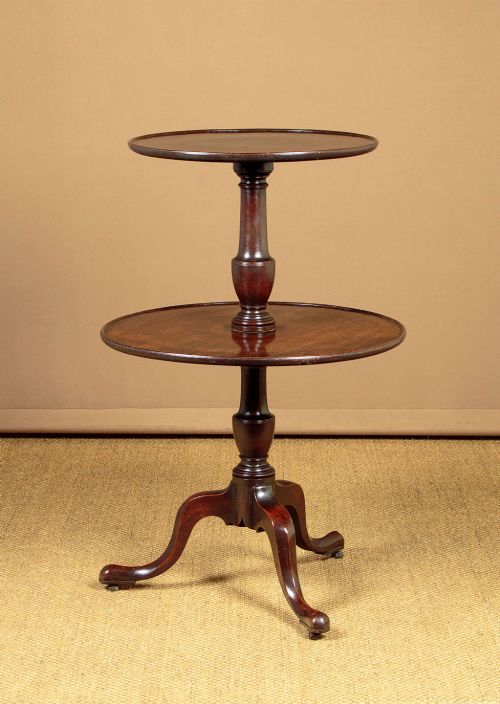
Early dining accessories let diners pass the mustard without breaking conversation.
What varies in quality
The distinction between tiers rests upon the precision of the hidden internal pivot mechanism and the smoothness of the rotation. Superior examples maintain a stable, level spin without lateral wobble, reflecting expert carpentry in the hidden axis.
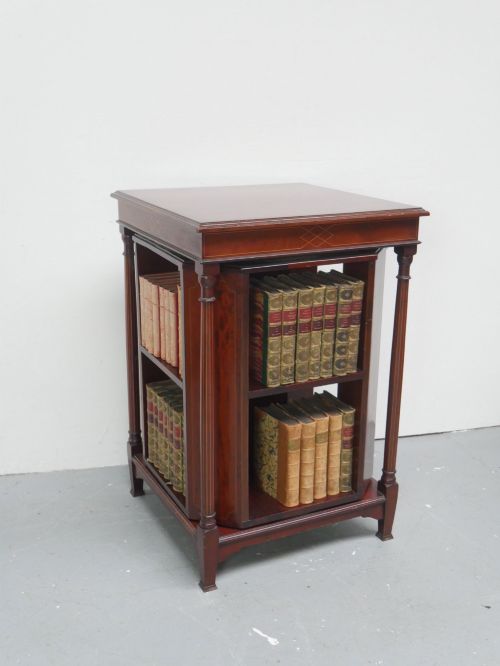
Material selection and decorative enrichment define the upper tier of pieces, seen in figured flame mahogany, detailed brass inlay, or complex marquetry. Simpler utility pieces rely on plain solid oak or mahogany with straightforward slatted sides.
Maple and Co
The Antique Rotating Stand Glossary
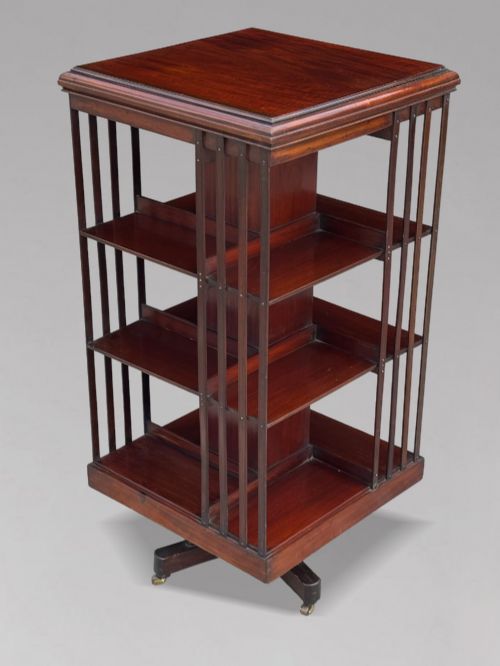
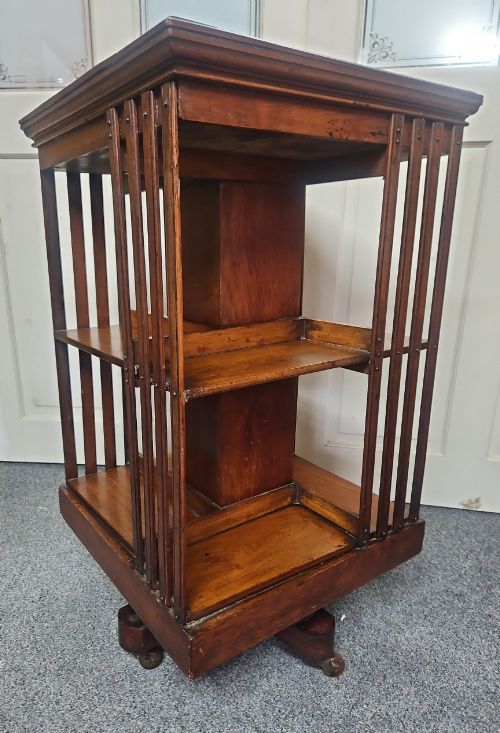
- Revolving bookcase
- A freestanding tiered shelving unit designed to spin on a central pivot base. This allows users to access volumes from a stationary seating position.
- Lazy Susan
- A rotating tray placed on a dining table or sideboard to share food and condiments. These date from the Georgian period onward in wood and ceramic forms.
- Marquetry
- Decorative patterns formed by fitting together thin slices of various coloured woods and veneers. It frequently embellishes the top surfaces of library tables.
- Cabriole leg
- A furniture leg that curves outward and then tapers inward, ending in a pad or foot. This stylistic feature appears on Edwardian adaptations of earlier furniture forms.
Antique Rotating Stand: Frequently Asked Questions
How do rotating stands work?
These pieces operate using an internal pivot mechanism concealed beneath the upper tier or tabletop. Metal bearings or wooden pins allow the upper section to rotate smoothly in either direction.
This engineering enabled users to reach multiple items without moving the entire piece of furniture from its designated spot in a room.
Where were revolving bookcases used?
Victorian and Edwardian households placed these items beside armchairs, desks, or in narrow library corners where floor space was limited. Their vertical tiers maximised storage capacity for reference books and novels.
Office spaces and studies also utilised table-top versions to keep frequently referenced ledgers within arm's reach.
How do I care for the wood?
Maintain timber surfaces by applying appropriate beeswax polish sparingly and buffing gently with a soft cloth. Keep pieces away from direct heat sources and strong sunlight to prevent the timber veneers from drying out or splitting.
Periodically check the central pivot mechanism to ensure dust does not impede the smooth rotation of the tiers.
Are all rotating stands bookcases?
Not all pieces function as bookcases, as the category includes dining room lazy susans, fireside stands, and display tables. Some examples feature glass or marble tops designed for serving or decorative display rather than holding books.
Each variation adapts the core principle of rotation to a specific domestic task within the home.