



Antique Rolltop Cabinet
An antique rolltop cabinet brings clever sliding mechanism and hidden compartments together, offering a practical workspace wrapped in period craftsmanship.
Antique Rolltop Cabinet
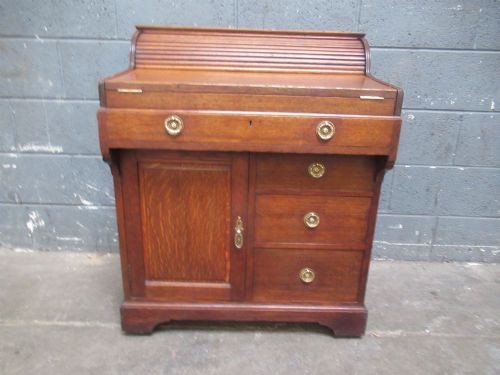
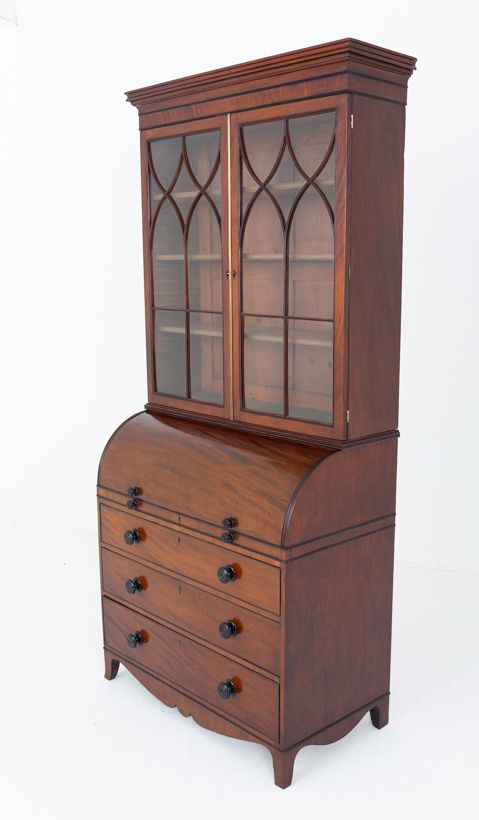
When you search for an antique rolltop cabinet, you encounter a variety of writing furniture designed to conceal papers and stationery behind a flexible wooden shutter or a solid curved cylinder. The forms range from compact tabletop boxes to large bureau bookcases and pedestal desks spanning the Georgian, Victorian, and Edwardian eras.
You are most likely to meet Edwardian oak and mahogany examples on this page, alongside earlier Georgian and Regency designs featuring tambour slats or rotating wooden cylinders. These pieces often incorporate fitted interior compartments, small drawers, and pull-out writing slides that demonstrate the ingenuity of period cabinet makers.
How they were made
Cabinet makers constructed these pieces using solid timbers and decorative veneers such as mahogany, walnut, oak, satinwood, and fruitwood. Individual wooden strips, known as tambour, were glued to canvas or leather backings to allow the flexible top to slide smoothly within curved grooves.
Many examples feature intricate details including floral marquetry, brass hardware, lead glass panels, and fine string inlay. Structural integrity relied on traditional joinery methods that accommodated the movement of wood across changing indoor climates.
Antique Rolltop Cabinet Retail Price Guide 2026
Typical asking prices for rolltop cabinet among the pieces listed under this phrase on Sellingantiques today, from the lower quarter to the upper quarter. They describe what is for sale here now, not the wider market.
One unusual survivor is specifically designed to store cigars, proving that Victorian writers needed smoke breaks just as much as ink.
What varies in quality
The sophistication of the internal fittings and the precision of the sliding mechanism set the finer pieces apart from standard workshop production. A smooth, silent travel of the tambour or cylinder shutter indicates careful initial fitting and minimal warping over time.
The choice of cabinet woods and the artistry of any inlay or marquetry dictate visual hierarchy. Finely figured mahogany, rich walnut, and delicate satinwood elevate the standing of a desk far beyond utility.
Wiggers
The Antique Rolltop Cabinet Glossary
- Tambour
- A flexible shutter formed of narrow wooden slats glued to a fabric backing. This allows the cover to curve around a track and conceal the desk interior.
- Cylinder Bureau
- A writing cabinet featuring a quarter-circle solid wooden barrel that rotates upwards to open the desk. It differs from the slatted tambour by using a single curved panel.
- Marquetry
- Decorative veneer work created by fitting pieces of various coloured woods and materials into a pattern. It often appears on drawer fronts and cylinder panels.
- Bureau Bookcase
- A dual-purpose tall furniture form combining a lower writing desk with an upper shelving section enclosed by doors. These often feature glazed panels.
- Satinwood
- A light yellowish timber prized for its lustrous sheen and smooth grain. Makers utilised it for fine stringing and decorative panels during the eighteenth and nineteenth centuries.
Antique Rolltop Cabinet: Frequently Asked Questions
How do tambour doors operate?
Tambour doors consist of narrow wooden slats attached to a flexible backing fabric that slides along internal tracks.
This clever construction allows the shutter to curve around the sides of the cabinet without jamming.
What is the difference between a cylinder desk and a rolltop?
A cylinder desk uses a solid curved piece of wood that rotates on a pivot to open.
In contrast, a rolltop uses multiple small slats that bend flexibly around a track.
Where were these cabinets used?
These cabinets served primarily in private studies, libraries, and home offices for managing correspondence.
The lockable shutters kept confidential papers and account books secure from prying eyes.
How do I care for the wood and mechanism?
Keep the cabinet away from direct heat sources and sudden humidity changes to prevent the wooden tracks from warping.
Apply a light microcrystalline wax periodically to nourish the timber and maintain smooth movement in the sliding sections.