


Antique Rocking Bassinet
An antique rocking bassinet is a nursery bed designed to soothe infants, crafted in wood or iron across the Georgian, Victorian, and Edwardian eras.
Antique Rocking Bassinet
An antique rocking bassinet is a traditional infant bed mounted on curved rockers to gently soothe a child, appearing across the Georgian, Victorian, Edwardian, and mid-nineteenth century periods. Buyers searching for an antique rocking bassinet will encounter various forms described interchangeably in the listings as cradles, cribs, cots, and bassinets. The examples most frequently met on this page span the nineteenth century and use traditional wooden or iron framing.
The styles recorded in the evidence range from Victorian Country and Scandinavian Country to Georgian, William IV, and Edwardian designs. These pieces vary from simple painted pine country furniture to polished mahogany and retailers like Heals and son. Each serves the historical purpose of infant sleep while displaying the domestic aesthetic of its specific decade.
How they were made
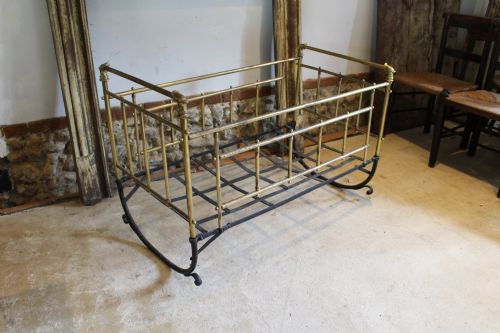
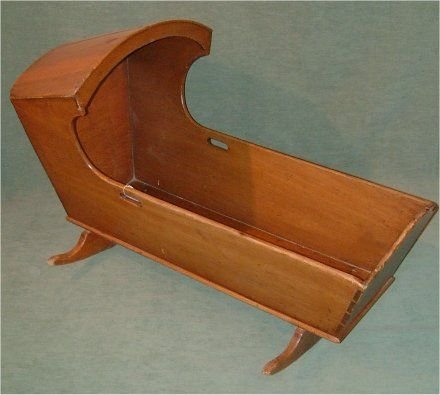
The construction relies heavily on native and imported timbers, with mahogany, pine, and oak utilised alongside metals such as brass, wrought iron, and cast iron. Cabinetmakers shaped solid mahogany and oak for formal domestic settings, whilst pine served as the primary material for painted or unpainted country pieces.
Flexible plant fibres such as cane and rattan appear interwoven within wooden frames to form ventilated sides for the sleeping compartment. Structural support is completed by curved wooden rockers or forged iron mounts that allow the entire bed to sway.
Some nineteenth-century infants slept in state with brass mounts that clinked softly every time a weary parent nudged the rockers in the dark.
What varies in quality
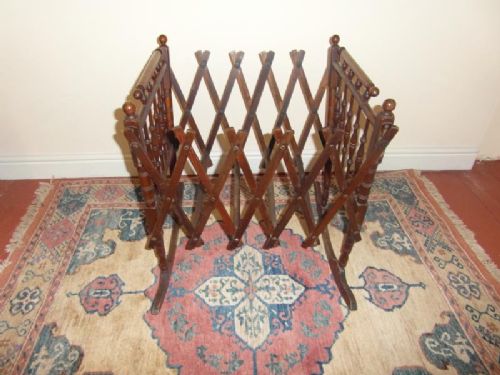
Quality in these infant beds is determined by the selection of materials and the sophistication of the joinery or metalwork. Fine mahogany frames with detailed carving or sophisticated mechanisms like metamorphic folding actions represent the upper tier of the range.
Simpler pine or iron constructions, including painted Scandinavian country pieces and utilitarian nursery cots, form the other end of the spectrum. The presence of documented retail provenance, such as the Heals and son attribution, elevates a piece through verified commercial history.
Heals and son
The Antique Rocking Bassinet Glossary
- Bassinet
- A lightweight basket or bed designed for newborns. It often shares functional overlap with terms like crib and cradle in nineteenth-century listings.
- Cane
- Strips of peeled rattan woven into an open mesh pattern. It provides lightweight and breathable side panels for infant beds.
- Metamorphic
- Describing furniture designed to transform into different forms or uses. The evidence includes a mahogany example that alters between cot configurations.
- Rattan
- A palm species with flexible stems used for weaving furniture panels. It frequently appears alongside cane in Victorian and Edwardian pieces.
- Rockers
- Curved wooden or metal feet attached to the base of a bed. They enable the gentle swaying motion characteristic of this furniture type.
Antique Rocking Bassinet: Frequently Asked Questions
What is a rocking bassinet?
A rocking bassinet is a small infant bed mounted on curved wooden or metal bases designed to sway. These pieces provide a traditional enclosed sleeping space for newborns.
Historical examples utilise materials like mahogany, pine, iron, and cane. They reflect the domestic standards and design preferences of Georgian, Victorian, and Edwardian nurseries.
How do I date a bassinet?
Dating relies on observing the primary materials, construction techniques, and stylistic markers present in the piece. Georgian items often show heavy oak framing, whereas Victorian pieces frequently employ mahogany, brass, or caned rattan.
Later Edwardian examples introduce wrought iron and lighter structural forms. Comparing these details against known period styles helps establish the approximate decade of manufacture.
How were these beds used?
These beds were kept in domestic chambers to keep infants close to parents during sleep hours. The curved rockers allowed caregivers to soothe a restless child without lifting them from the bed.
Many designs served a dual purpose as stationary cots or portable bassinets within the home. Their construction prioritised both ventilation and gentle motion.
Can I use an antique bassinet?
Antique bassinets were built to historical safety and manufacturing standards rather than modern regulatory frameworks. Collectors typically acquire them for display, decorative restoration, or historical study.
Anyone wishing to use one for an infant must ensure the structure meets contemporary safety specifications. Modern mattresses and reinforcement are usually necessary for practical nursery use.
What styles are available?
The available styles span several historical periods including Georgian, William IV, Victorian, and Edwardian. Regional aesthetics also appear, such as Scandinavian Country painted pine pieces.
Formal urban pieces feature polished mahogany and brass details, whilst rural examples showcase simpler joinery and painted finishes. Caned panels are common across multiple Victorian designs.