

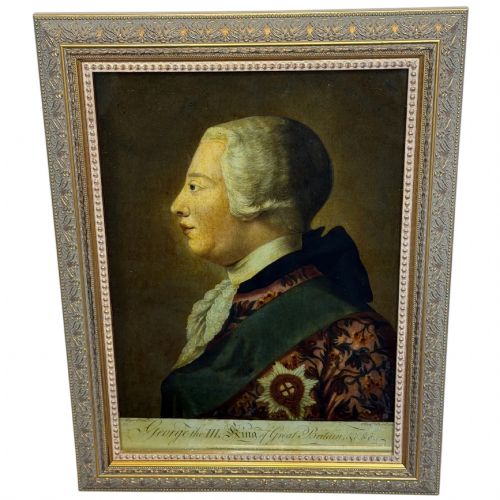


Antique Reverse Glass Pictures
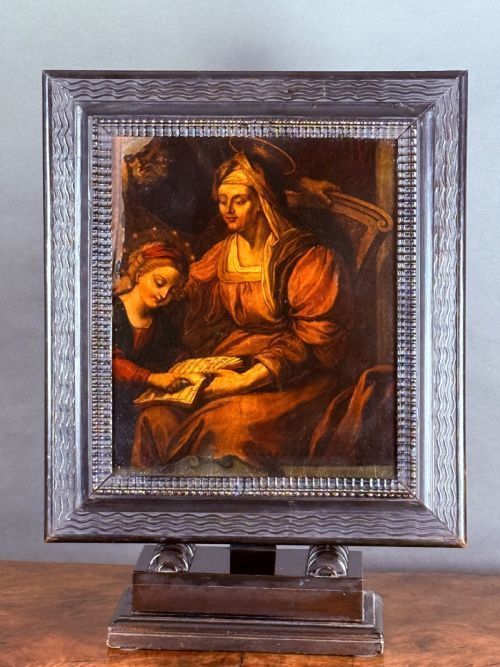
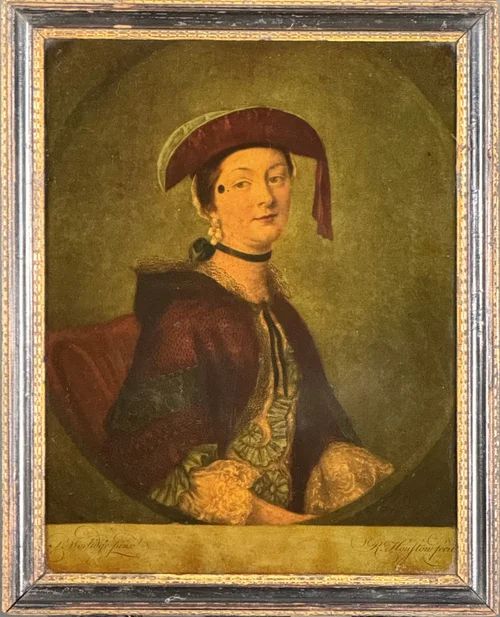
These antique reverse glass pictures apply pigment, print and oil directly to the back of glass panels, creating polished portraits and scenes that survive from the eighteenth and nineteenth centuries.
Antique Reverse Glass Pictures
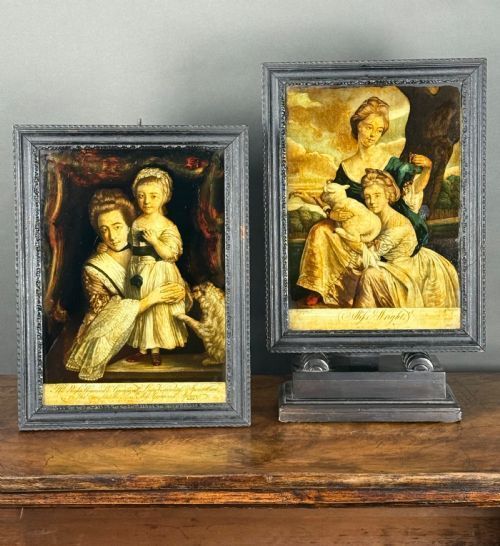
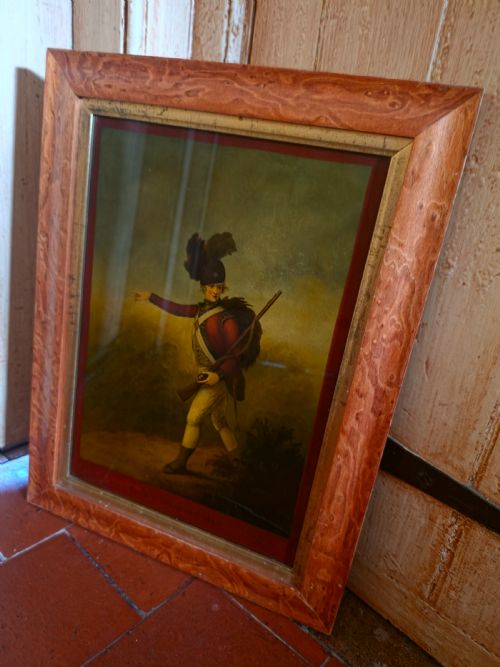
When you search for antique reverse glass pictures, you encounter wall art, framed prints and paintings executed behind glass rather than upon its front. The selection includes Georgian mezzotints, Regency engravings, and Victorian crystoleoms.
Portraits of nobility, domestic subjects, and equestrian sporting art dominate the examples on this page. You also find religious themes, armorial crests, and historical battle scenes housed in wood frames.
How they were made
Craftsmen applied oil paint, pigment and gold leaf directly onto the reverse side of a glass sheet, sometimes transferring engraved paper prints face-down onto the glass before hand-colouring them.
The finished work relied on wood frames, maple surrounds or mirror plates to support and protect the delicate painted surface from the air.
Listings include eighteenth and nineteenth-century examples using glass, wood, paper, oil paint, and gold leaf across British, Chinese export, and continental styles.
What varies in quality
The refinement of the brushwork and the delicacy of the applied pigment distinguish the superior examples from simpler decorative output. Hand-coloured mezzotints with crisp line work show greater technical skill than mass-produced later prints.
The survival of the original gilding and the clarity of the underlying glass plate dictate the visual impact of the piece. Clean integration between the paper print and the painted highlights marks the better productions.
Fletcher·Sebastiaan Vrancx·Charles Spooner·Richard Purcell·Abraham Cooper·Takabatake Kasho·Schweninger
The Antique Reverse Glass Pictures Glossary
- Mezzotint
- A printmaking process where the image is scraped and burnished upon a roughened copper plate. These tonal prints were frequently transferred to glass for hand-colouring.
- Crystoleum
- A Victorian technique where a paper engraving was stuck face-down to glass, made transparent, and hand-painted before another glass layer sealed the back.
- Eglomise
- A process of applying cold painting and gold leaf to the rear face of glass to create a decorative mirror panel or picture.
- Armorial
- A painted heraldic crest or coat of arms displayed upon glass, often used to denote family lineage.
Antique Reverse Glass Pictures: Frequently Asked Questions
How can I tell a crystoleum from an earlier print?
Crystoleoms belong to the Victorian era and involve multiple layered paper pressings tinted by hand. Earlier Georgian examples rely on mezzotints applied straight to single glass sheets.
Examining the back of the frame helps reveal the construction layers and paper backing typical of nineteenth-century production methods.
Where should I hang these pictures?
These works require shaded interior walls away from direct sunlight. Ultraviolet rays fade the applied pigments and oil paints over time.
Stable indoor humidity prevents the wooden frames from warping and protects the fragile bond between the glass and the paint.
Are these pictures fragile?
The glass panels are inherently brittle and demand careful handling during relocation. The paint layer sits exposed on the rear, making it vulnerable to flaking if knocked.
Professional framing with secure backing boards provides the necessary structural support to keep the glass stable over the decades.