



Antique Regimental Paintings
Antique regimental paintings capture the discipline and uniforms of historic military service through oil on canvas, watercolour, and reverse glass.
Antique Regimental Paintings
When you examine antique regimental paintings, you encounter portraits of military officers, cavalrymen, infantrymen, and general officers. These works document specific uniforms and regiments, ranging from the 18th century through to the early 20th century.
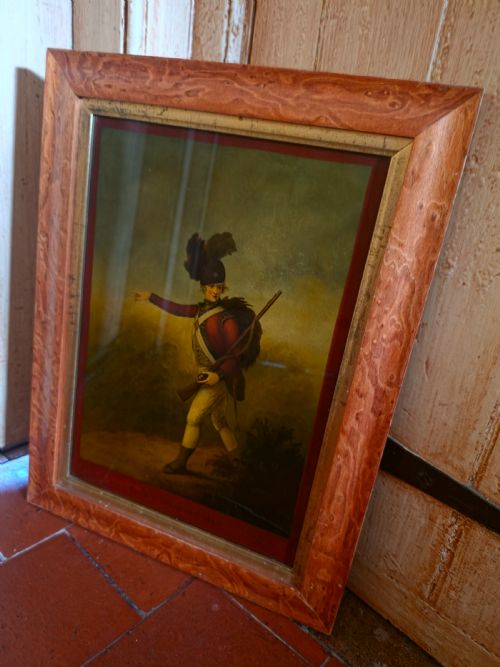
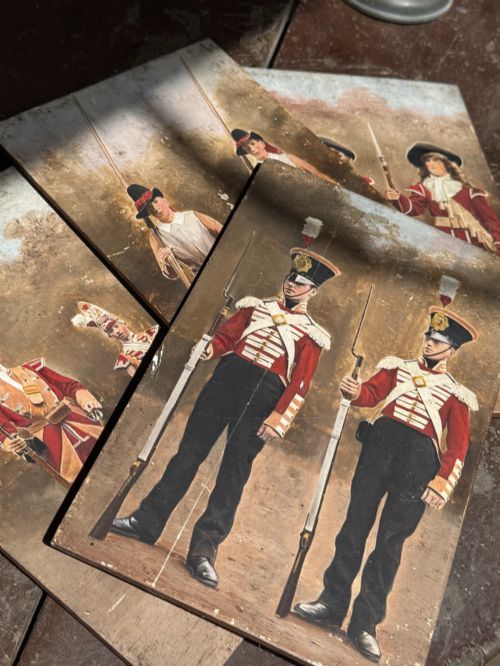
The pieces on this page appear primarily as wall art, oil paintings, and watercolour works on paper or canvas. You will also find painted panels, reverse glass pictures, and portrait miniatures depicting named soldiers and horses.
Originating largely from British and English schools, these items record the visual history of regiments such as the 5th Royal Lancashire Militia and the 15th King's Hussars. They serve as historical archives of military personnel and their mounts.
Materials and construction
Painters utilised oil and watercolour pigments applied to canvas, paper, and wooden panels to create these military depictions. Artists worked in mediums ranging from fine oil on canvas to reverse glass techniques.
Frames play a significant structural and visual role, with many period examples housed in gilded wood frames that complement the painting style. Support structures include stretched canvas, wooden panels, and glass sheets for reverse paintings.
One military portrait captures the likeness of a horse named Balmoral rather than a human officer.
Assessing quality
Quality in antique regimental paintings depends upon the precision of the uniform details and the skill of the portraiture. Works by identified artists or established schools demonstrate superior brushwork and anatomical accuracy in figures and horses.
Henry Walton·Sir Richard Westmacott·Snaffles
The Antique Regimental Paintings Glossary
- Watercolour
- A painting method where fine pigment is suspended in a water-based solution on paper. This medium produces translucent washes often seen in early 20th-century military sketches.
- Oil on canvas
- A traditional technique using pigments bound in drying oil applied to a woven fabric support. This combination allowed artists to achieve deep tones in military uniforms and portraits.
- Reverse glass picture
- An artwork painted directly onto the back of a glass sheet and viewed from the front. This specialised method yields a glossy finish popular in 19th-century folk and military depictions.
- Portrait miniature
- A small, highly detailed painting capturing an individual likeness, frequently executed on a small panel or ivory. These portable works often commemorated specific officers.
- Gilded wood frame
- A wooden moulding coated with gold leaf or metallic paint to enclose and protect an artwork. Period frames provide contextual dating alongside the paintings they surround.
Antique Regimental Paintings: Frequently Asked Questions
What is an antique regimental painting?
Antique regimental paintings are historical artworks depicting soldiers, officers, and military units from eras such as the Georgian and Victorian periods.
They record specific uniforms, regiments, and occasionally named individuals or horses in oil, watercolour, or paint.
How were these paintings displayed?
These works were traditionally hung in officers' messes, regimental headquarters, and private country homes to commemorate military service.
They served as both personal memorials and statements of patriotic allegiance within domestic and military interiors.
How do I identify the regiment?
You can identify the regiment by examining the uniform colours, collar badges, cuffs, and any inscribed titles on the canvas or frame.
Historical records and regimental archives often cross-reference with named subjects like the 5th Royal Lancashire Militia or the 15th King's Hussars.
How do I care for antique paintings?
Display these works away from direct sunlight and fluctuating humidity to protect the oil paint, watercolour pigments, and canvas supports.
Dust gilded wood frames gently with a dry, soft brush and avoid using chemical cleaning agents on the painted surfaces.