


Antique Red Ginger Jars
Antique red ginger jars combine traditional storage forms with vibrant palettes, bringing historic ceramic artistry and striking colour into any interior.
Antique Red Ginger Jars
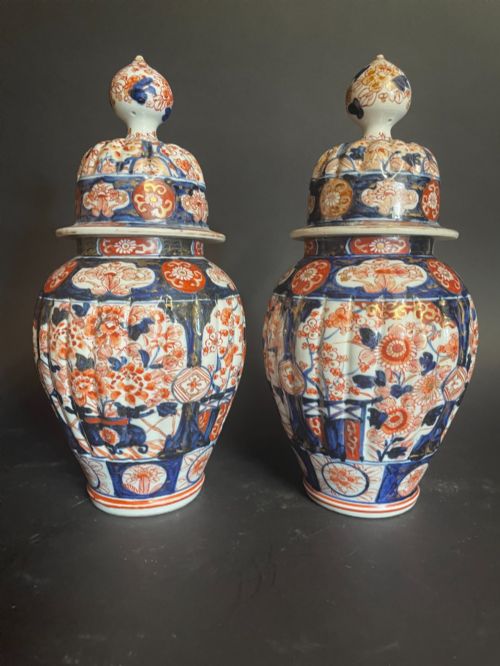
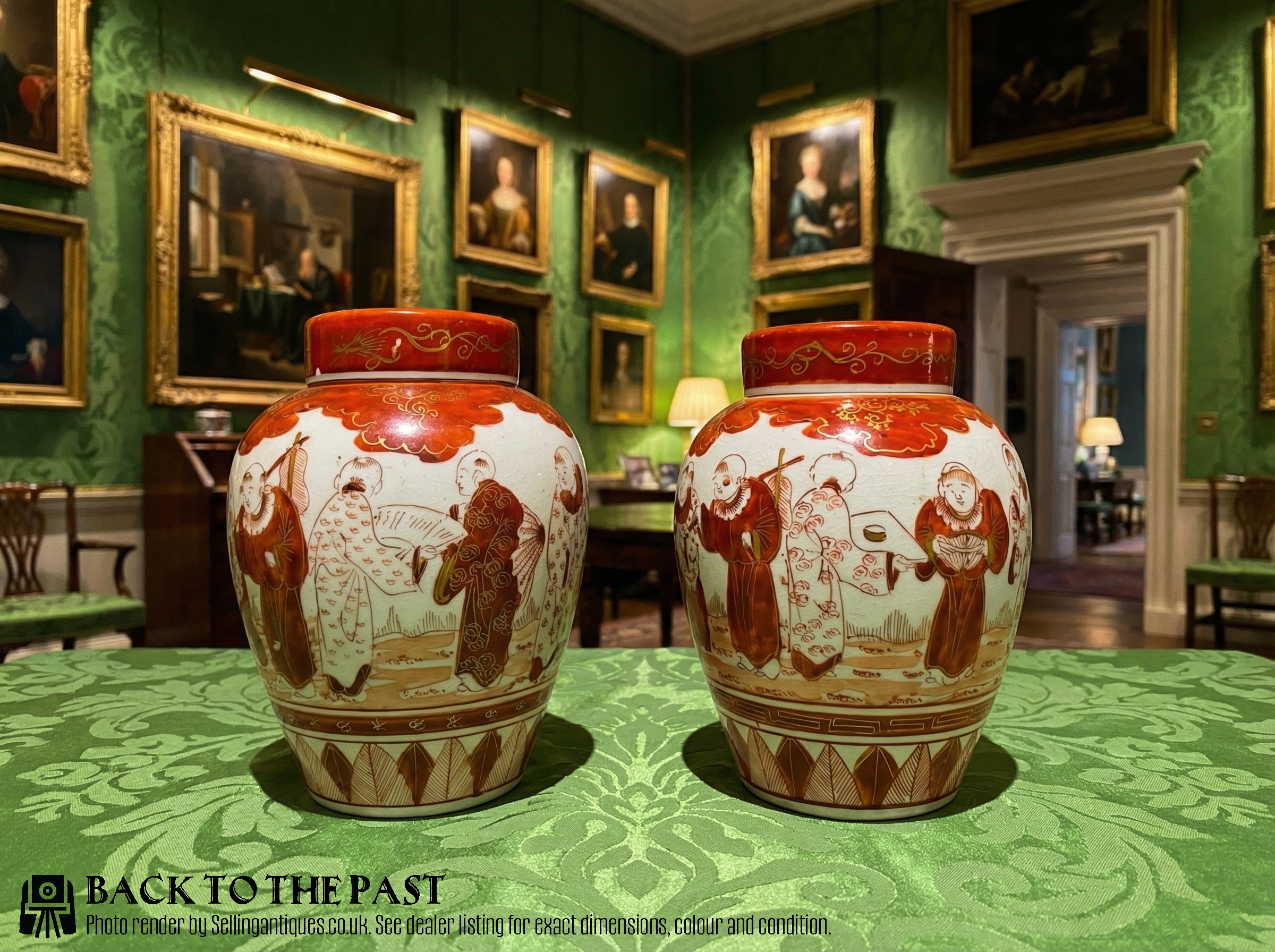
When buyers search for antique red ginger jars, they encounter lidded vessels and covered vases originating from Japanese, Chinese, and European workshops. The selection here leans heavily towards Japanese Imari and Kutani porcelain examples spanning the eighteenth and nineteenth centuries.
These covered jars and vases take various forms, including traditional ginger jars, tea caddies, and decorative lidded urns. Many pieces date from the nineteenth century, specifically the Meiji period and the decades around eighteen-eighty, reflecting distinct historical aesthetics.
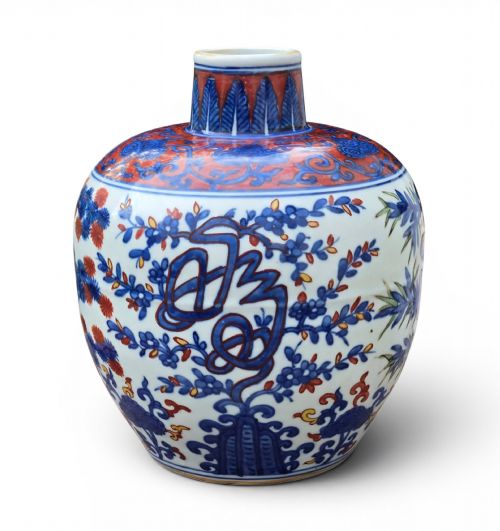
Makers across different regions adopted distinct stylistic approaches, from Japanese Arita production to European Continental maiolica and French creations in the Edo manner. Buyers also find pieces associated with specific historical periods such as the sixteenth-century Jiajing mark or seventeenth-century transitional styles.
How they were made
Artisans constructed these vessels using porcelain and maiolica bodies, applying glazes and enamels before firing. Many items utilise iron-red enamel combined with cobalt glaze and other pigments to create detailed surface patterns.
Decoration often includes gold leaf, gilt, and gilding applied over the glaze to highlight specific motifs. Handpainted details define the surface work across Japanese Imari, Kutani, and Chinese Wucai examples.
The listings span from the sixteenth century to the Edwardian era, featuring porcelain, enamel, and gold leaf.
What varies in quality
The sophistication of the handpainted brushwork and the precision of the enamel application distinguish finer examples from standard production. Superior pieces demonstrate crisp definition in the iron-red enamel and controlled integration of gilt or gold leaf details.
Coherence of style and the preservation of the original matching cover significantly influence the standing of a vessel. Pieces that maintain harmonious proportions between the jar and its lid reflect higher craftsmanship from periods such as the Meiji era or eighteenth-century Arita.
The Antique Red Ginger Jars Glossary
- Imari
- A style of Japanese porcelain originating from Arita, typically decorated in underglaze blue, iron-red enamel, and gold. This palette became widely imitated across Europe during later centuries.
- Kutani
- Japanese coloured porcelain known for bold designs and rich enamel work, often featuring red and gold tones. These wares gained prominence during the nineteenth century.
- Wucai
- A Chinese ceramic style meaning five colours, combining underglaze blue with contrasting overglaze enamels such as iron-red and green. This technique flourished during the Ming dynasty and transitional periods.
- Maiolica
- European tin-glazed earthenware produced from the Renaissance onwards, sometimes decorated with Chinoiserie motifs. Continental workshops utilised this technique to replicate Asian porcelain aesthetics.
- Gilding
- The application of gold leaf or powdered gold onto the ceramic surface to add decorative highlights. Artisans used this technique to accentuate rims, panels, and floral motifs.
Antique Red Ginger Jars: Frequently Asked Questions
What were antique red ginger jars used for?
Originally, these ceramic lidded vessels served to store and transport spices, salt, and precious herbs like ginger along trade routes. Over time, wealthy households repurposed them as decorative containers and mantelpiece ornaments.
As interior tastes shifted towards Asian porcelain collections, the jars functioned primarily as ornamental centrepieces and covered vases. Their secure lids made them practical for keeping dry goods while displaying intricate handpainted motifs.
How should I display ginger jars at home?
Ginger jars work well placed on sideboards, mantels, or within cabinet displays where their vibrant red and gold decoration can catch the light. Pairing matching jars as symmetrical pairs creates a traditional formal arrangement.
Due to their historic nature, place them away from direct sunlight and high-traffic edges to protect the delicate enamel and gilt surfaces. Many collectors also utilise sturdy wooden stands to elevate larger vases and jars.
How do I tell nineteenth-century pieces apart?
Nineteenth-century Japanese pieces often reflect Meiji period aesthetics, showcasing dense Kutani or Imari decoration with generous use of iron-red enamel. European adaptations from this era, such as Continental maiolica or Samson productions, frequently mimic these Asian styles with distinct paste characteristics.
Examining the foot ring, glaze consistency, and brushwork technique helps differentiate original Japanese export porcelain from later European copies. Subtle variations in the weight and translucency of the ceramic body also offer clues to the origin and period.