


Antique Reading Rack Stand
An antique reading rack stand holds heavy volumes and periodicals close to hand, combining practical storage with the rich warmth of period timber and metalwork.
Antique Reading Rack Stand
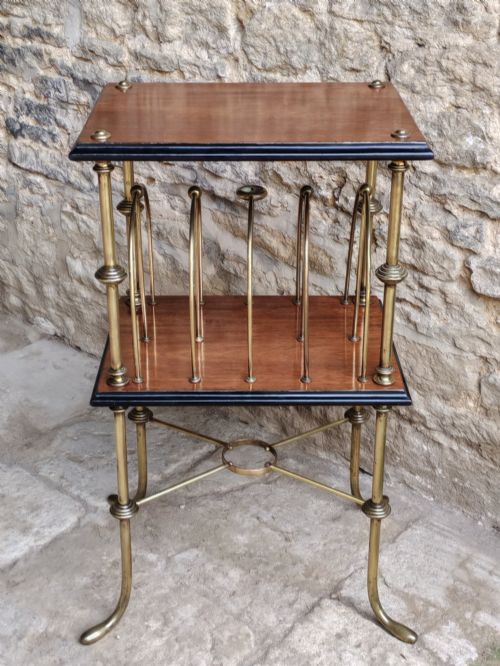
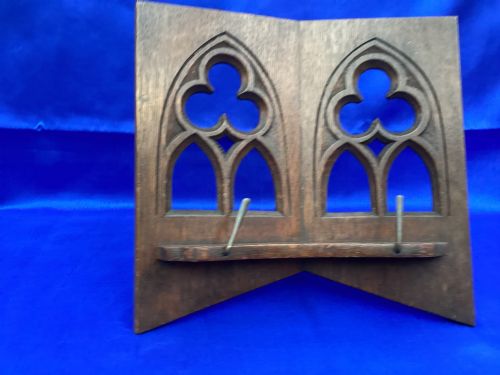
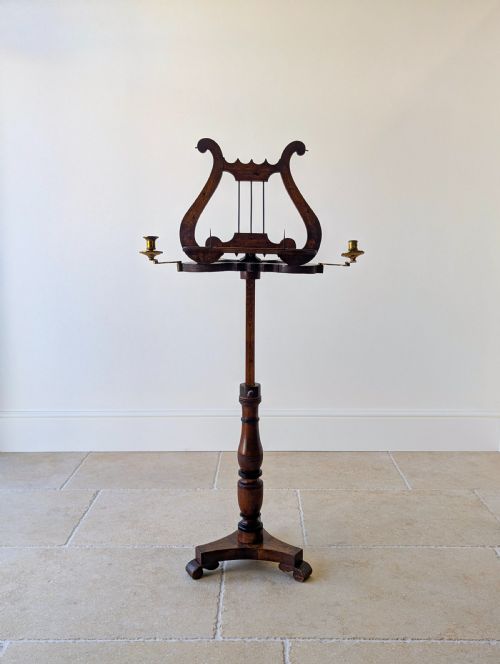
When you search for an antique reading rack stand, you encounter a varied group of domestic library and parlour furnishings spanning the Regency, Victorian, and Edwardian eras. These pieces range from simple open-front shelf book troughs and floor-standing newspaper racks to complex canterburys and revolving table stands.
The most common examples on this page are Edwardian mahogany book troughs and Victorian brass-mounted magazine stands, alongside older Regency and William IV pieces. Form follows function closely, resulting in items that double as side tables, music stands, or metamorphic pieces that fold out for reading.
Materials and Construction
Timbers dominate the construction of these stands, with mahogany, oak, and walnut providing sturdy frames and rich grain patterns. Cabinetmakers selected burr walnut and satinwood for decorative veneering, while boxwood provided sharp contrast through fine inlay work.
Metal components form an integral part of the manufacturing technique, particularly brass used for structural rods, carrying handles, revolving mechanisms, and decorative mounts. Porcelain and bone appear as subtle accents on handles and feet, adding tactile variety to the heavier wooden frameworks.
Listings feature items spanning the Regency, Victorian, Edwardian, and 1930s interwar periods, constructed in mahogany, oak, walnut, and brass.
Judging Quality
The distinction between standard utility items and superior pieces rests on the choice of timber and the precision of the joinery. Finer stands display carefully selected grain figures, such as burr walnut, and employ sophisticated construction methods like dovetailed joints and crisp boxwood stringing.
Hardware and movement define the upper tier of manufacturing, evident in smooth revolving book tables, heavy cast brass mounts, and well-integrated folding mechanisms. Pieces bearing maker attributions or retail stamps from established houses reflect a higher standard of design execution.
Waring and Gillows·Harrods
The Antique Reading Rack Stand Glossary
- Canterbury
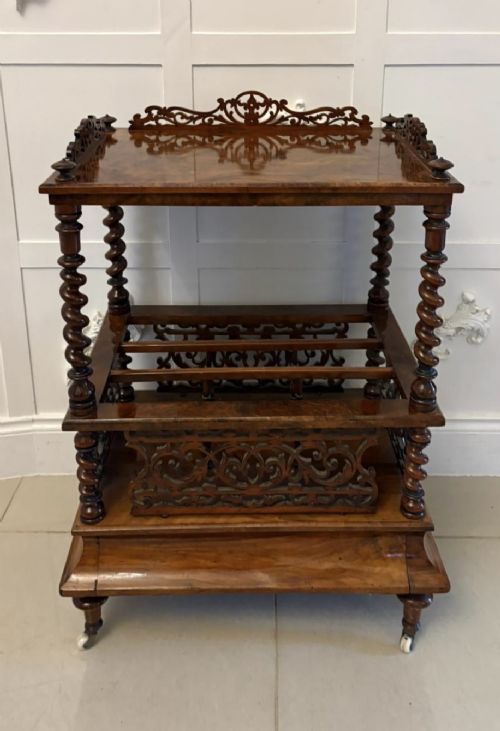
- A low, freestanding rack traditionally used for holding sheet music, newspapers, or books, featuring slatted partitions and often mounted on castors. This form originated in the late eighteenth century and remained popular through the Victorian era.
- Book Trough
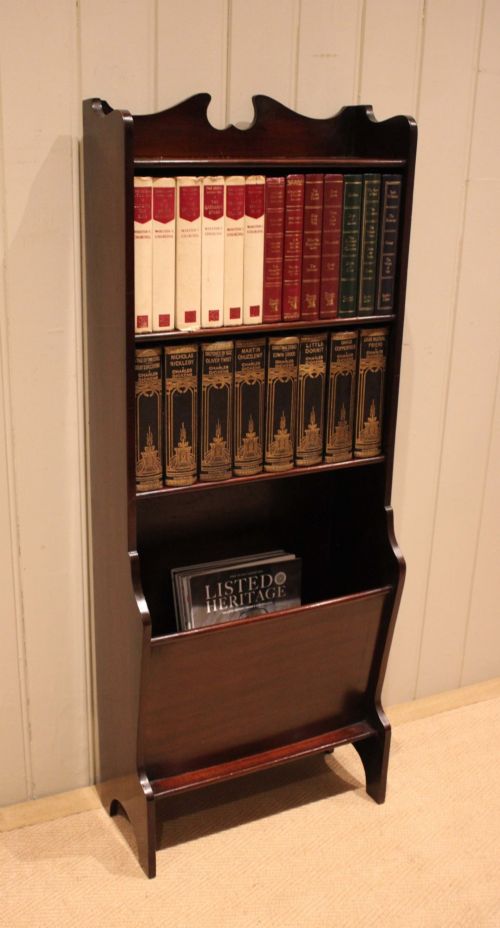
- An open-topped container with sloping sides designed to hold a small selection of books upright on a desk, table, or floor. They frequently appear in oak and mahogany during the Edwardian period.
- Metamorphic
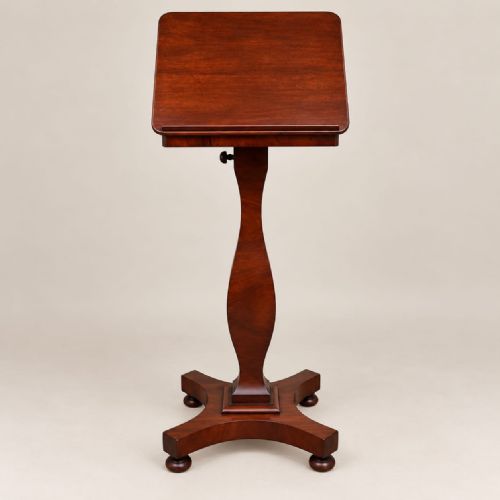
- Describing a piece of furniture that transforms from one function to another, such as a reading rack that unfolds into a table. These inventive designs showcase nineteenth-century mechanical ingenuity.
- Revolving Bookcase
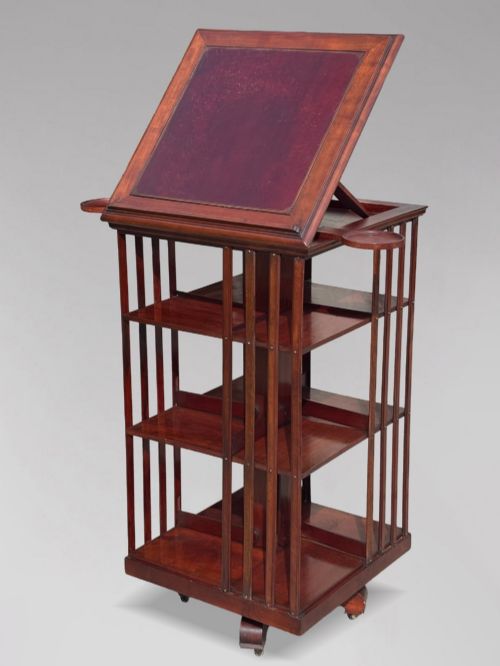
- A tiered shelving unit mounted on a concealed pivot and heavy base, allowing the user to spin the entire structure to access volumes from all sides. Brass inlay and heavy timber construction mark the finer examples.
- Stringing
- A narrow strip of contrasting wood inlaid into the surface veneer to form decorative borders and geometric patterns. Cabinetmakers utilised boxwood and ebony for this precise craft.
Antique Reading Rack Stand: Frequently Asked Questions
What is a Canterbury stand?
A Canterbury is a compartmentalised rack designed for holding sheet music, periodicals, or books within easy reach of a chair or piano.
Originating in the Georgian period, these stands continued to evolve through the Victorian and Edwardian eras with partitions and integrated drawers.
How do revolving book stands work?
Revolving book stands utilise an internal pivot mechanism concealed beneath the base, allowing the upper tier of shelves to spin freely.
This design enabled readers to browse an entire small library collection from a single seated position beside a desk or armchair.
Where should I place a book trough?
Book troughs sit comfortably on top of side tables, desks, or directly on the floor beside a fireplace or lounge seating.
Their open slope-shelf design keeps current reading material visible and accessible while adding period character to a room.
How do I date a mahogany rack?
Dating relies on examining the timber grain, construction techniques, and stylistic clues such as brass mounts, inlay work, and hardware.
Earlier Regency pieces show heavier classical proportions, whereas Edwardian examples often feature lighter mahogany frames and simpler inlaid decoration.