


Antique Putto Figure
An antique putto figure brings the playful, winged infant of classical mythology into interior spaces through sculpture, lighting and porcelain.
Antique Putto Figure
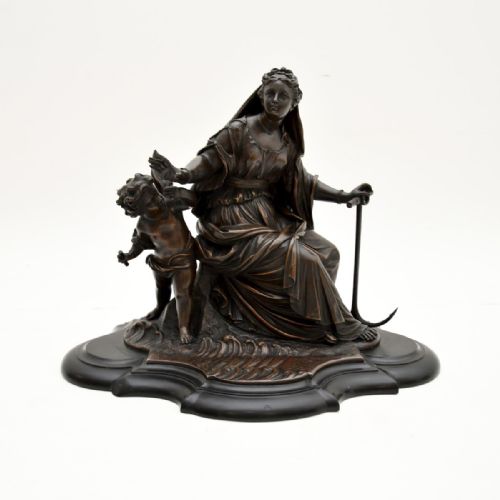
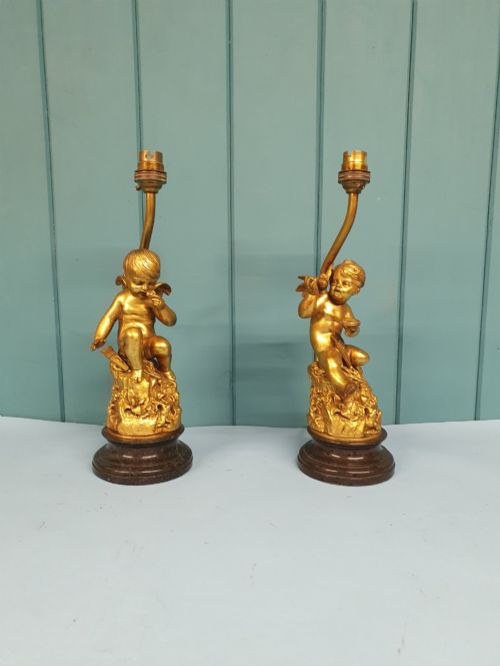
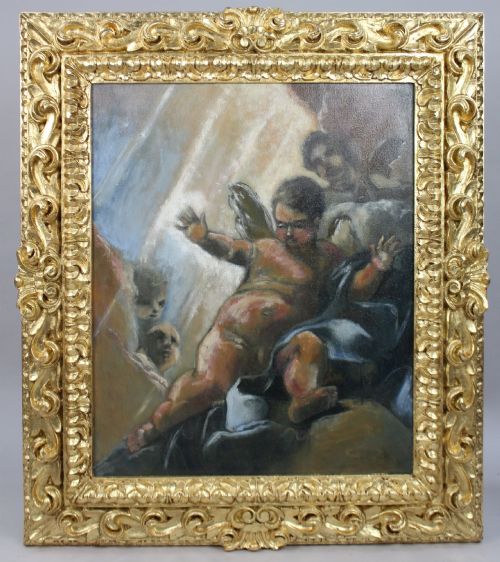
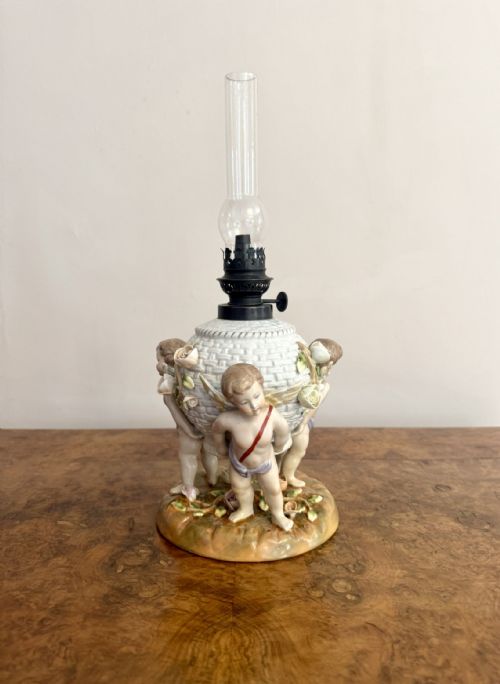
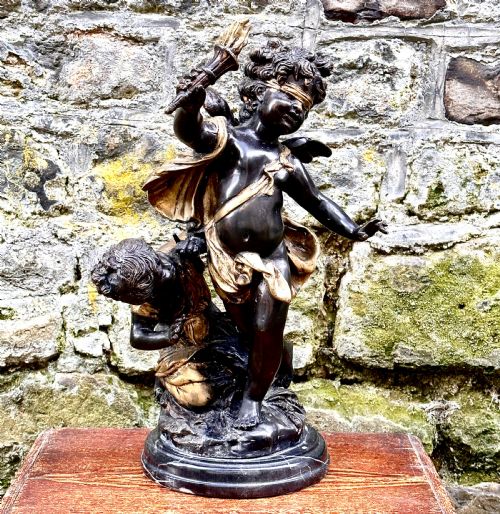
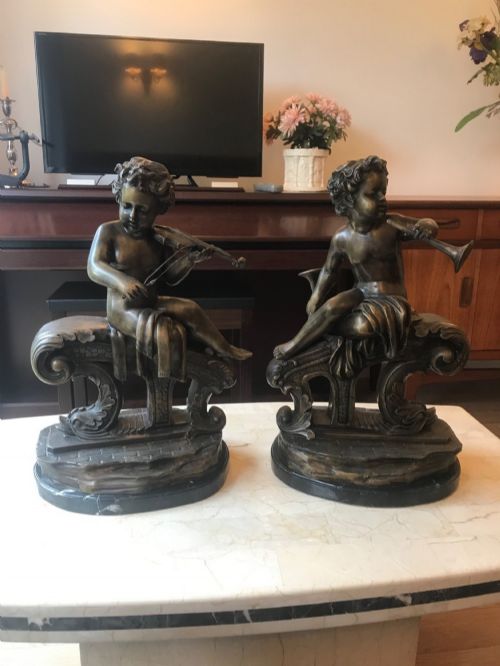
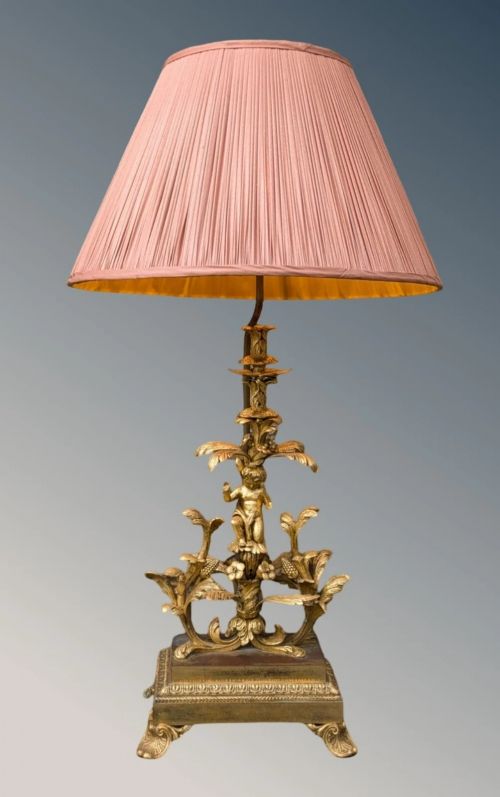
An antique putto figure takes the form of a chubby, often winged infant derived from classical art, appearing frequently across the eighteenth, nineteenth and early twentieth centuries. These depictions range from standalone bronze and marble sculptures to functional items such as porcelain candlesticks, table lamps and bookends.
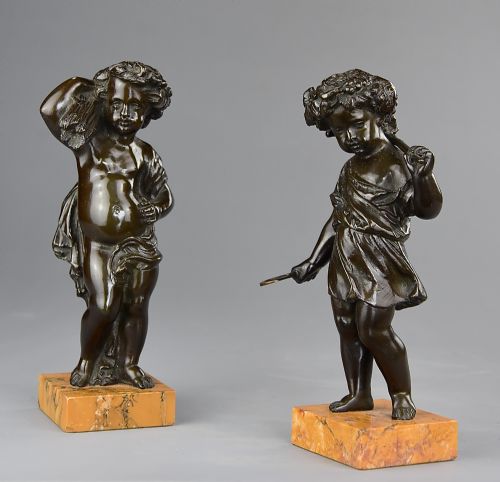
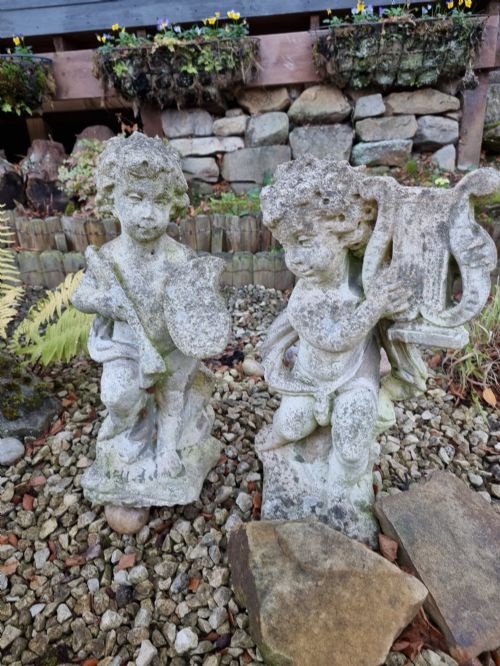
The versions most commonly met on this page span the nineteenth century, reflecting revival styles from Rococo to Neoclassical. Figures are modelled singly or in pairs, often engaged in allegorical pursuits like music, harvest or the seasons.
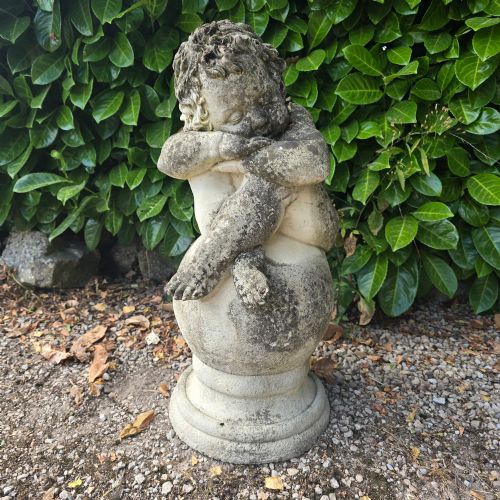
Origins vary from English factories such as Bow and Chelsea to continental porcelain works like Meissen and Sitzendorf, alongside French and Italian bronze foundries. Buyers encounter these figures in media as diverse as carved wood, gilt bronze, biscuit porcelain and weathered garden stone.
Materials and production methods
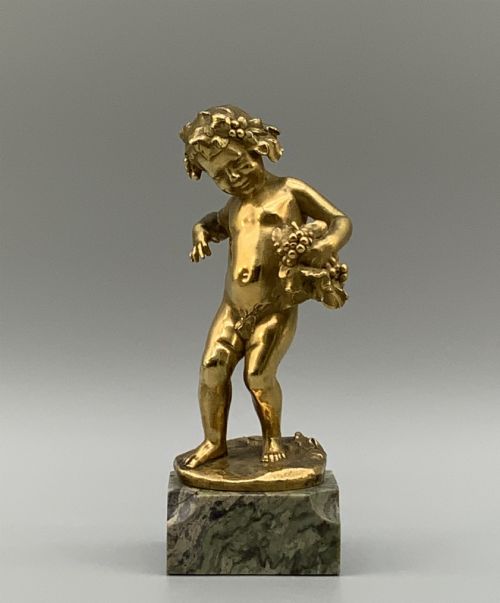
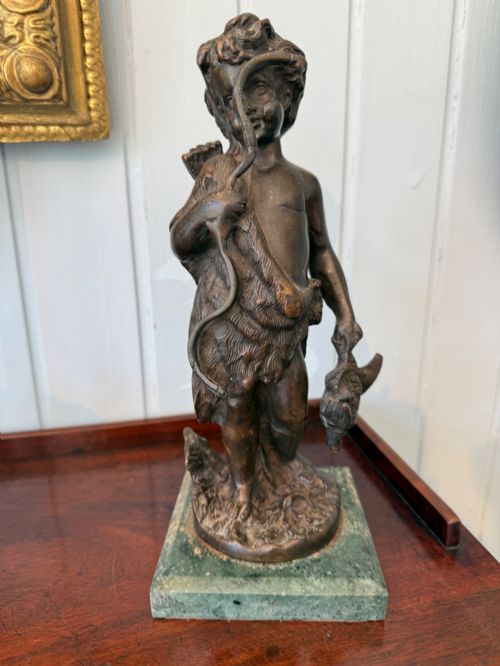
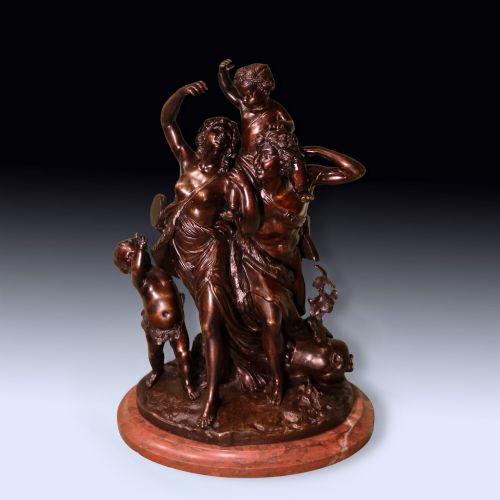
Foundries produced bronze figures using the lost-wax casting method, frequently finishing the metal with fine chased details and mounting the sculptures on marble bases. Gilt bronze and gold leaf applications added reflective surface lustre to interior decorative objects.
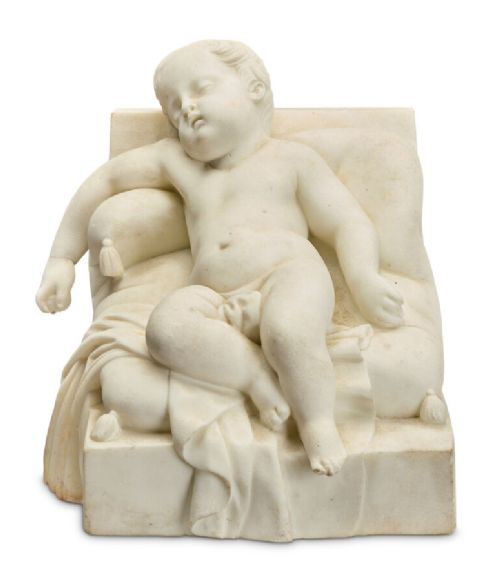
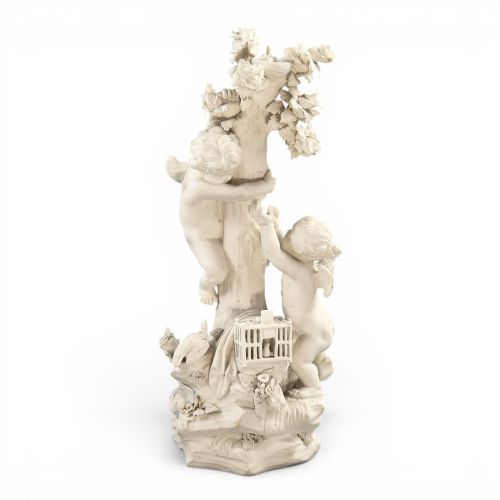
Ceramic pieces utilise soft-paste or hard-paste porcelain, often left unglazed as biscuit porcelain to mimic carved marble, or decorated with enamel paints. Hand-carved wooden examples employ dense timbers shaped with chisels and occasionally finished with gesso.
Stoneware, lead and weathered materials served for garden statuary and architectural ornaments exposed to the elements, while table lamps integrated electrical fittings into older bronze or ceramic statuettes.
Antique Putto Figure Retail Price Guide 2026
Typical asking prices for putto figure among the pieces listed under this phrase on Sellingantiques today, from the lower quarter to the upper quarter. They describe what is for sale here now, not the wider market.
Periods represented span from Georgian iterations through Victorian revivals and Edwardian decorative objects up to mid-century items.
Assessing sculptural quality
In porcelain and bronze alike, the integration of secondary elements such as musical instruments, foliage or drapery demonstrates the maker's skill. Exceptional pieces retain original mercury gilding, hand-painted enamel details or patination developed over centuries rather than heavy restoration.
Charles Louis Malric·Susse Freres·Sitzendorf·Bow Porcelain·Royal Dux Bohemia·H. Schubert·Antonio Canova·Meissen·Paul Scheurich·Chelsea
The Antique Putto Figure Glossary
- Putto
- A representation of a chubby, naked infant, often winged, derived from classical art. In Renaissance art, they sometimes represented cupids or cherubs.
- Biscuit porcelain
- Unglazed porcelain fired to a matte, white finish resembling marble. It was widely utilised by eighteenth-century factories for detailed sculptural figures.
- Grand Tour
- A cultural tour of Europe undertaken by wealthy young men in the eighteenth and nineteenth centuries. Souvenirs included small bronze sculptures of classical subjects.
- Lost-wax casting
- A metal-casting method in which a molten metal is poured into a mould that has been created by means of a wax model. This technique allows for intricate detail in bronze figures.
- Gilt bronze
- Bronze mounted or coated with a thin layer of gold or gold-coloured alloy. Also known as ormolu, it was extensively employed in French decorative arts.
Antique Putto Figure: Frequently Asked Questions
What is the difference between a putto, a cherub and a cupid?
In art history, a putto is a generic winged infant figure borrowed from classical mythology. A cherub specifically denotes a celestial being of higher biblical order, while Cupid is the specific mythological god of erotic love, usually identified by his bow and arrows.
Despite these distinct origins, antique dealers and makers frequently used the terms interchangeably throughout the eighteenth and nineteenth centuries. Most small winged infant figures encountered on the market are loosely termed cherubs or putti regardless of their precise iconography.
How can I tell an eighteenth-century porcelain figure from a nineteenth-century revival piece?
Early porcelain figures from factories like Bow, Chelsea or Meissen typically exhibit the weight, glaze characteristics and subtle translucency specific to soft-paste or early hard-paste porcelain of the period. Pigments were hand-applied under or over the glaze with distinct tonal variations.
Nineteenth-century revival pieces often display sharper mould definitions, different factory marks stamped rather than painted, and chemical compositions in the ceramic paste that reflect industrial standardisation. Examining the base for firing scars and wear patterns aids in determining the exact era of production.
Were bronze putti figures always made as sculptures?
While many bronze putti were cast as independent tabletop sculptures or garden statues, others served functional roles in interior design. Makers integrated these figures into the bases of table lamps, the stems of candlesticks or as decorative bookends.
Conversion of antique bronze statuettes into lighting fixtures occurred frequently during the late nineteenth and twentieth centuries. Buyers should inspect the mounting points to determine whether electrical wiring was added later to an existing sculptural piece.
How do I care for antique bronze and marble putti?
Bronze figures require minimal intervention beyond dusting with a soft, dry cloth to prevent particulate accumulation. The surface patination developed over decades should be preserved rather than aggressively polished with abrasive chemical cleaners.
Marble components benefit from gentle wiping with a damp cloth, avoiding acidic substances that can etch the calcium carbonate surface. Keeping these pieces away from direct heat sources and excessive moisture protects both the stone and any underlying wooden or gilded bases.