





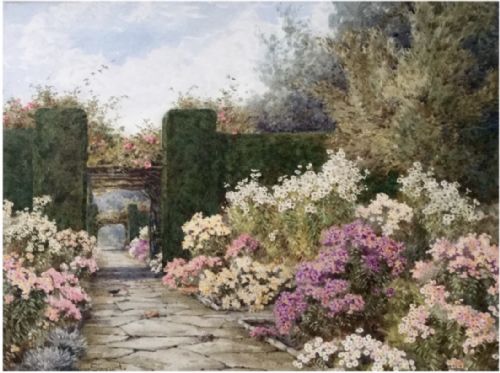
Antique Purple Flower Artwork
Antique purple flower artwork brings the delicate hues of irises, pansies, and lilac straight onto paper and canvas.
Antique Purple Flower Artwork
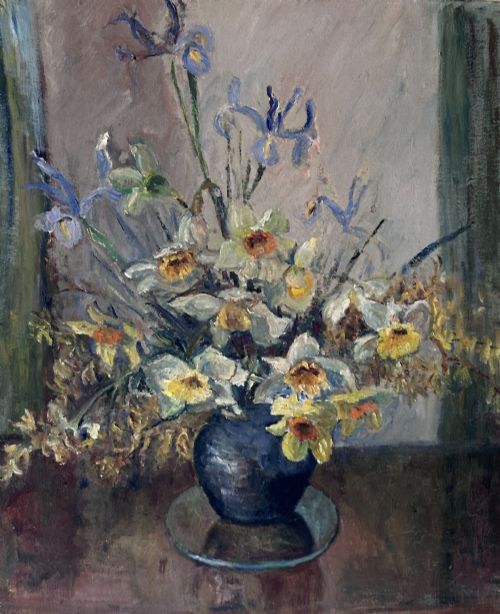
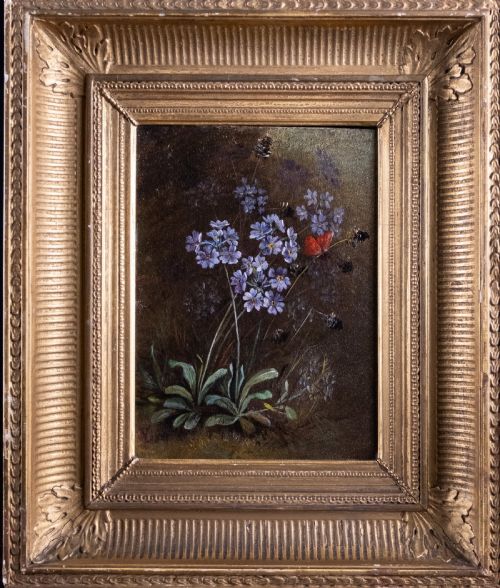
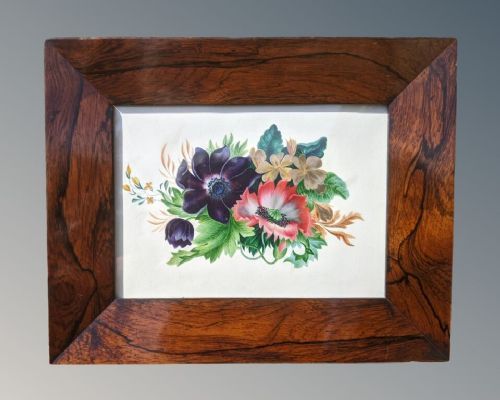
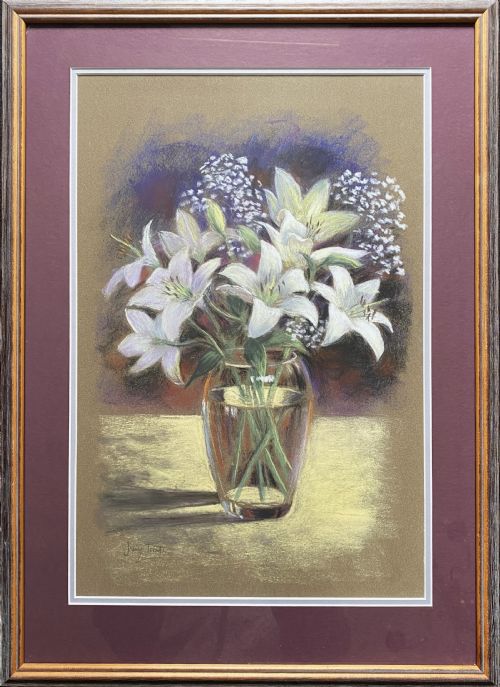
When you search for antique purple flower artwork, you encounter delicate floral still lifes and garden scenes created across the nineteenth and early twentieth centuries. These pieces capture seasonal blooms such as irises, pansies, crocuses, and anemones rendered with botanical observation and painterly skill.
The selection on this page relies primarily on watercolours on paper and oil paintings on canvas or mahogany panels. Victorian and Edwardian examples predominate, alongside French nineteenth-century works and post-impressionist interpretations.
Subjects range from formal still-life arrangements in terracotta pots to loose studies of spring flowers in London parks and country doorways. Each piece reflects the enduring appeal of botanical subjects within period domestic interiors.
How these pieces were made
Makers applied oil paint or watercolour pigments to traditional supports including stretched canvas, heavy paper, and mahogany panels. Oil on canvas works often display textured brushwork while watercolours utilise fluid washes to capture transparent petal details.
Many of these works retain their original period framing, utilising materials such as carved giltwood and gesso, or polished rosewood, to complement the painted composition.
Antique Purple Flower Artwork Retail Price Guide 2026
Typical asking prices for purple flower artwork among the pieces listed under this phrase on Sellingantiques today, from the lower quarter to the upper quarter. They describe what is for sale here now, not the wider market.
Listings feature works executed in oil paint and watercolour on paper, canvas, and mahogany panels.
What varies in quality
Quality rests in the precision of the botanical rendering and the confidence of the brushwork across the petals and leaves. Superior pieces demonstrate subtle tonal variation in the purple pigments rather than flat washes of colour.
The integrity of the original support and the sympathetic pairing of the artwork with its period frame influence the overall distinction of the piece.
Catherine Thomas·Grace Hastie·Elizabeth T. Sutcliffe·Henry D'Arcy Hart·Beatrice Parsons·Lilian Stannard
The Antique Purple Flower Artwork Glossary
- Watercolour
- A painting method where fine pigment is suspended in a water-based, translucent solution applied to paper. This technique allows for delicate colour layering.
- Oil on Canvas
- A traditional painting medium utilising pigments bound in drying oils applied to stretched woven fabric. This method permits rich texture and deep colour saturation.
- Giltwood
- Timber carved and surfaced with a thin layer of gold leaf. It forms a decorative perimeter around many period artworks.
- Still Life
- An artwork depicting inanimate subject matter, typically commonplace objects or natural specimens such as cut flowers and potted plants. These compositions focus on form and colour arrangement.
- Gesso
- A plaster-like mixture applied to wood or canvas as a smooth base for painting or gilding. It provides a stable ground for decorative frame moulding.
Antique Purple Flower Artwork: Frequently Asked Questions
What periods do these floral artworks come from?
The pieces span the nineteenth century through the early twentieth century, including Victorian and Edwardian examples. Artists worked during periods that embraced both detailed botanical illustration and looser post-impressionist styles.
Dates recorded on the listings range from eighteen-hundred-ninety through nineteen-twenty, showing consistent output across several decades of floral painting.
What materials were used to create them?
Painters utilised oil paint and watercolour as their primary mediums. Supports include paper, canvas, and mahogany panels.
Frames often incorporate traditional materials such as giltwood, gesso, and rosewood to house the artwork.
How were these botanical paintings displayed?
Period artworks were typically hung in domestic reception rooms, parlours, and hallways within homes of the Victorian and Edwardian eras. They brought natural garden subjects into interior living spaces.
Original frames made of giltwood or rosewood were selected to complement the domestic decor of the period.
How do I identify the subject matter?
The compositions focus on botanical subjects, specifically garden flowers and potted plants. Recognisable species include irises, pansies, lilac, anemones, crocuses, and Michaelmas daisies.
Artists arranged these blooms either as cut specimens in vases and terracotta pots or as growing plants within landscape settings like parklands.