

Antique Provincial Seating
Antique provincial seating brings practical regional character to a room through solid timber forms and straightforward construction.
Antique Provincial Seating
When you search for antique provincial seating, you find regional chairs, benches, settles, and stools made outside major urban centres for everyday use. These pieces reflect local tastes and available woods rather than formal court designs.
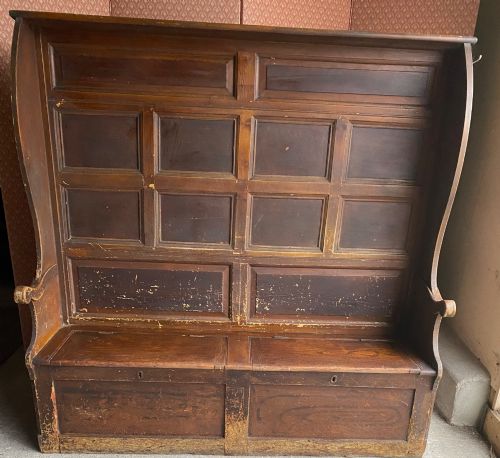
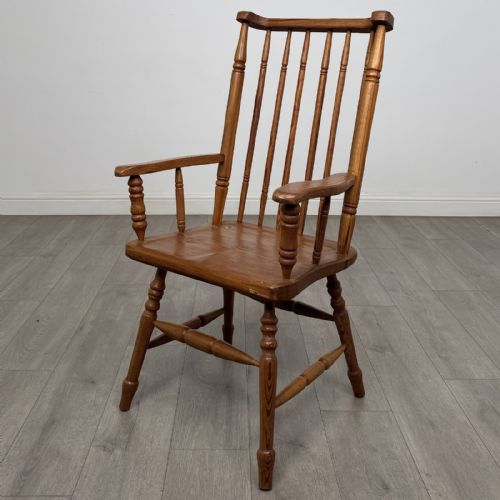
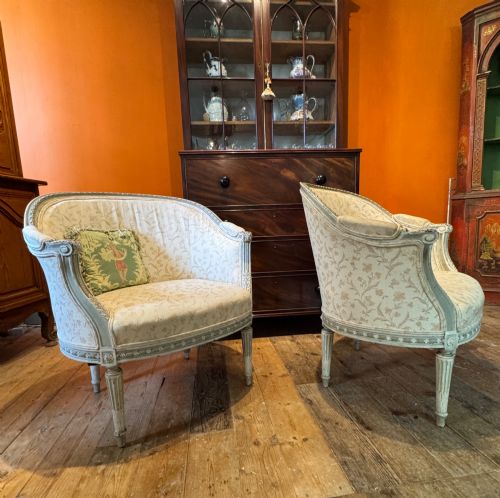
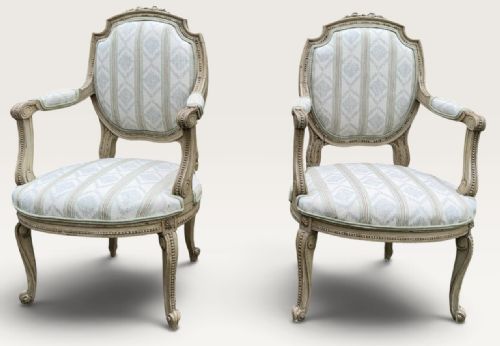
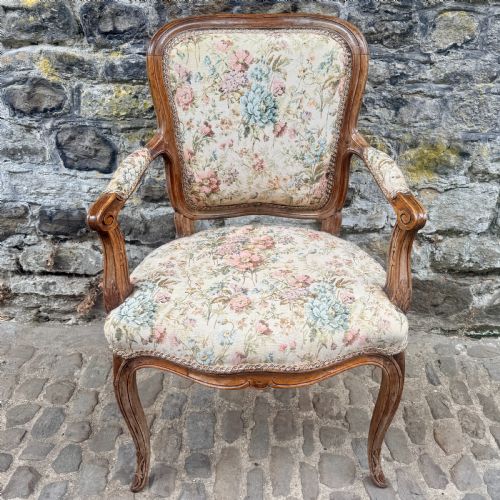
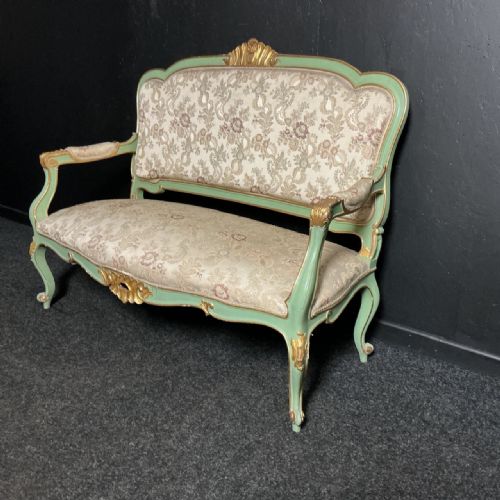
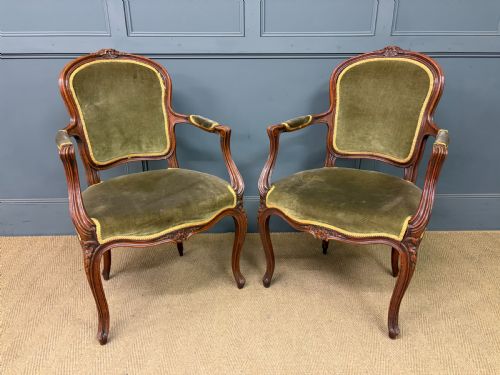
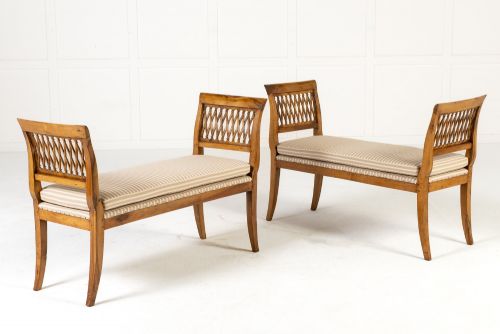
The selections here lean heavily toward French and English country pieces, including dining chairs, armchairs, window seats, and long benches spanning the seventeenth century through the early twentieth century.
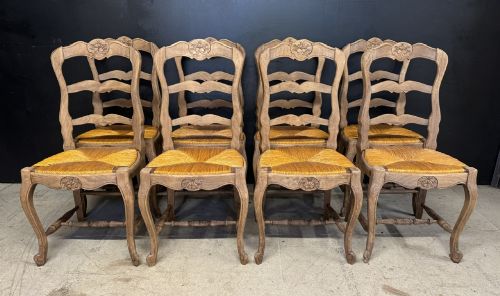
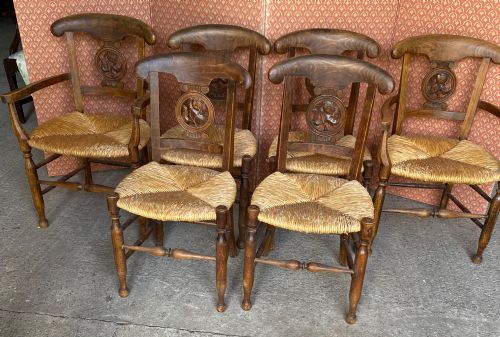
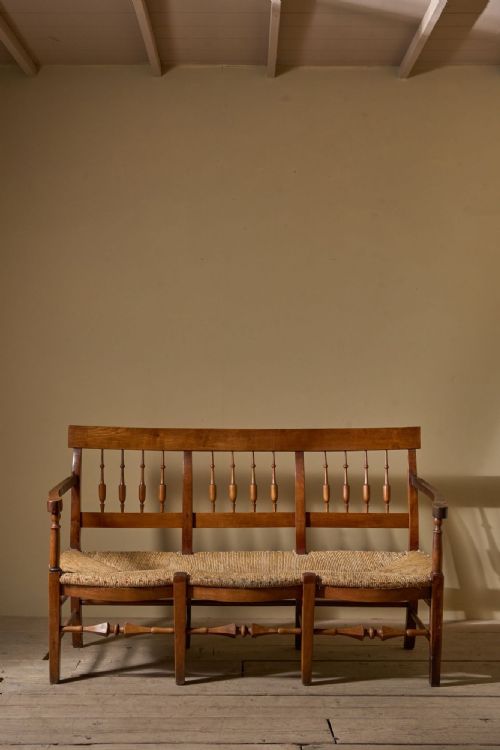
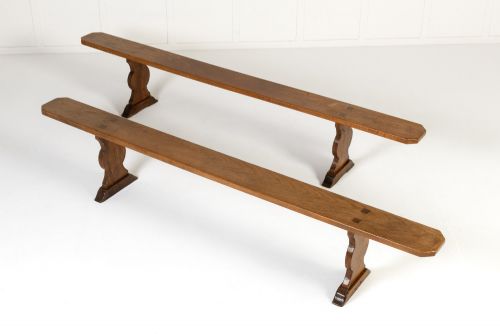
You encounter single items alongside matched sets, ranging from rush-seated hall benches to elm country house armchairs and fruitwood dining sets.
How these pieces were made
Craftsmen built these chairs and benches using sturdy domestic hardwoods like oak, walnut, beech, fruitwood, elm, and cherry, often shaping seats from solid blocks or weaving them with rush.
Joinery relied on traditional pegging, turning, and carving, with many items retaining their original painted finishes or needlework upholstery rather than modern restorations.
Antique Provincial Seating Retail Price Guide 2026
Typical asking prices for provincial seating among the pieces listed under this phrase on Sellingantiques today, from the lower quarter to the upper quarter. They describe what is for sale here now, not the wider market.
Listings feature regional seating spanning the seventeenth, eighteenth, nineteenth, and early twentieth centuries in oak, walnut, beech, elm, and fruitwood.
What varies in quality
Quality rests in the integrity of the timber, the depth of the natural colour, and the preservation of original surfaces such as early paint or patinated fruitwood.
Proportion and the restraint of regional carving distinguish finer country work from ordinary utility seating, alongside the survival of original rush or fabric upholstery.
The Antique Provincial Seating Glossary
- Settle
- A wooden bench with a high back, solid arms, and often a box seat or enclosed lower section to block drafts. Early examples date to the seventeenth century in oak or elm.
- Bergère
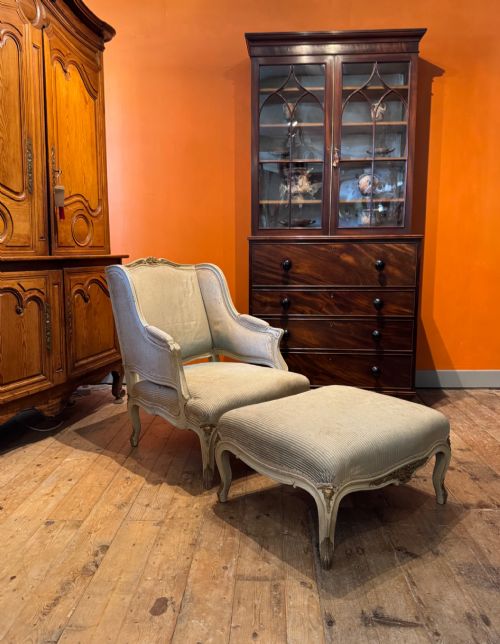
- An enclosed upholstered armchair with wooden framing, popular in French provincial and revival seating. Frames commonly use walnut, oak, or beech with cane or fabric panels.
- Smokers bow
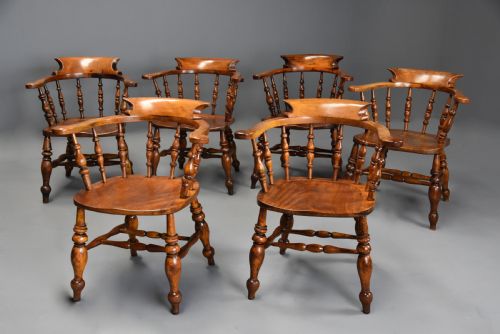
- A sturdy, low-backed Windsor chair type with a rounded arm rail, frequently found in English country settings. These pieces utilise turned spindles and solid wood saddles.
- Fauteuil
- An open-arm upholstered French chair with exposed wooden framing around the back and seat. Walnut and oak are typical timbers for provincial interpretations.
- Joint stool
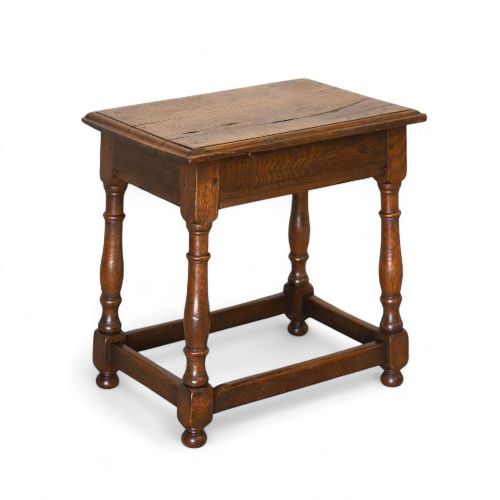
- A low wooden stool constructed with mortise and tenon joints using oak or other dense timbers. These early forms served multiple household functions.
Antique Provincial Seating: Frequently Asked Questions
How do I clean an antique painted chair?
Dust surfaces gently with a dry, soft cloth to protect fragile historical layers. Avoid harsh chemical cleaners that strip old paint or dry out aged wood.
Test any mild cleaning solution on a hidden spot first. Keep pieces away from direct sunlight and damp conditions.
Are provincial chairs sturdy enough for daily use?
Most regional seating was built for heavy everyday utility from solid hardwoods like oak, elm, and fruitwood. Simple joinery often remains resilient after centuries.
Check leg joints and seat stability periodically. Lighter rush seats require more care than solid timber planks.
How do I identify French provincial styles?
French provincial pieces display simpler, heavier carved details than royal court furniture. Local woodworkers interpreted Louis XV and Régence fashions using regional fruitwoods, walnut, and oak.
Look for cabriole legs, muted proportions, and original painted finishes rather than giltwood.