



Antique Prism Lighting
Antique prism lighting brings together cut glass, crystal and gilt brass to cast bright, refractive patterns across a room.
Antique Prism Lighting
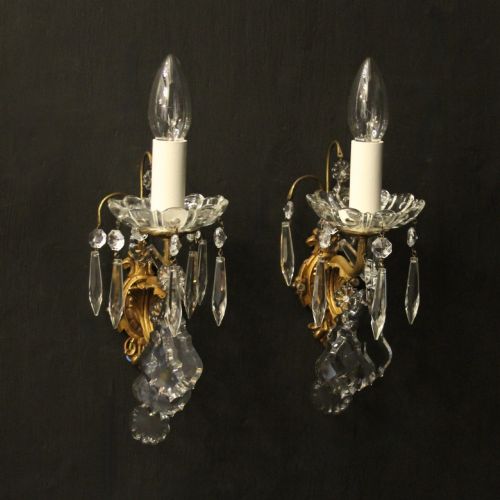
Antique prism lighting encompasses hanging chandeliers, wall lights, and mantel lustres that utilise glass droplets to catch and scatter light. The pieces span periods from the Regency era through Victorian times, Edwardian designs, and into the 1930s.
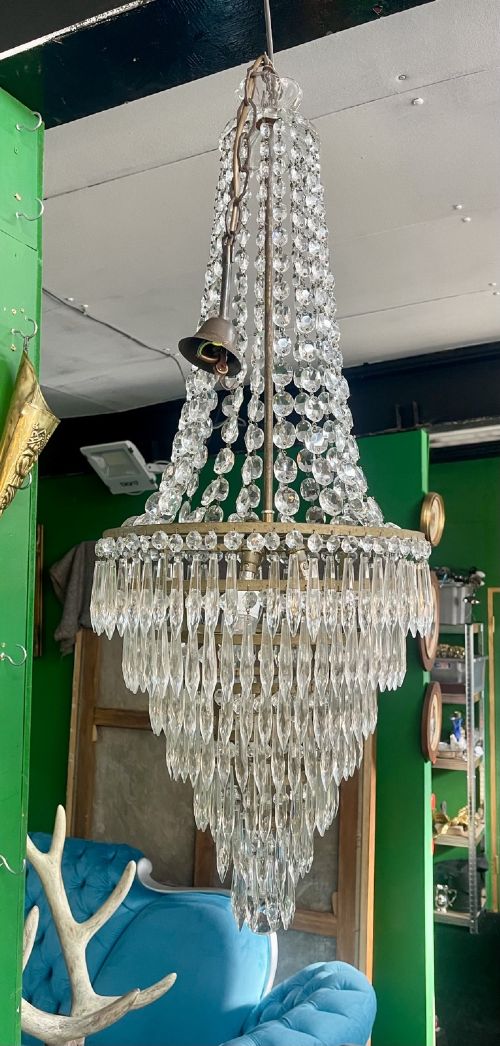
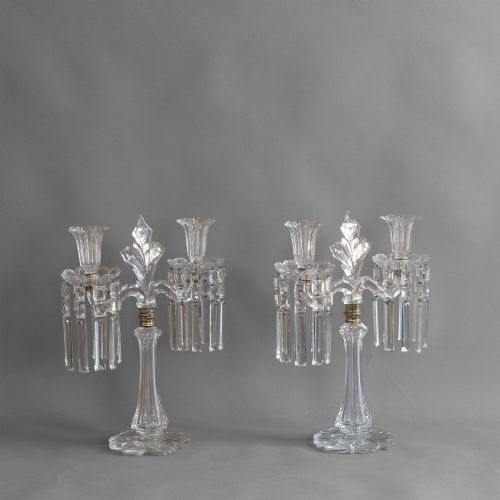
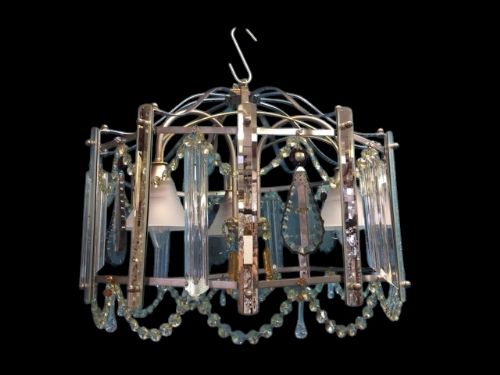
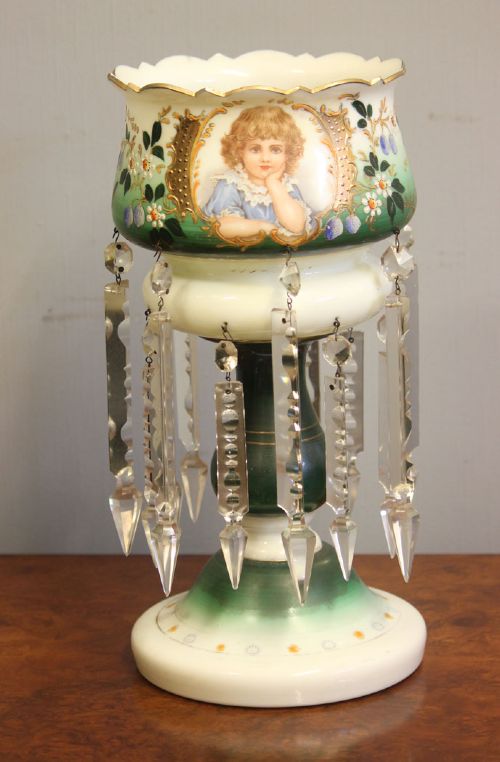
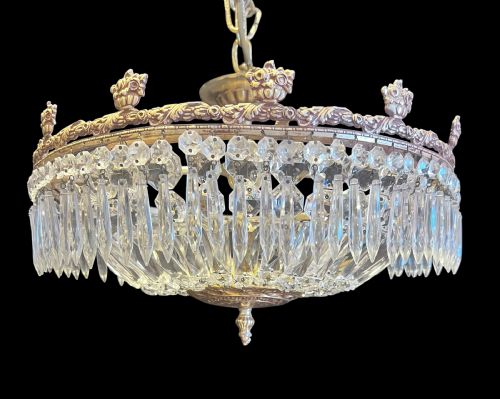
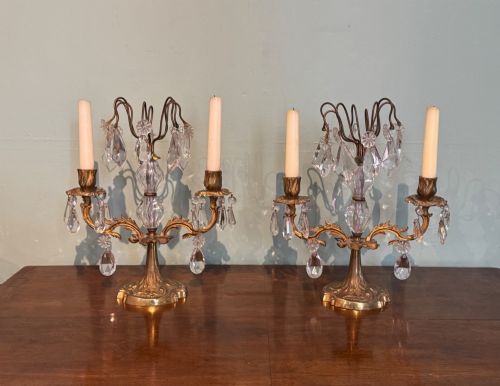
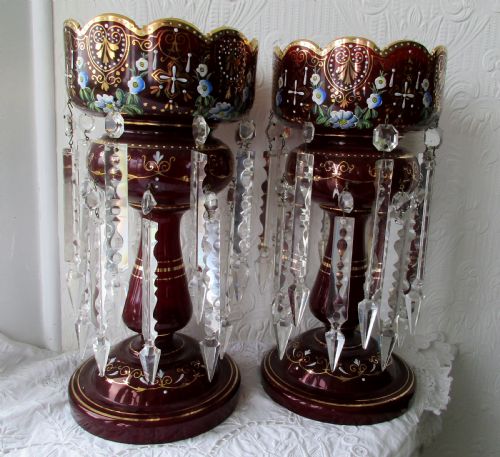
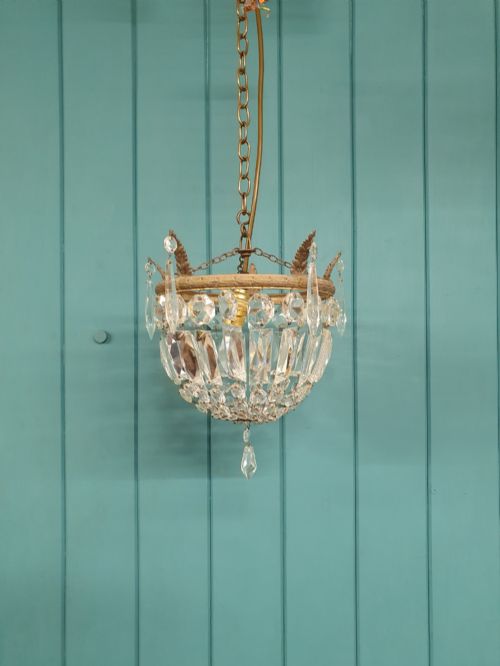
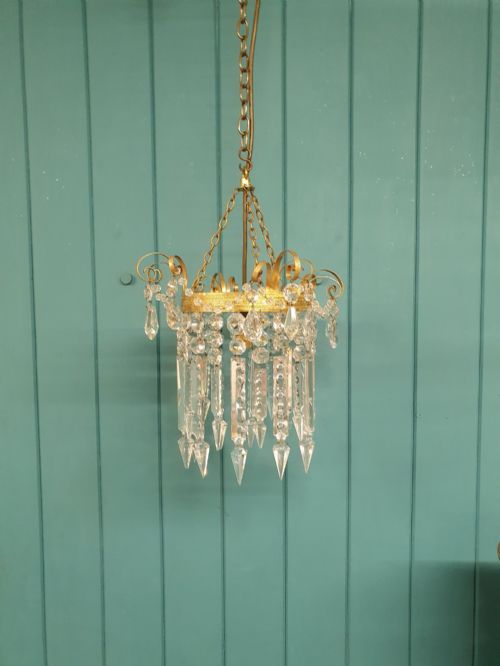
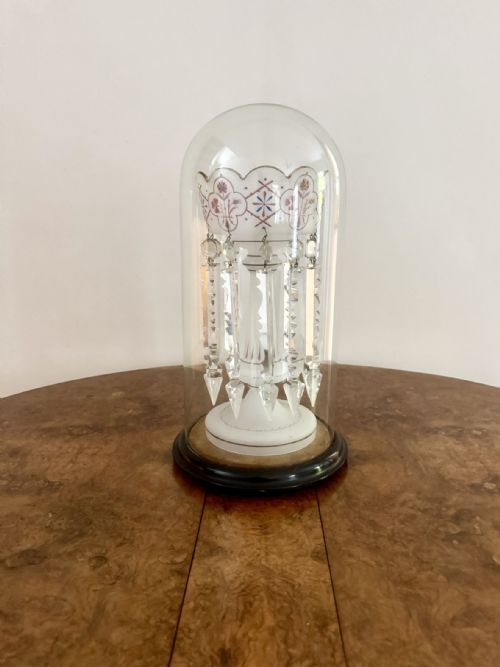
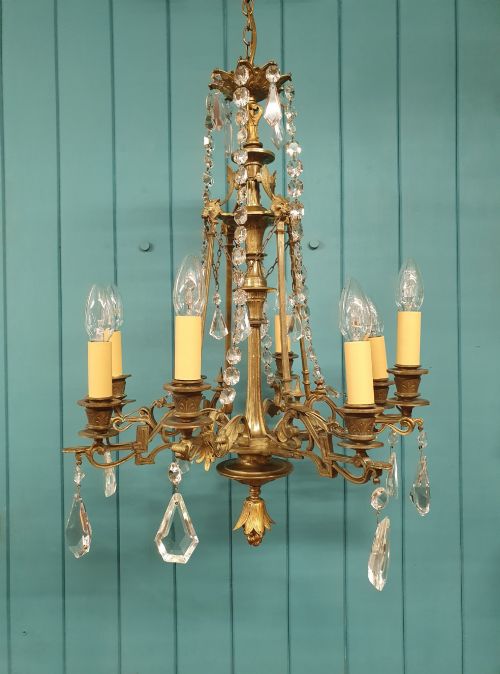
Chandeliers and ceiling fixtures dominate the selection, often taking the form of tent and waterfall styles, bag fittings, or brass frames set with coffin and spike prisms. Alongside these hang pairs of glass lustres and candelabra designed for mantelpieces and tables.
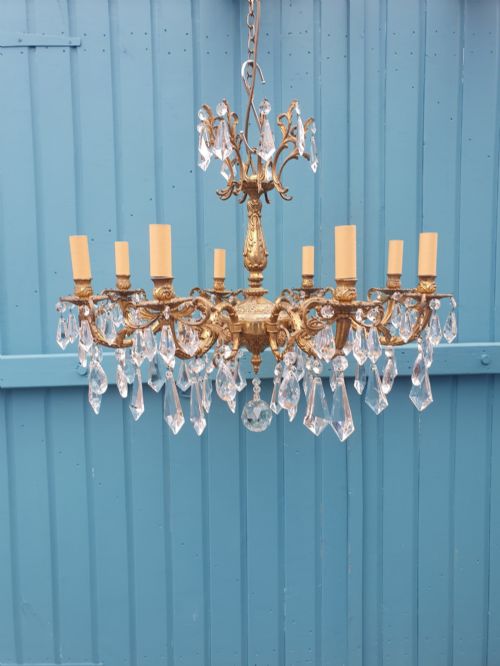
French influence runs deep through the selection, with gilt brass and ormolu mounts appearing frequently beside English Victorian ruby, pink, yellow, and bohemian overlay glass. Buyers meet everything from small, compact hallway fittings to large multi-arm chandeliers.
Materials and Construction
Brass, bronze, and gilt metal provide the structural skeletons for these pieces, supporting heavy arrangements of cut glass and crystal prisms via wire pins and delicate metal frames.
Prisms, drops, and beads are shaped from crystal and glass, occasionally featuring colour overlays in ruby, pink, or yellow hues before being hand-cut to maximise light refraction.
Antique Prism Lighting Retail Price Guide 2026
Typical asking prices for prism lighting among the pieces listed under this phrase on Sellingantiques today, from the lower quarter to the upper quarter. They describe what is for sale here now, not the wider market.
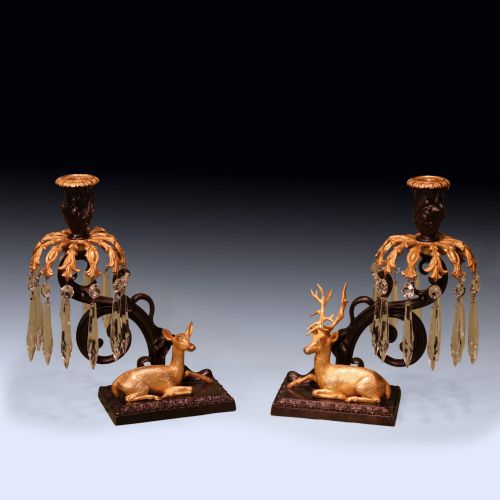
Cast bronze stags and does occasionally stand guard beneath candle sockets, holding heavy crystal lustres upon their antlers.
Judging Quality
Quality rests upon the crispness of the glass cutting and the clarity of the crystal drops, where sharper facets yield brighter light dispersion.
The weight and detail of the metalwork set finer pieces apart, visible in cast brass elements, lion masks, ormolu mounts, and substantial gilt bronze frames.
The Antique Prism Lighting Glossary
- Lustre
- A decorative tabletop ornament featuring hanging crystal prisms, often formed from coloured or overlay glass.
- Prism
- A cut glass or crystal pendant suspended from a lighting fixture to refract light into spectral colours.
- Plafonniere
- A shallow ceiling light fitting mounted close to the plasterwork, frequently framed in brass and hung with crystal drops.
- Ormolu
- Gilded bronze or brass mounts applied to decorative objects and lighting fixtures during the nineteenth century and earlier.
Antique Prism Lighting: Frequently Asked Questions
Where should I hang an antique prism chandelier?
These fixtures suit hallways, dining rooms, and bedrooms where their refractive qualities create patterns on surrounding walls and ceilings. Lower ceilings benefit from flush plafonniere fittings or smaller bag chandeliers.
Larger multi-arm chandeliers require adequate clearance beneath them and sturdy ceiling joists to support the combined weight of the brass frame and glass drops.
How do I clean antique crystal and glass prisms?
Maintenance involves wiping individual glass drops with a soft cloth dampened in a mild solution of warm water and mild detergent. Rinsing with clean water prevents soap residue from dulling the cut facets.
Leaving the prisms attached to the frame prevents breakage, though delicate wiring or antique brass plating requires careful avoidance of excess moisture.
What is the difference between a lustre and a candelabra?
Table lustres serve primarily as decorative mantel ornaments consisting of a glass vase or stem fitted with a ring of hanging crystal prisms. They often include candle sockets but function mainly to catch and reflect ambient light.
Candelabras are built specifically to hold multiple candles for illumination, sometimes incorporating prism drops around the drip pans to enhance the brightness of the flame.
How can I date an antique chandelier?
Dating relies on stylistic clues, metal types, and the specific cut of the glass prisms used throughout the piece. Regency and Victorian examples often feature heavy brass frames and hand-cut crystal, while Edwardian and 1930s pieces introduce sleeker lines and geometric Art Deco influences.
Examining the wiring methods and suspension fixings also helps determine whether a fixture dates to the nineteenth century or the early twentieth century.