


Antique Powder Mirror Compact
These antique powder mirror compact pieces are small pocket mirrors and cosmetic cases holding glamour from the twentieth century.
Antique Powder Mirror Compact
When you search for an antique powder mirror compact, you uncover pocket accessories designed for cosmetics and personal grooming during the early decades of the twentieth century. The selection spans vanity cases, combination compacts, and traditional powder compacts intended for ladies to carry in handbags or evening bags.
The version you are most likely to meet on this page belongs to the Art Deco period, typically taking form around nineteen thirty with geometric lines and practical mirror inserts. Alongside these geometric designs, pieces emerge from nineteen hundred, nineteen twenty, nineteen forty, and nineteen fifty.
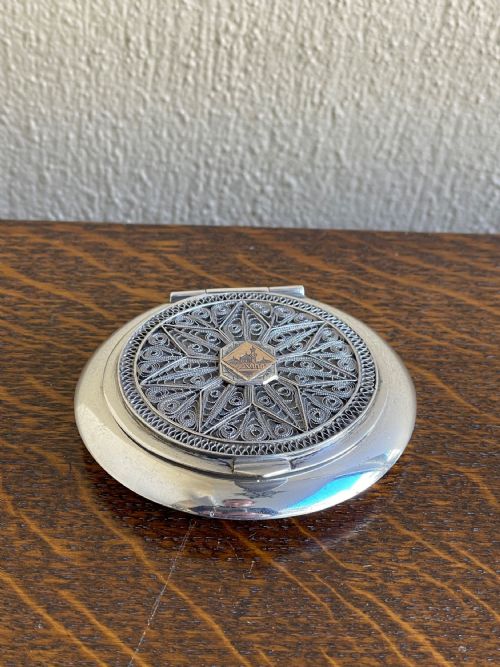
Origins stretch across different stylistic traditions including Chinese Export Silver, Persian filigree work, and Mid-Century Italian craftsmanship. Makers such as Henry Matthews, Cartier, Richard Hudnut, and Houbigant appear among the listings, alongside mesh bodies and suede linings.
Materials and construction methods
Silver, sterling silver, yellow gold, and eight hundred grade silver form the metallic foundations of these vanity items, accompanied by brass, gilt metal, chrome, and flexible mesh. Smiths shaped these metals through casting and engine turning to create textured geometric patterns on the outer casing.
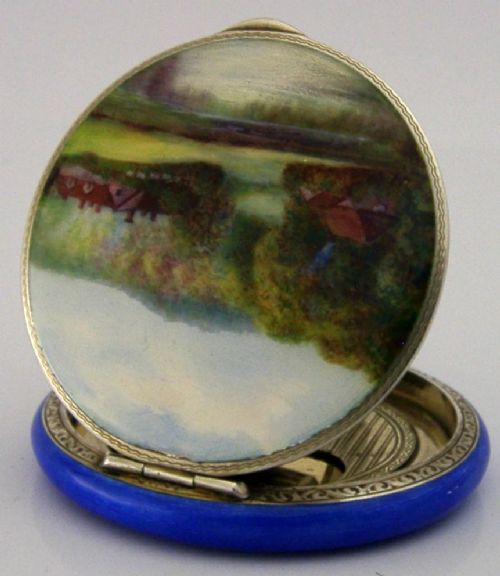
Enamel and guiloche enamel add colour to the metal surfaces, often applied with hand-painted details or translucent layers over engraved grounds. Precious stones such as rubies and diamonds occasionally accent the precious metal bodies, while suede lines the interior compartments.
Listings feature items spanning the decades from nineteen hundred to nineteen fifty, constructed in enamel, silver, gold, mesh, and suede.
Distinguishing quality in portable vanities
The distinction between standard production and exceptional work rests on the complexity of the materials and the precision of the mechanics. Pieces incorporating precious metals, solid gold, or fully integrated lipstick holders demonstrate higher material ambition than chrome or brass alternatives.
Enamel execution separates simpler coloured surfaces from intricate hand-painted miniatures or precise guiloche patterns under glass or clear glaze. Signed pieces carrying the marks of established makers command attention through superior finishing and deliberate artistic attribution.
Henry Matthews·Giuliano Spinelli Florence·Cartier·Richard Hudnut·Houbigant
The Antique Powder Mirror Compact Glossary
- Guiloche enamel
- Enamel applied over a metal surface that has been machine-turned with an intricate geometric pattern. The underlying engraving shows through the translucent coloured glass.
- Filigree
- Delicate metalwork formed from fine twisted wires soldered together in openwork patterns. This technique appears on Persian silver examples.
- Silver-gilt
- Silver that has been coated with a thin layer of gold on its surface. This finish provides the warm tone of gold while utilising a silver base.
- Engine turned
- Metal decorated with precise geometric patterns cut by a specialised lathe. This mechanical engraving appears frequently on silver and chrome cases.
- Vanity case
- A larger cosmetic container designed to hold multiple items such as powder, mirror, and lipstick. These combination pieces offer greater utility than simple single-purpose compacts.
Antique Powder Mirror Compact: Frequently Asked Questions
What is an antique powder mirror compact?
It is a pocket-sized cosmetic case featuring an internal mirror and a compartment for face powder, produced primarily during the first half of the twentieth century.
These objects served as essential daily accessories for women, combining personal grooming utility with decorative artistry.
How do I date an art deco compact?
Dating relies on stylistic markers such as geometric motifs, symmetrical lines, and the presence of chrome or blue enamel typical of the nineteen twenties and nineteen thirties.
Maker marks, hallmarks, and engraved presentation dates on the metal casing provide further chronological certainty.
What materials were used for these compacts?
Manufacturers utilised sterling silver, yellow gold, brass, gilt metal, and chrome for the structural bodies and exterior cases.
Surfaces frequently incorporated enamel, mesh fabric, or suede linings, while luxury versions added rubies and diamonds.
Were compacts made with lipsticks?
Yes, some examples are known as combination compacts or vanity cases that integrated a matching lipstick holder alongside the powder well and mirror.
These multi-functional designs offered complete cosmetic solutions for evening wear and travel.