



Engine Turned Compact Box
These engine turned compact box pieces span the Art Deco and Edwardian periods in sterling silver, enamel, and rose gold.
Engine Turned Compact Box
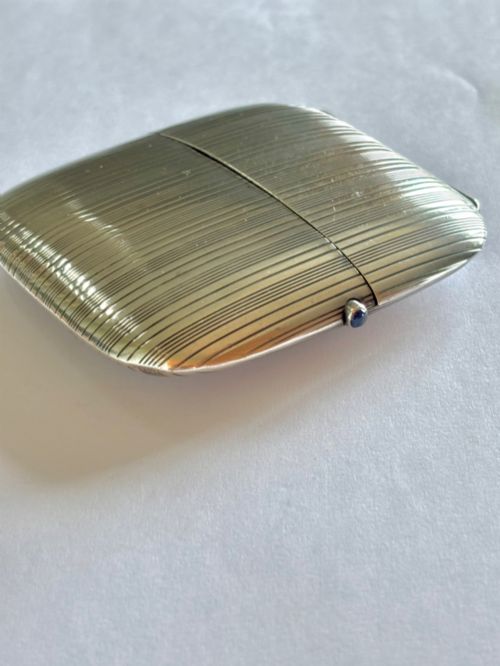
An engine turned compact box groups together portable silver and enamel items designed for personal use, taking forms such as cigarette cases, powder compacts, pill boxes, and vanity cases. These objects date across the nineteenth century, the Edwardian era, and strongly into the Art Deco period of the 1920s, 1930s, and 1940s.
The pieces encountered on this page most frequently adopt the geometric lines and machine-tooled patterns of the Art Deco era, alongside earlier Victorian examples. Forms range from simple silver cases and desk accessories to elaborate travel clock stands and fitted vanity sets with silk and leather interiors.
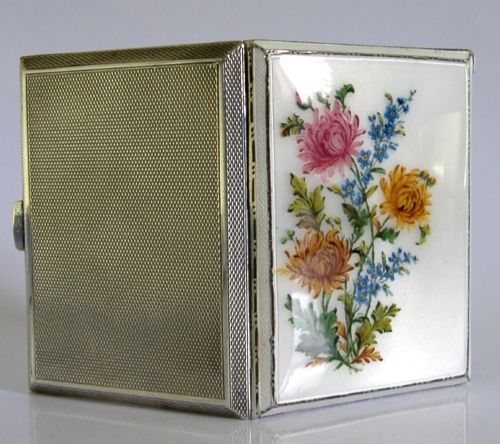
Makers utilised these pocket-sized containers to hold cosmetics, tobacco, or small valuables, combining utility with decorative metalwork. Collectors find items ranging from plain sterling silver constructions to vibrant pieces augmented by guilloche enamel and hand-painted floral details.
How they were made
Silversmiths constructed the primary body of each piece using sterling silver, silver-gilt, and rose gold, often applying mechanical turning techniques to engrave precise geometric patterns directly onto the metal surface. This process created textured surfaces that caught the light.
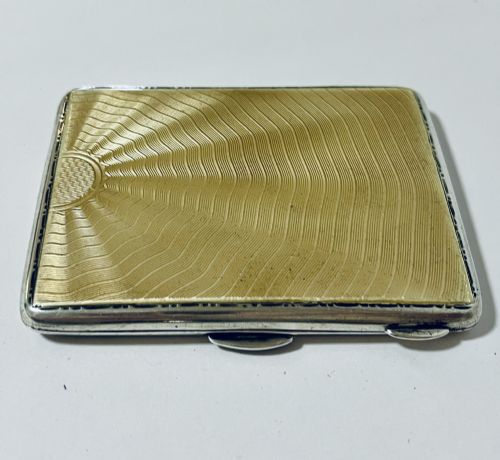
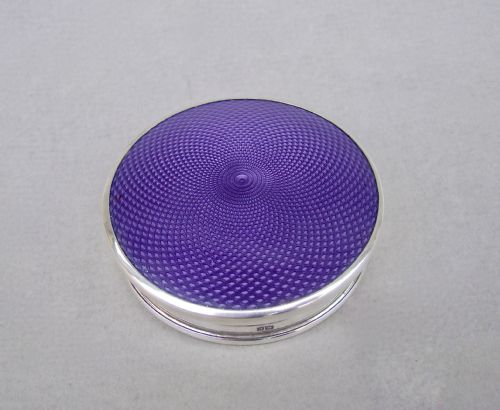
Many items incorporate guilloche enamel or hand-painted enamel panels, fused to the metal base through high-heat firing. Interior compartments frequently feature linings of silk or leather, accompanied by fitted components such as original sponges and glass mirrors.
Materials span sterling silver, silver-gilt, rose gold, enamel, leather, silk, and celluloid across multiple decades.
What varies in quality
Quality rests upon the crispness of the engine turned engraving and the preservation of the enamel work across the exterior surface. Finer examples display deep, sharp geometric incisions and pristine enamel free from chips or hairline fractures.
The internal fittings and associated elements, such as original leather cases, intact silk linings, and fully functional hinged lids, elevate the standing of a piece. Finer works also involve prestigious makers or precious additions like rose gold and diamonds.
Nathaniel Mills·The Daniel Manufacturing Co·Van Cleef Arpels
The Engine Turned Compact Box Glossary
- Engine turned
- A method of mechanical engraving that cuts precise, intricate geometric patterns into metal surfaces. This technique creates a textured finish designed to reduce glare and catch the light.
- Guilloche enamel
- A decorative technique where enamel is applied over an engine turned metal ground. The pattern beneath shows through the translucent coloured glass.
- Vinaigrette
- A small ornamental box featuring a perforated internal grille. It held a sponge soaked in aromatic vinegar to revive the user.
- Silver-gilt
- Silver that has been coated with a thin layer of gold on its surface. This finish provides a warm golden tone while retaining a silver core.
- Celluloid
- An early thermoplastic material used in personal accessories during the early twentieth century. It often imitated natural substances like ivory or tortoise shell.
Engine Turned Compact Box: Frequently Asked Questions
What periods do these boxes cover?
The pieces span from the nineteenth century through the Edwardian era up to the 1940s.
Most items concentrate heavily in the Art Deco decades of the 1920s and 1930s.
What materials are typically used?
Makers worked primarily in sterling silver, silver-gilt, and rose gold.
Decoration often includes enamel, celluloid, silk, and leather.
How were these compacts used?
These portable containers held cosmetics, powder, cigarettes, and pills.
Some specialised items functioned as vinaigrettes, travel clock cases, and vanity sets.
How do I identify Art Deco pieces?
Art Deco items feature geometric engraving, streamlined silhouettes, and machine-tooled engine turning.
Enamel decoration in bright or contrasting colours frequently accompanies these designs.