



Antique Powder Bowl
An antique powder bowl brings dressing table elegance from past decades into daily use.
Antique Powder Bowl
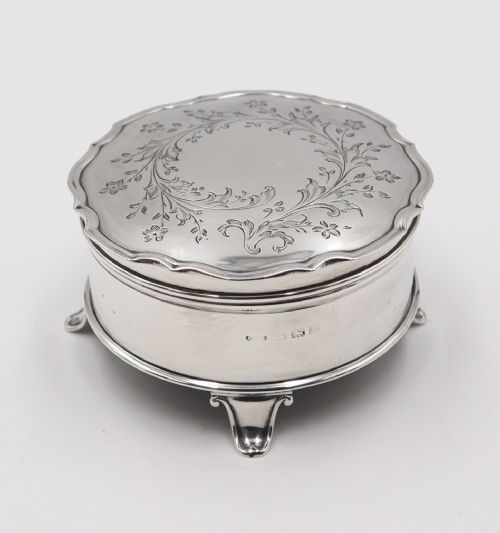
An antique powder bowl serves as a vanity accessory designed for holding loose cosmetic powder or dressing table items. The selection spans periods from the Georgian era through the Edwardian years up to the 1930s. Art Deco examples feature prominently alongside Edwardian and 19th-century designs.
Makers shaped these items in forms ranging from lidded bowls and vanity jars to trinket boxes and ceramic powder boxes. French, German and English origins appear across the selection, often taking circular or figural shapes on dressing tables.
How they were made
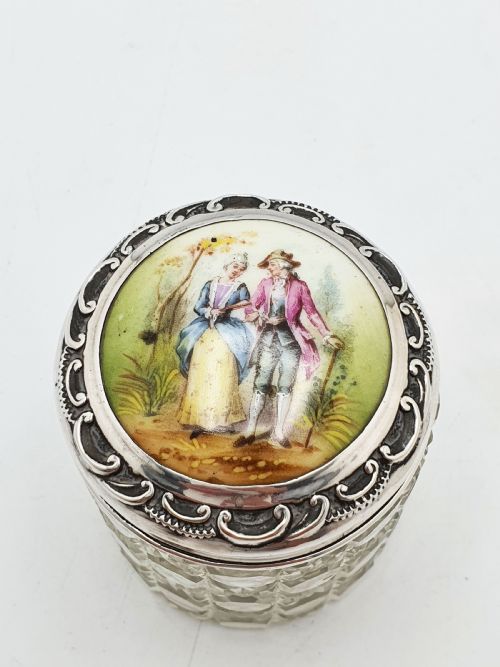
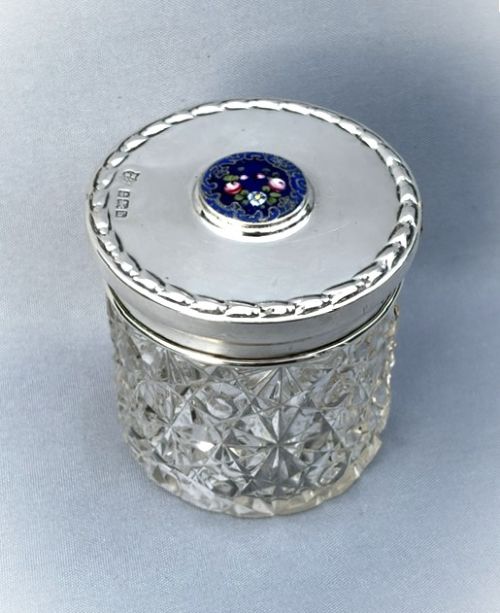
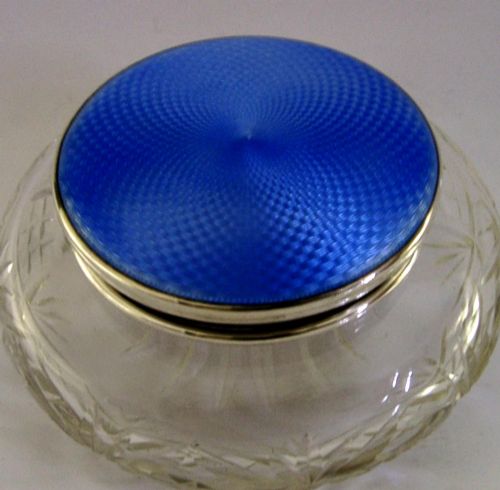
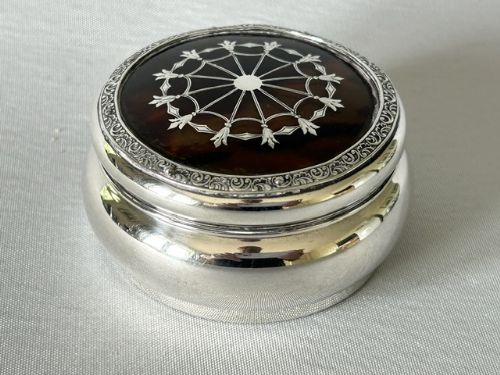
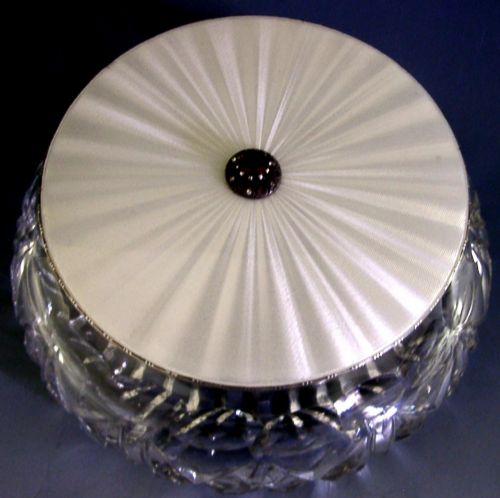
Craftsmen combined sterling silver, vermeil, or brass with cut glass, crystal, and coloured glass bodies. Enamel work, tortoiseshell with pique, and ceramic materials also form the basis of these dressing table pieces.
Pottery and porcelain examples incorporate moulded figures, half dolls, flapper girls, and jesters into the lids. Metal elements frequently carry hallmarks from assay offices in cities such as Birmingham and Edinburgh.
Several Art Deco powder bowls feature ceramic half doll lids peering up from the vanity.
What varies in quality
Material combination and decorative complexity separate standard production from finer work. Pieces incorporating detailed sterling silver lids, hand-painted enamel, or tortoiseshell display superior craftsmanship.
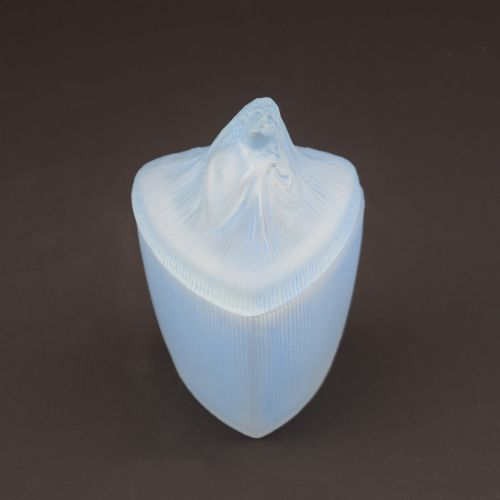
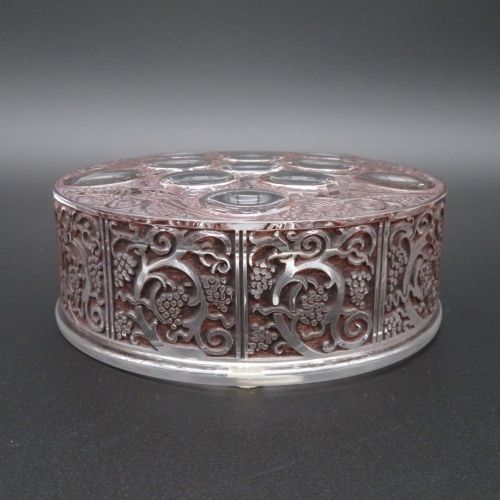
Origin and maker attribution also influence distinction. Works by notable designers like Rene Lalique or documented pottery houses carry greater artistic definition than anonymous factory pieces.
Rene Lalique·Asprey and Co·Henry Williamson Ltd·A E Jones
The Antique Powder Bowl Glossary
- Hallmark
- An official stamp applied to precious metals indicating the standard of purity, the assay office, and the date letter. English silver carries these marks on the rims and mounts.
- Pique
- A decorative technique using tiny points of gold or silver inlaid into tortoiseshell or ivory. It appears on Edwardian trinket boxes.
- Vermeil
- Sterling silver plated with a thin layer of gold. French covered bowls utilise this finish.
- Half doll
- A ceramic upper torso used as a decorative lid on powder boxes and tea cosies. They gained popularity during the Art Deco period.
- Cut glass
- Glass decorated by cutting facets or patterns into the surface using a wheel. It provides weight to dressing table jars.
Antique Powder Bowl: Frequently Asked Questions
What is an antique powder bowl used for?
These vessels held loose face powder on dressing tables before the advent of modern compacts. Today they serve as decorative containers for small trinkets or vanity accessories.
Collectors place them on dressing tables or display shelves to retain period dressing room charm.
How do I identify an Art Deco powder bowl?
Art Deco examples typically date from the 1920s and 1930s, featuring geometric forms or stylised figural lids such as flapper girls and pierrots. Ceramic and glass are common materials from this stylistic movement.
French and German potteries produced many of the figural and novelty designs found in this category.
Are silver hallmarks useful for dating?
Silver mounts and lids often bear assay office marks and date letters which pinpoint the exact year of manufacture. Birmingham and Edinburgh hallmarks are frequently seen on British pieces.
Matching the letter stamp to historical assay records gives a reliable production date.
What materials were used in Edwardian powder jars?
Edwardian pieces frequently combine cut glass or cranberry glass with sterling silver lids. Tortoiseshell with pique inlay also defines the luxury dressing table items of this era.
Enamel decoration in blue or pink further distinguishes Edwardian and George V vanity jars.