






Antique Potboard Base
An antique potboard base is a sturdy kitchen or dining timber table with a low slatted shelf for heavy pottery, built to anchor a rustic interior.
Antique Potboard Base
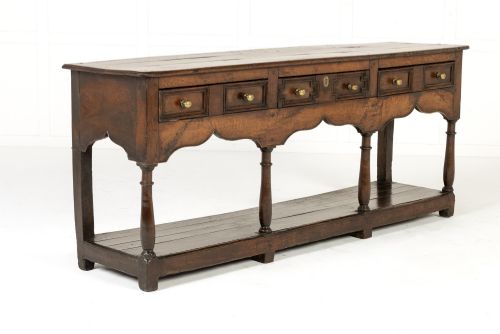
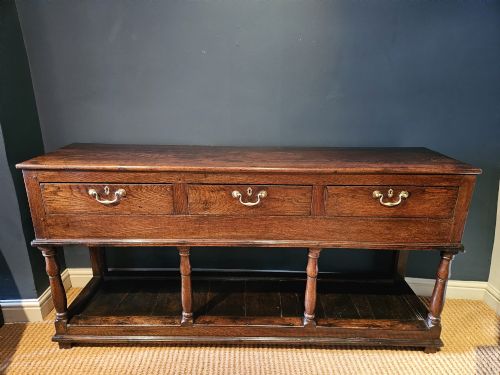
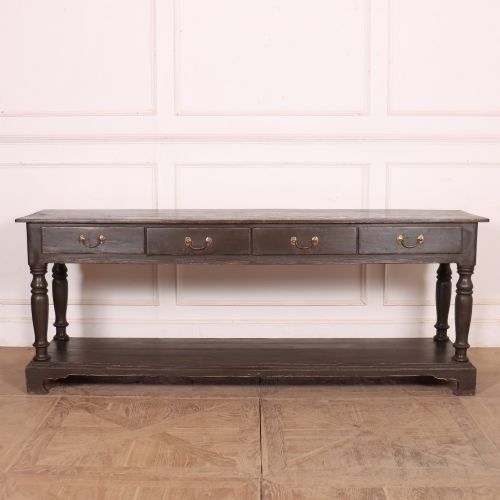
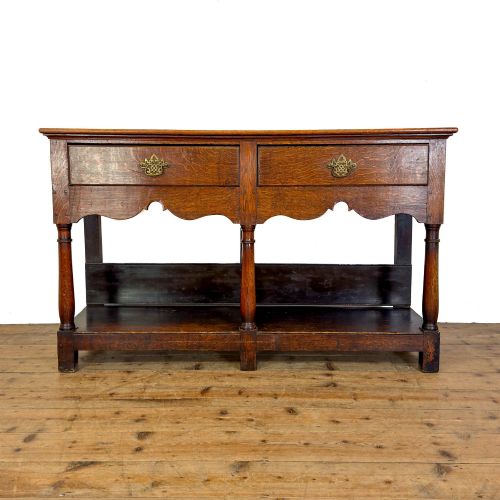
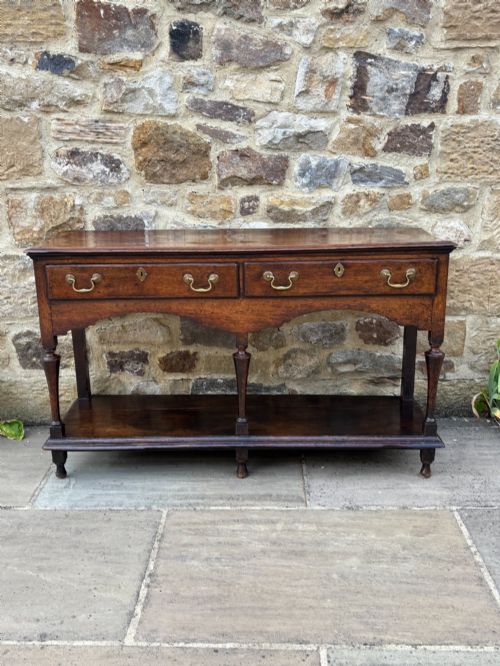
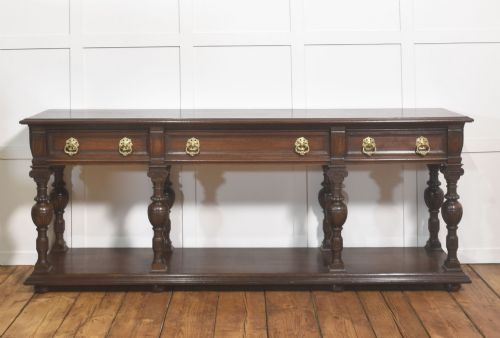
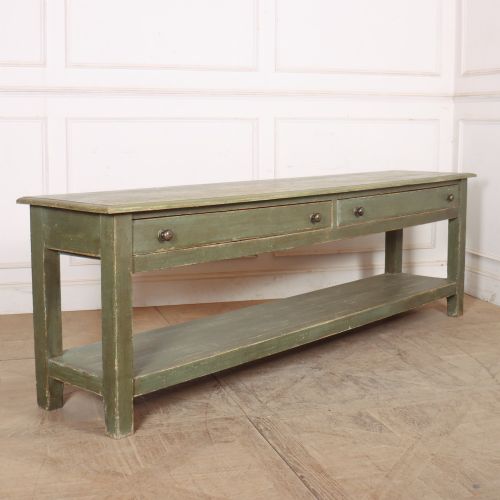
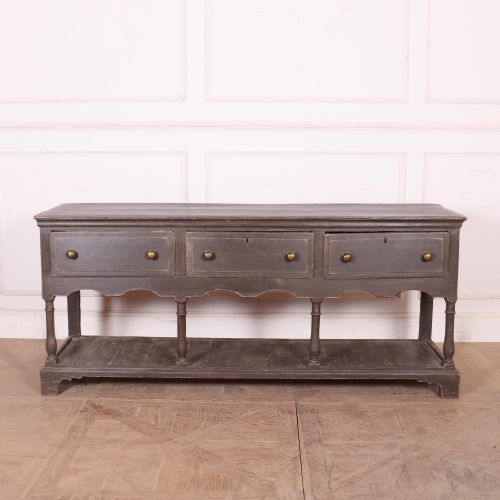
An antique potboard base is a low wooden sideboard or serving table designed with a boarded lower shelf near the floor. You encounter these primarily in 18th century and 19th century oak, often categorised under English country, Georgian, or Welsh regional styles.
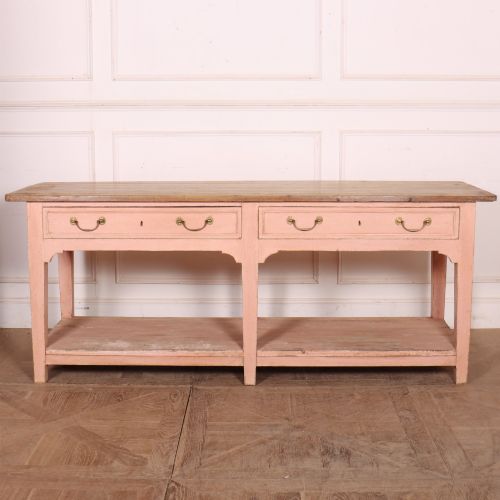
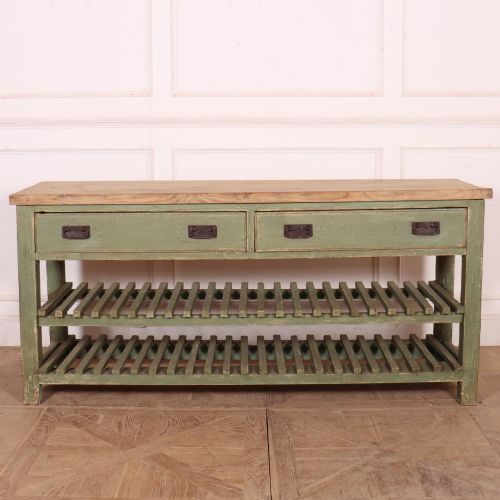
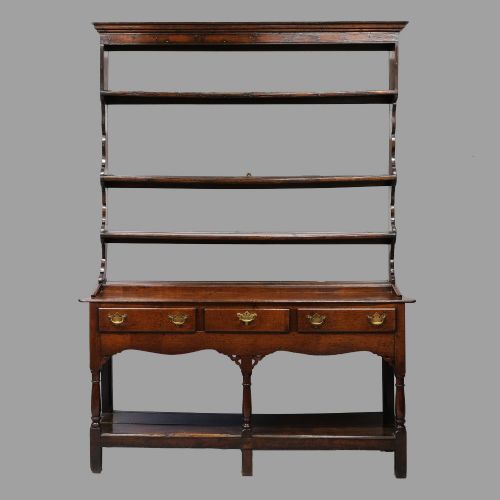
The form functions as a long table fitted with drawers across the top and a continuous planked shelf beneath for storage. Regional variations include Scottish, Welsh, and English country pieces, sometimes paired with plate racks or altered down from full dressers over time.
Makers built these pieces for utilitarian service in large country houses and farmhouses. They survive today as practical sideboards for dining rooms and kitchens, offering a wide top surface and open lower display space.
Materials and construction methods
Joiners relied heavily on native timber, building the primary frames and drawers in solid oak, occasionally supplemented with elm for drawer linings and pine for secondary framing. Boards were hand-sawn and joined with pegged mortise and tenon joints to withstand heavy daily use.
Surface treatments range from waxed bare timber to painted wood finishes in historic colours, reflecting domestic updates through the Victorian period and later. Iron and brass handles, drawer pulls, and hinges secure the drawer fronts, often showing replacement or period-appropriate hardware.
Antique Potboard Base Retail Price Guide 2026
Typical asking prices for potboard base among the pieces listed under this phrase on Sellingantiques today, from the lower quarter to the upper quarter. They describe what is for sale here now, not the wider market.
Many an antique potboard shelf still bears the faint circular scars left by generations of heavy earthenware mixing bowls sliding across the timber.
Assessing quality and proportion
Quality rests in the proportion of the base, the thickness of the top boards, and the retention of the original lower potboard shelf without extensive timber replacement. Finer examples display clean timber figuring in the oak, well-cut cockbeading around drawers, and minimal alteration to the structural legs and feet.
The integrity of the lower potboard shelf and the depth of the drawer banks dictate the desirability of the piece. Untouched country surfaces with deep patination command greater interest than heavily stripped or over-restored timber.
The Antique Potboard Base Glossary
- Potboard
- The low slatted or planked shelf fitted between the lower stretchers of a dresser base, traditionally used for storing heavy earthenware pots and platters.
- Dresser base
- A low sideboard fitted with drawers along the upper section, standing on legs or stile feet without an upper plate rack.
- Cockbeading
- A narrow semi-circular moulding applied to the edges of drawer frames to protect the drawer margins and add neatness to the elevation.
- Mortise and tenon
- A traditional woodworking joint where a projecting tenon fits tightly into a corresponding mortise hole, secured with wooden pegs.
- Elm
- A tough, interlocking native timber frequently utilised for drawer bottoms and structural elements due to its resistance to splitting.
Antique Potboard Base: Frequently Asked Questions
What is a potboard base used for?
These low tables serve as practical sideboards in modern dining rooms, kitchens, and hallways. The top surface provides ample room for serving food or displaying objects, while the lower shelf holds books, baskets, or large ceramics.
Historically, the lower shelf kept heavy cookware off damp flagstone floors. Today, that open space gives the furniture a grounded, airy presence compared to closed cupboards.
How do I date an antique oak base?
Dating relies on examining the construction methods, timber characteristics, and hardware fixings. Hand-sawn boards, pegged joints, and drawer construction styles indicate 18th century or early 19th century origins.
Later Victorian and early 20th century revivals often feature more uniform machine sawing and different internal linings. Patination and wear patterns around the drawer pulls also help establish the age of the piece.
Are these bases parts of full dressers?
Many lower sections started life as part of a taller dresser that included an upper plate rack. Over the centuries, houses changed and some racks were separated or discarded.
When buying, look closely at the top surface to see if peg holes or support marks indicate a former rack stood there. Both standalone serving tables and separated dresser bases are historically correct forms.
How do I care for an old oak surface?
Maintain timber surfaces by applying a traditional beeswax paste occasionally and buffing it with a soft cloth. Avoid placing antique wood in direct sunlight or near heat sources to prevent the planks from splitting.
Keep liquids off the bare oak and use mats under serving dishes. Gentle cleaning preserves the natural patination built up over centuries of use.