
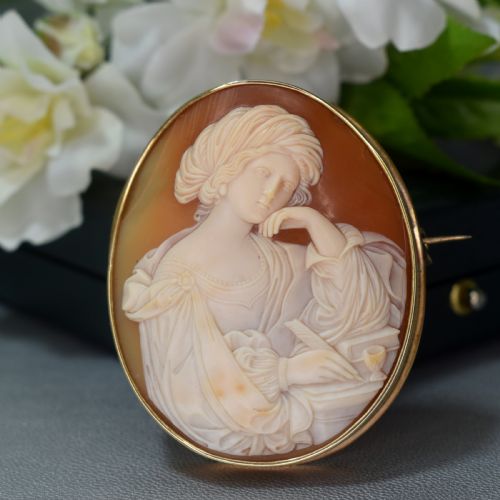


Antique Portrait Cameo Brooch
These antique portrait cameo brooch pieces combine carved shell, agate and hardstone profiles with gold frames to create wearable miniature sculpture.
Antique Portrait Cameo Brooch
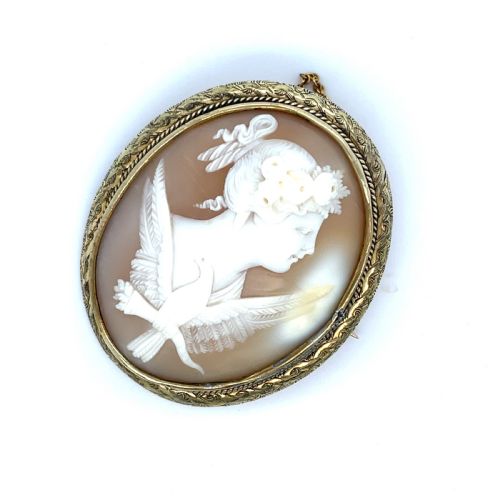
When you search for an antique portrait cameo brooch, you encounter carved likenesses of mythological figures, classical deities, and historical personalities mounted in precious metal frames. The selection centres on Victorian and Edwardian examples carved from shell or hardstone, frequently doubling as pendants or tabletop ornaments.
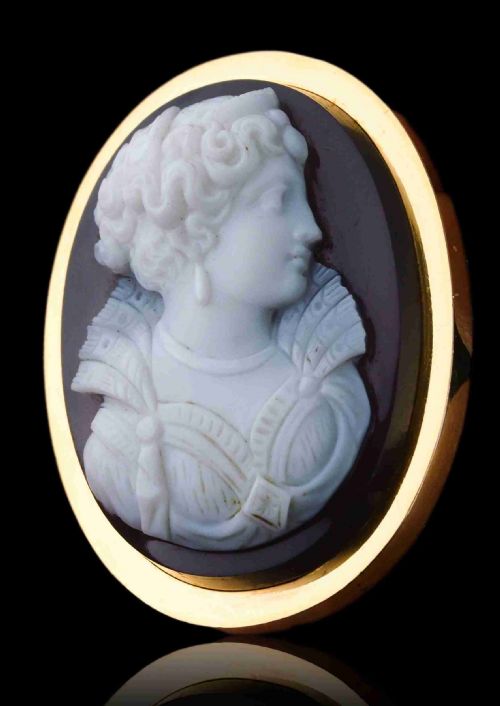
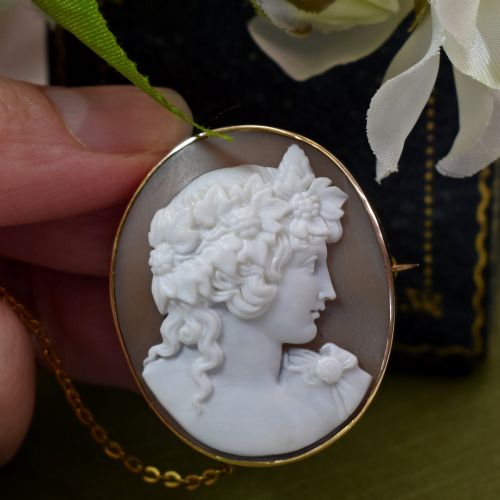
Most surviving pieces derive from Italian workshops or French makers of the nineteenth century, capturing subjects such as the Persian Sibyl, Goddess Flora, and Aphrodite. The forms range from delicate nine-carat gold dress pins to monumental shell carvings set within solid gold frames and stands.
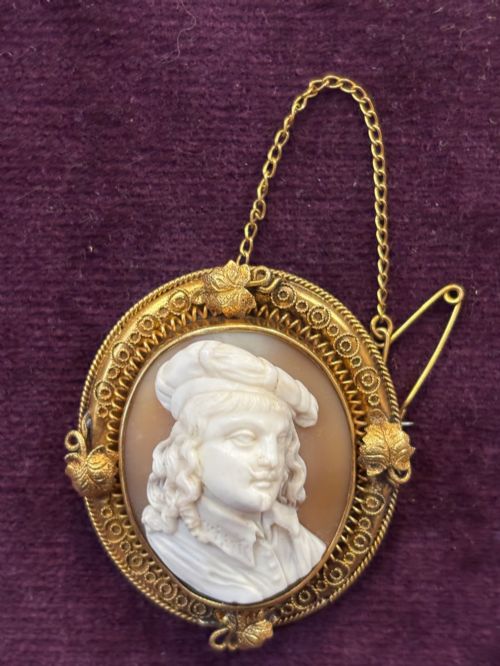
The wearable tradition spans early Victorian interpretations through to Edwardian silver mounts and mid-twentieth-century iterations. Buyers find both classical revival profiles and specific gentleman portraits framed in fourteen-carat or eighteen-carat gold.
How they were made
Carvers cut directly into layered natural materials, exploiting the colour contrast between a pale upper stratum and a darker backing. Shell and agate provide the primary surfaces for these relief carvings, allowing artisans to isolate detailed facial profiles against a contrasting ground.
Metalworkers encase the finished carvings in frames constructed from nine-carat, fourteen-carat, eighteen-carat, or twenty-carat gold, often incorporating fine filigree wirework. Certain pieces utilise silver mounts or pinchbeck settings, while pearl accents occasionally border the central cameo.
Italian and French ateliers employed specialised gravers and abrasive powders to achieve the crisp undercut details seen in classical depictions. The integration of hinged pins and swivel loops transforms the carved reliefs into versatile brooches and pendants.
Listings feature Victorian, Edwardian, and mid-twentieth-century periods using shell, agate, lava, and gold materials.
What varies in quality
The substance and complexity of the metal mount influence the overall standing of the piece. Solid eighteen-carat or twenty-carat gold frames with detailed filigree or integrated stands indicate higher workshop ambition than simple pinchbeck or light nine-carat settings.
The integrity of the natural material affects durability and visual appeal. Smooth, crack-free shell and evenly layered agate without natural fissures represent the better tier of surviving ornaments.
R. Pernice
The Antique Portrait Cameo Brooch Glossary
- Cameo
- A method of carving an object such as a engraved gem, item of jewellery, or vessel. In these pieces, it refers specifically to a relief carving on shell or hardstone.
- Hardstone
- A term for semi-precious stones used in glyptic art, including agate and lava. These materials offer dense, multi-coloured strata for detailed portrait carving.
- Grand Tour
- A cultural excursion undertaken by wealthy young Europeans through France and Italy during the nineteenth century. Travellers frequently acquired carved lava and shell cameos as mementos of their journey.
- Pinchbeck
- An alloy of copper and zinc invented in the eighteenth century to imitate gold. It appears in affordable Victorian jewellery frames.
- Filigree
- Ornamental work consisting of fine wire, usually gold or silver, soldered together in intricate patterns. It frequently decorates the edges of nineteenth-century frames.
Antique Portrait Cameo Brooch: Frequently Asked Questions
How do I wear a cameo brooch?
These pieces function as traditional dress fasteners pinned to lapels, collars, and heavy scarves. Many examples also include hidden loops, allowing them to suspend from chains as pendants.
The substantial scale of certain carvings permits them to transition from personal adornment to tabletop display when placed within fitted stands.
What materials are used for cameos?
Carvers primarily utilise conch or helmet shell alongside hardstones like agate and lava. The natural colour variation between upper and lower strata defines the relief image.
Frames incorporate yellow gold in various carats, silver, and pinchbeck, occasionally supplemented by seed pearls or coral.
How do I date an antique cameo?
Stylistic clues, frame construction, and hallmarks provide chronological markers. Victorian pieces frequently feature classical revival motifs, deep gold bezels, and pin stems that extend beyond the safety catch.
Edwardian examples often employ silver or lighter gold settings with openwork frames, reflecting twentieth-century manufacturing shifts.
What subjects appear on portrait cameos?
Common subjects include mythological figures, classical deities such as Flora and Aphrodite, and literary heroines like the Persian Sibyl. Specific historical personages and private gentlemen also appear.
Italian workshops frequently reproduced famous classical sculptures and Renaissance paintings in miniature relief.