

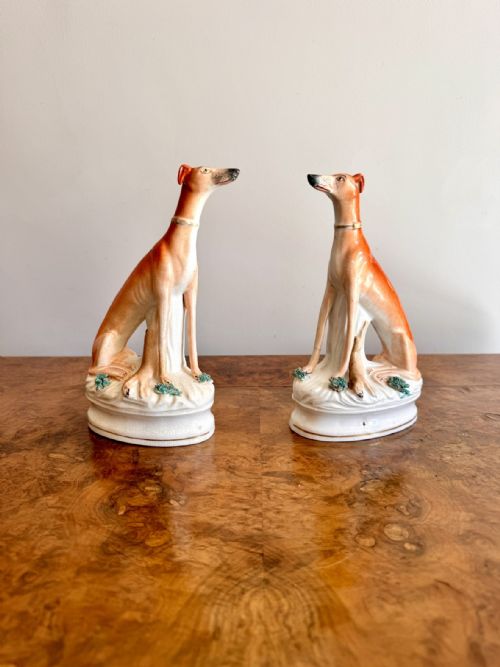



Antique Porcelain Greyhounds
These antique porcelain greyhounds are spirited ceramic tributes to the prized coursing dogs of the nineteenth and twentieth centuries.
Antique Porcelain Greyhounds
When you search for antique porcelain greyhounds, you are looking at figures that capture the sleek lines and alert posture of these dogs. The selection here leans heavily towards Victorian Staffordshire models, alongside Chinese export pieces and mid-century European figures.
Most examples appear as pairs or functional desk accessories such as inkwells and quill holders. You will also find solitary sculptures and decorative ornaments representing the breed across different decades.
The origins span from eighteenth-century Chinese export work to nineteenth-century British earthenware and twentieth-century continental porcelain. Victorian Staffordshire Staffordshire pottery examples dominate the forms available.
How they were made
Makers utilised traditional moulding techniques to capture the musculature and distinct stance of the greyhound. Many pieces required multiple firings in a kiln to set the glaze and fix the hand-painted enamel decoration.
Antique Porcelain Greyhounds Retail Price Guide 2026
Typical asking prices for porcelain greyhounds among the pieces listed under this phrase on Sellingantiques today, from the lower quarter to the upper quarter. They describe what is for sale here now, not the wider market.
Victorian desk accessories ensure these swift hounds spend their retirement faithfully holding your pens instead of chasing hares.
What varies in quality
The sophistication of the modelling determines whether the hound looks alert and natural or stiff and disproportionate. Functional pieces like inkwells vary in the complexity of their fittings and the balance of the overall composition.
Thomas Parr·Rosenthal
The Antique Porcelain Greyhounds Glossary
- Staffordshire
- A term for pottery and ceramic figures produced in the Staffordshire potteries of England during the nineteenth century. These pieces often feature hand-painted details and naturalistic forms.
- Inkwell
- A small pot or reservoir for ink, designed to hold writing fluid on a desk. In this category, the form is integrated into the base of the greyhound figure.
- Quill holder
- A desk accessory featuring a slot or channel to rest writing quills when not in use. They frequently accompany animal figures from the Victorian era.
- Lead glaze
- A glossy coating applied to ceramics before firing, containing lead oxide to create a smooth and shiny finish. It gives many nineteenth-century figures their characteristic lustre.
- Gold leaf
- Beaten gold applied to the surface of ceramic pieces to accentuate decorative elements like collars and bases. It adds a metallic richness to the painted details.
Antique Porcelain Greyhounds: Frequently Asked Questions
What are antique greyhound inkwells?
These are functional desk accessories where a modelled greyhound sits beside or atop a ceramic ink reservoir. They combined decorative appeal with practical use in nineteenth-century studies.
Purchasers used them to hold writing fluid and quill pens while adding a touch of canine companionship to the writing table.
How do I date Staffordshire greyhounds?
Dating relies on stylistic clues, glaze characteristics, and the handling of the clay body. Victorian examples from the mid-nineteenth century often display hand-painted enamel highlights and earthenware construction.
Comparing the modelling style to known period pieces helps narrow down the decade of production.
What is the difference between porcelain and earthenware?
Porcelain is a finer, denser ceramic material fired at higher temperatures, resulting in a white and vitreous body. Earthenware is more porous and opaque, requiring a glaze to seal the surface.
Victorian Staffordshire pieces are typically earthenware, while continental and export pieces often utilise porcelain.