



Antique Porcelain Demitasse Set
An antique porcelain demitasse set brings small-scale elegance to the after-dinner table, offering finely painted cups designed specifically for strong coffee.
Antique Porcelain Demitasse Set
An antique porcelain demitasse set comprises small cups and saucers designed for serving strong black coffee after a meal. These services range from single cabinet cups to multi-person cased sets intended for formal entertaining.
The pieces appearing on this page span several stylistic periods, including the Georgian era, the Regency period, Victorian production, and later twentieth-century manufacturing. Forms vary from simple coffee cans to pedestal cups and elaborate services equipped with silver mounts.
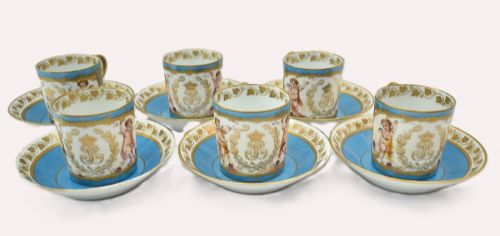
Makers and factories represented across the eras include English works such as Royal Worcester, Spode, Minton, and Coalport, alongside continental houses like Meissen, Sevres, and KPM Berlin. Buyers encounter both individual cabinet pieces and matched sets of six.
Materials and production methods
The primary material underpinning these items is hard-paste or soft-paste porcelain, alongside bone china, formed into delicate cups and shallow saucers. Many examples incorporate applied gold leaf and rich gold gilt detailing to highlight rims, handles, and painted panels.
Decoration relies on hand-painted floral motifs, figurative scenes, and transfer-printed patterns such as the dragon in compartments. Artisans often utilised vibrant enamel colours to build complex palettes across the surface of the porcelain.
Antique Porcelain Demitasse Set Retail Price Guide 2026
Typical asking prices for porcelain demitasse set among the pieces listed under this phrase on Sellingantiques today, from the lower quarter to the upper quarter. They describe what is for sale here now, not the wider market.
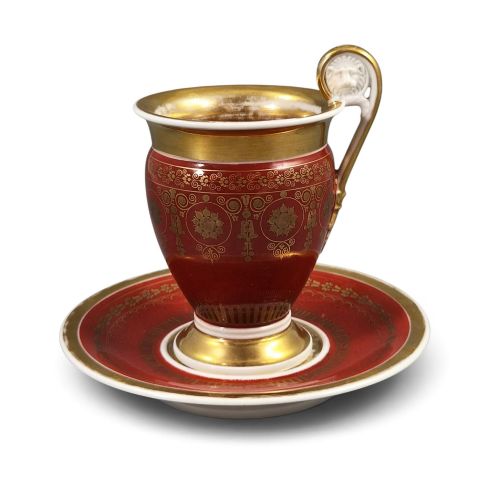
Some nineteenth-century French sets include lion mask handles, offering a fierce grip for your morning espresso.
Distinguishing quality in porcelain sets
Quality rests heavily on the crispness of the porcelain body and the finesse of the hand-painted decoration. Finer examples display meticulous brushwork by named artists, precise gilding that retains its burnished finish, and well-balanced forms with elegant handles.
The integrity of the set as a whole influences its standing, particularly where cased services retain their original spoons or fitted presentation boxes. Finer sets demonstrate consistent firing without kiln flaws, whereas lesser pieces show minor irregularities in the glaze or simpler transfer printing.
Royal Worcester·Meissen·KPM Berlin·Coalport·Minton·Sevres·Spode·Elkington
The Antique Porcelain Demitasse Set Glossary
- Demitasse
- A small cup used for serving strong black coffee or espresso. The term translates literally from French as half-cup.
- Coffee can
- A straight-sided cylindrical cup lacking the traditional curved bowl shape, popular during the Georgian and Regency periods. This form sits comfortably in a matching saucer.
- Cabinet cup
- A decorative porcelain cup intended for display within a cabinet rather than regular drinking use. These pieces often feature elaborate hand-painted scenes and heavy gilding.
- Hard-paste porcelain
- A durable ceramic composition fired at very high temperatures, using kaolin and petuntse. Continental factories like Meissen and Sevres specialised in this medium.
- Gilt
- A thin layer of gold applied to the surface of the porcelain as decoration. It is often hand-burnished to achieve a bright reflective finish.
Antique Porcelain Demitasse Set: Frequently Asked Questions
What is the difference between a teacup and a demitasse?
A demitasse is significantly smaller than a standard teacup and is specifically proportioned to hold a small measure of strong black coffee.
Teacups are wider and deeper to accommodate larger volumes of tea, often served with milk.
How should I clean antique porcelain?
Antique porcelain requires gentle hand washing in lukewarm water with mild soap.
Harsh detergents and dishwashers should be avoided because they can damage delicate hand-painted enamels and wear away gold gilt.
Can I use these sets for serving coffee?
Many sets remain fully functional and can be used for serving coffee on special occasions.
However, collectors often limit use to preserve delicate antique gilding and fragile porcelain handles.
How do I identify the period of a set?
Dating relies on factory backstamps, stylistic markers such as Rococo Revival or Art Deco forms, and the characteristics of the paste and glaze.
Comparing the painting technique and decorative motifs to documented factory examples helps narrow the production date.