



Antique Porcelain Credenza
These antique porcelain credenza pieces combine rich timber, gilded metal mounts, and painted ceramic plaques to anchor a grand nineteenth-century interior.
Antique Porcelain Credenza
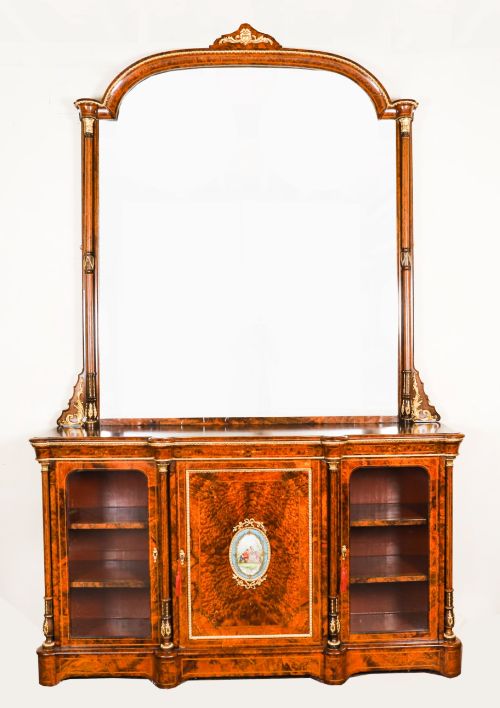
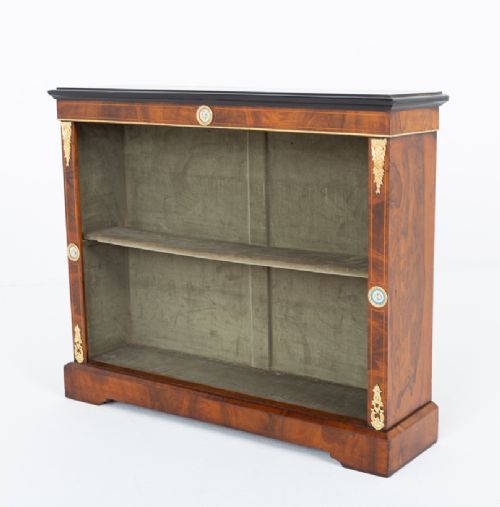
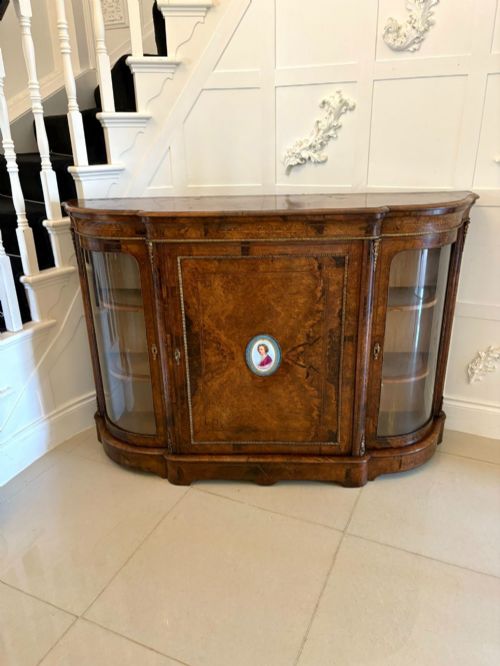
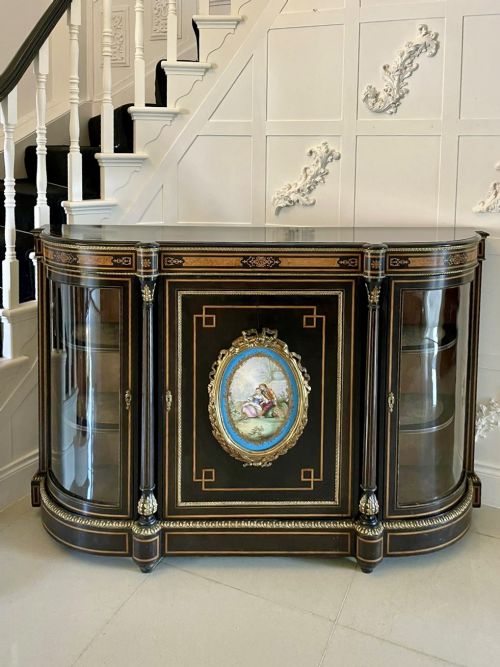
When you search for an antique porcelain credenza, you encounter substantial display furniture designed for nineteenth-century formal rooms, most frequently taking the form of low side cabinets fitted with glazed doors and inset ceramic plaques. The pieces listed now originate primarily from the Victorian era and the nineteenth century, alongside French revival styles such as Napoleon III and Louis XVI.
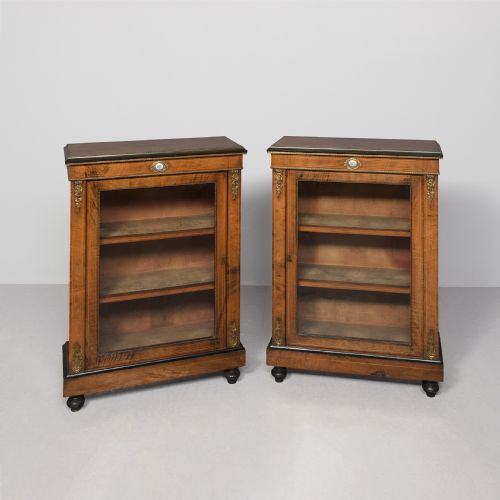
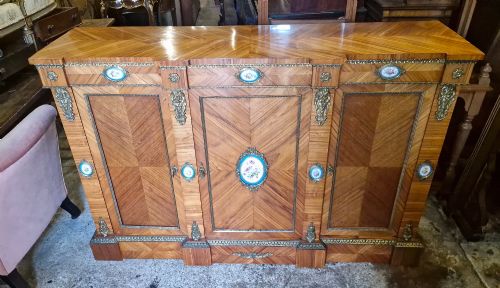
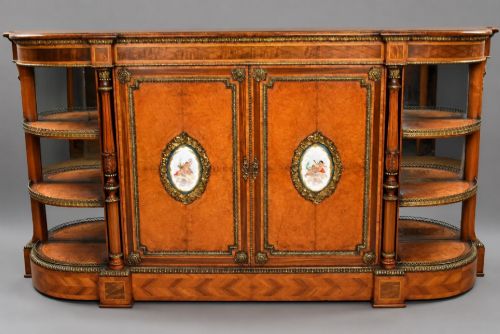
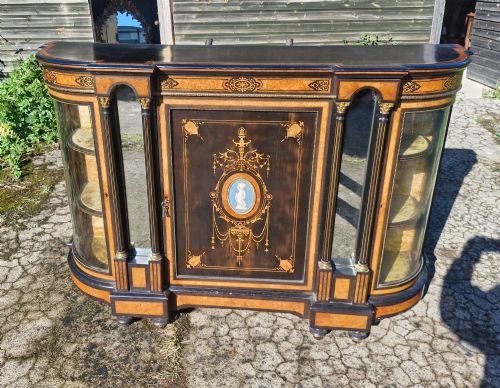
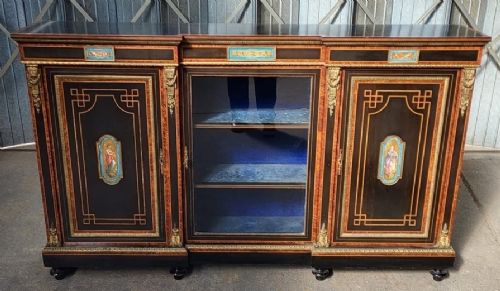
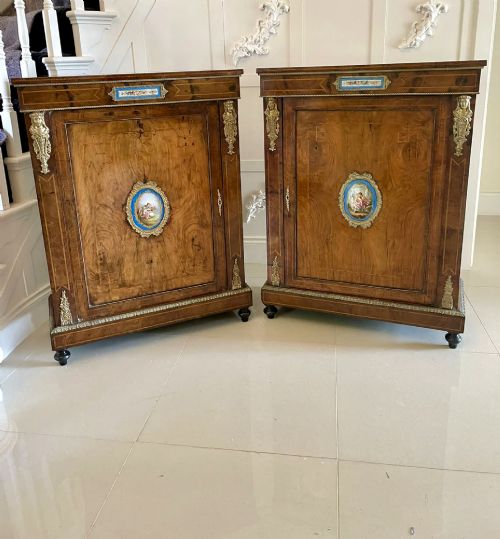
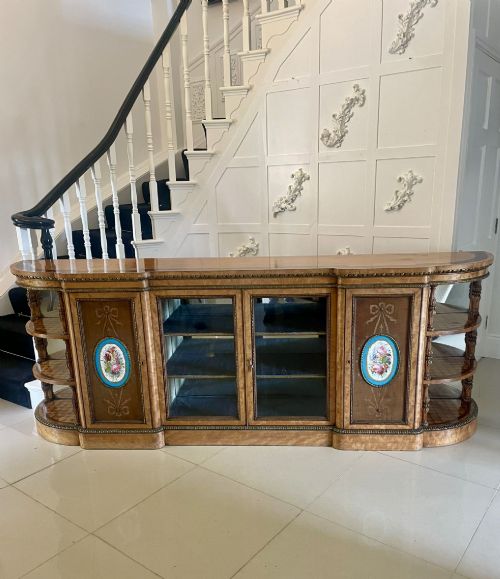
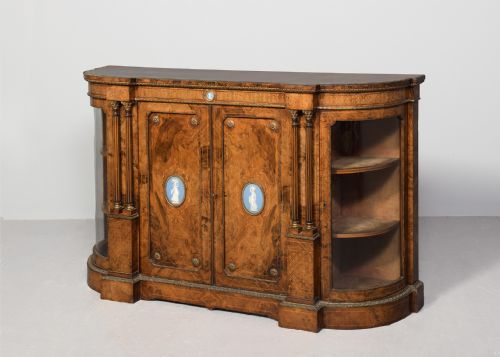
The standard configuration involves a central cupboard flanked by curved glass display sections, though shorter pier cabinets and three-door side cabinets also appear under this heading. Walnut, burr walnut, and ebonised wood form the primary carcass structures, frequently inlaid with marquetry or stringing to frame the painted porcelain panels.
How they were made
Cabinet makers built these structures using dense hardwoods like walnut, kingwood, and satinwood, often applying ebonised finishes or intricate marquetry veneers over a secondary timber base. Ormolu mounts in gilt bronze or gilt-metal provide structural edging and decorative corner brackets that frame the inset elements.
Ceramic plaques, frequently painted in the Sevres style, were integrated directly into the timber doors or friezes alongside glass panels. These components required specialised joinery to accommodate the differing expansion rates of wood, metal, and porcelain without straining the mounts.
Antique Porcelain Credenza Retail Price Guide 2026
Typical asking prices for porcelain credenza among the pieces listed under this phrase on Sellingantiques today, from the lower quarter to the upper quarter. They describe what is for sale here now, not the wider market.
The listings on this site span walnut, ebonised wood, and kingwood, paired with ormolu mounts and Sevres style porcelain plaques.
What varies in quality
The standard of a piece rests heavily on the crispness of its ormolu cast mounts and the fidelity of the timber veneers, where highly figured burr walnut or meticulous marquetry distinguishes ambitious workshops from standard production. Cabinet construction depth and the weight of the bronze or gilt-metal mounts indicate the level of investment behind the original commission.
The painted porcelain plaques introduce another tier of distinction, as finely rendered figurative or floral ceramic panels elevate a cabinet above those decorated with simpler transfer-printed motifs. The integration between the ceramic inserts and the surrounding woodwork shows whether the maker took care to achieve a flush, seamless fit.
Lamb of Manchester
The Antique Porcelain Credenza Glossary
- Credenza
- A low cabinet used for display and storage, typically featuring glass-fronted side compartments and central doors mounted with porcelain plaques. This form became central to formal nineteenth-century drawing rooms.
- Ormolu
- Gilt-bronze mounts applied to furniture edges and panels for decorative effect. The metal is cast and chased to produce crisp, gilded surface details.
- Sevres style
- A descriptive term for porcelain decorated in the manner of the French royal factory, often featuring hand-painted reserves against a rich blue or green ground with gilt enrichment.
- Burr walnut
- Timber taken from a walnut tree growth containing distorted grain patterns, sliced into veneers to create richly figured decorative surfaces on cabinet doors.
Antique Porcelain Credenza: Frequently Asked Questions
What rooms suit an antique porcelain credenza?
These cabinets work best in principal reception rooms or long hallways where their low profile allows paintings to hang above them while offering surface space for decorative objects.
Because they incorporate glass doors and open shelving, they also serve well for displaying collections of smaller antiques away from dust and foot traffic.
How do I distinguish French from Victorian examples?
French pieces often utilise ebonised finishes, amboyna, or kingwood alongside pronounced ormolu mounts and marble tops, reflecting Napoleon III or Louis XVI revival tastes. Victorian versions frequently rely on burr walnut carcasses with marquetry inlay and subtle stringing.
Examining the internal secondary timbers and the specific style of the bronze casting usually clarifies the origin of the workshop.
How were these cabinets originally used?
In nineteenth-century homes, such furniture served as both a practical sideboard for serving items and a primary showcase for status, displaying imported ceramics and glassware.
The central cupboards held linens or silver, while the flanking glazed sections protected delicate ornaments from handling.
How should I care for the wood and ormolu?
Maintain the finish by avoiding direct sunlight and excessive humidity swings that can cause walnut veneers to lift or timber to split. Clean the surfaces with a soft dry cloth and avoid harsh chemical polishes that degrade the gilt-metal ormolu mounts.
Wax should be applied sparingly to the wood only when the grain appears dry.