

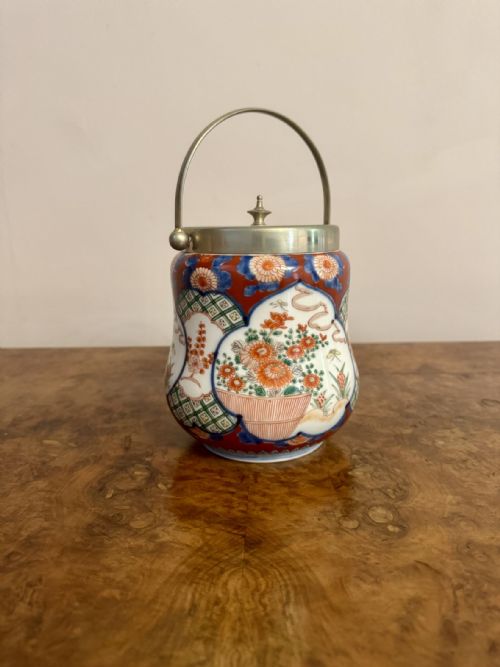


Antique Porcelain Barrel
An antique porcelain barrel brings cylindrical form into domestic and garden settings through ceramic vessels spanning centuries.
Antique Porcelain Barrel
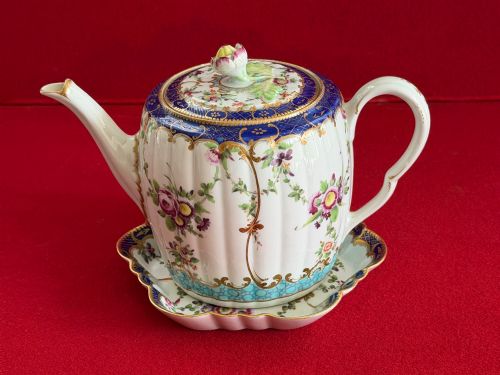
The antique porcelain barrel encompasses diverse functional forms ranging from delicate teapots and mugs to sturdy biscuit barrels and large garden seats. Pieces emerge across the Georgian, Victorian, and Edwardian eras alongside 18th-century and 19th-century Chinese and Japanese imports.
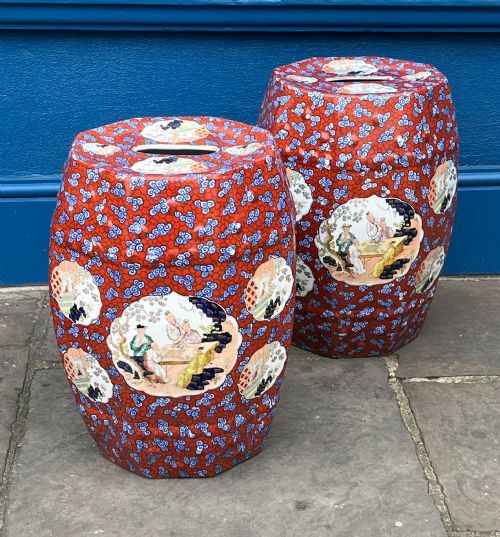
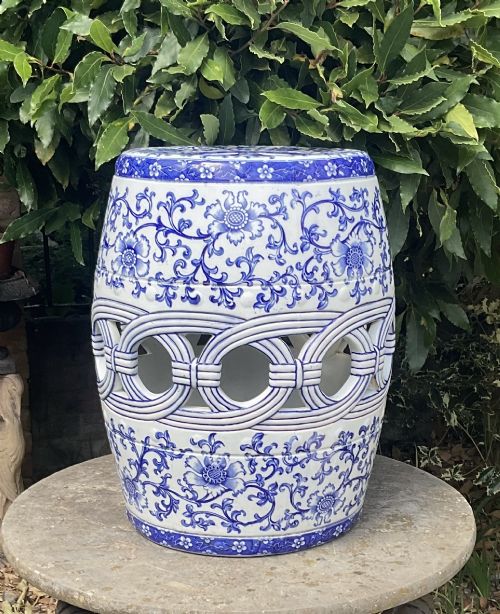
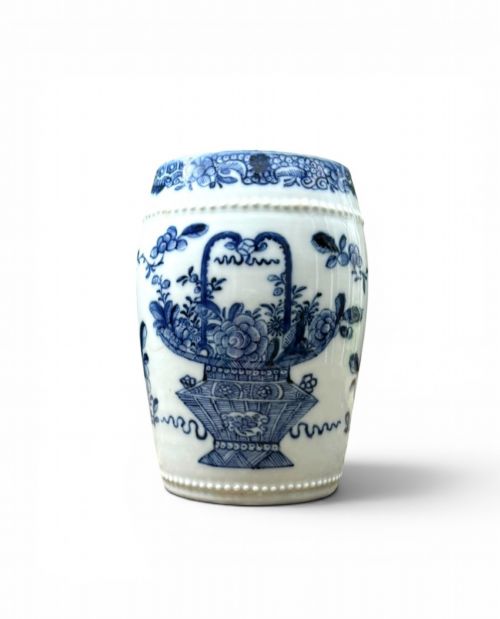
Domestic vessels frequently serve as tea wares or biscuit jars paired with silver plate mounts and glazed ceramic finishes. Larger installations appear as garden seats decorated in blue and white, Chinese Export, Famille Rose, and Japanese Imari palettes.
Buyers encounter European factories such as First Period Worcester, Minton, Meissen, Crown Devon, and Carlton Ware alongside Asian export wares. Each maker adapts the cylindrical barrel shape to specific domestic and decorative traditions.
How they were made
Potters shape ceramic, porcelain, earthenware, and ironstone into cylindrical forms using throwing and moulding techniques. Surfaces receive detailed painting, flow blue transfers, enamel work, and gilding with gold leaf.
Metal mounts in silver plate frequently complete biscuit barrels and teapots, providing functional lids and swing handles. Glaze applications seal the ceramic body before final firing and decoration.
Antique Porcelain Barrel Retail Price Guide 2026
Typical asking prices for porcelain barrel among the pieces listed under this phrase on Sellingantiques today, from the lower quarter to the upper quarter. They describe what is for sale here now, not the wider market.
A porcelain funnel helps a Meissen grape harvester girl pour wine into her barrel.
What varies in quality
Quality rests in the crispness of hand-painted enamel details, the precision of blue and white transfers, and the richness of gilding. Early factory pieces display finer potting compared to later commercial wares.
The preservation of original silver plate mounts and matching stands dictates the desirability of biscuit barrels and teapots. Garden seats vary according to the complexity of Chinese export painting and overall structural glaze integrity.
Minton·Crown Devon·Carlton Ware·Meissen
The Antique Porcelain Barrel Glossary
- Biscuit barrel
- A covered ceramic container designed for storing dry biscuits at the dining table. These vessels often feature silver plate hardware and swinging handles.
- Flow blue
- A cobalt blue transfer printing technique where the colour intentionally bleeds into the surrounding glaze during firing. This creates a soft, hazy aesthetic popular in Edwardian and Victorian ceramics.
- Chinoiserie
- European artistic style reflecting Chinese motifs and landscapes. Artisans apply these imaginative scenes to ceramics across Georgian and Victorian periods.
- Imari
- Japanese export porcelain decorated in underglaze blue, iron red, and gold. This distinct palette appears on various barrel forms.
- Famille Rose
- Chinese porcelain decorated with an opaque pink enamel palette introduced during the Qing Dynasty. This colourful style adorns garden seats and decorative vessels.
Antique Porcelain Barrel: Frequently Asked Questions
What was an antique biscuit barrel used for?
These lidded vessels served biscuits and dry cakes during formal afternoon tea and Victorian dining gatherings. The fitted silver plate mounts kept the contents fresh while sitting on the sideboard.
Today, collectors repurpose them as decorative containers or kitchen storage jars. Their sturdy ceramic walls make them practical for everyday interior display.
Where do porcelain garden seats come from?
Many examples originate from 19th-century Chinese kilns created for export to Western markets. They feature traditional Famille Rose, Rose Medallion, and blue and white painted surfaces.
Potteries in Britain also produced earthenware garden seats during the Victorian era. These domestic versions often imitated Asian export styles or utilised flow blue transfers.
How do I date an antique porcelain barrel?
Dating relies upon factory backstamps, ceramic body composition, and decorative painting styles. Georgian and 18th-century pieces display different potting characteristics compared to Victorian and Edwardian items.
Accessory materials like silver plate mounts provide additional clues. Maker marks help pinpoint exact production decades for factories like Crown Devon and Carlton Ware.
Can antique garden seats stay outside?
Most porcelain and ceramic garden seats withstand outdoor placement in mild weather. However, freezing temperatures can crack historical ceramic bodies and damage surface glazes.
Many collectors prefer keeping delicate painted garden seats indoors to preserve the enamel and gold leaf decoration. Enclosed porches offer a safer environment for fragile pieces.