



Antique Pop Up Desk
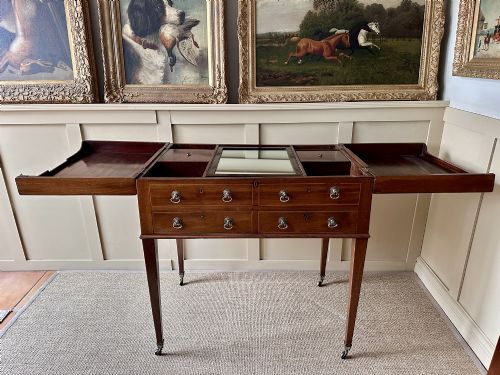
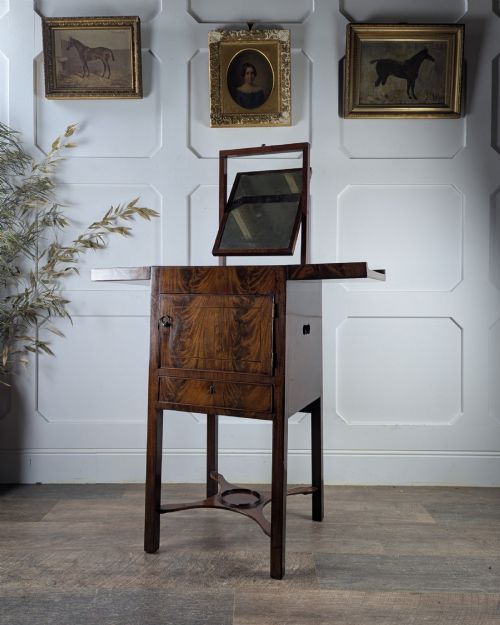
An antique pop up desk offers ingenious mechanical writing compartments and hidden storage, making it a clever and space-saving choice for any study.
Antique Pop Up Desk
An antique pop up desk is a clever piece of furniture designed to conceal writing implements, stationery, and drawers beneath a rising lid or within a sliding superstructure. The examples found here span the Victorian, Edwardian, and Georgian periods, showcasing the ingenuity of nineteenth-century cabinet makers.
The most common form encountered on this page is the Davenport desk, particularly variants fashioned from burr walnut and rosewood featuring piano tops and pop up mechanisms. Alongside these, buyers will discover related metamorphic writing tables and clever worktables with secret rising compartments.
Dating primarily from the mid-nineteenth century through to the early twentieth century, these desks reflect a period of domestic innovation where multi-functional furniture became essential for compact living. They combine traditional craftsmanship with mechanical surprises that continue to delight collectors today.
How they were made
Cabinet makers utilised dense hardwoods such as mahogany, walnut, and burr walnut as the primary structural foundations, often selecting veneers for their rich grain patterns. Boxwood inlay frequently provides delicate linear contrast around the borders and drawer fronts.
Internal mechanisms rely on brass fittings, springs, and counterweights to achieve the smooth rising action of the pop up compartments. Writing surfaces are traditionally lined with tooled leather to provide a durable and tactile platform for correspondence.
Antique Pop Up Desk Retail Price Guide 2026
Typical asking prices for pop up desk among the pieces listed under this phrase on Sellingantiques today, from the lower quarter to the upper quarter. They describe what is for sale here now, not the wider market.
Listings feature Victorian, Edwardian, and Georgian periods, with materials spanning burr walnut, rosewood, mahogany, and brass.
What varies in quality
The sophistication of the internal mechanism largely dictates the grade of the piece, with complex spring-loaded piano tops and multi-tiered rising stationery boxes representing the pinnacle of workshop skill. Smooth, balanced movement without sticking or binding indicates superior initial construction and careful maintenance.
Timber selection and veneer matching also set exceptional examples apart from standard production, particularly the use of highly figured burr walnut or richly patinated rosewood. Subtle details such as fine boxwood stringing and well-executed brass hardware elevate the overall visual harmony.
The Antique Pop Up Desk Glossary
- Davenport
- A compact pedestal desk featuring a sloping writing surface and drawers opening to the side. It was named after a Captain Davenport who commissioned the original design.
- Pop up
- A mechanical feature where internal compartments, stationery racks, or mirrors rise automatically or semi-automatically when a lid or catch is released.
- Burr walnut
- Timber taken from the warted excrescences of a walnut tree, yielding a highly swirled and mottled grain pattern prized for fine cabinet work.
- Metamorphic
- Furniture designed to transform into another form or function, such as a table converting into a desk or housing concealed compartments.
- Sheraton Revival
- A late nineteenth and early twentieth-century style inspired by the neoclassical designs of Thomas Sheraton, often incorporating delicate inlay and satinwood.
Antique Pop Up Desk: Frequently Asked Questions
How does a pop up mechanism work?
The internal tiers and stationery boxes are connected to a system of weights, springs, or linkages concealed within the pedestal of the desk. Lifting the primary lid or releasing a side catch allows the internal mechanism to rise smoothly into view.
Over time, dust and minor wood movement can affect the tension, but a properly adjusted mechanism operates with minimal effort and balanced resistance.
How do I care for leather writing surfaces?
The leather writing inserts benefit from gentle cleaning with a slightly damp cloth and occasional application of neutral leather balm to prevent drying and cracking. Avoid using harsh chemical cleaners or excessive water, which can damage the surrounding wood veneer.
Keeping the leather conditioned preserves its supple texture and maintains the traditional appearance of the desk.
Where were these desks placed in a home?
These compact writing desks were traditionally utilised in drawing rooms, boudoirs, or private studies where space was at a premium. Their finished backs often allowed them to sit away from the wall rather than requiring placement against a flat surface.
Today, they function well in contemporary home offices or living spaces as statement pieces that provide concealed storage.