





Antique Pocket Clock
These antique pocket clock pieces bring portable timekeeping into domestic and travel spaces, offering mechanical interest and period design.
Antique Pocket Clock
When you search for an antique pocket clock, you encounter various portable timepieces spanning the eighteenth century to the early twentieth century. The selection ranges from pocket watches and travel clocks to desk accessories and novelty items.
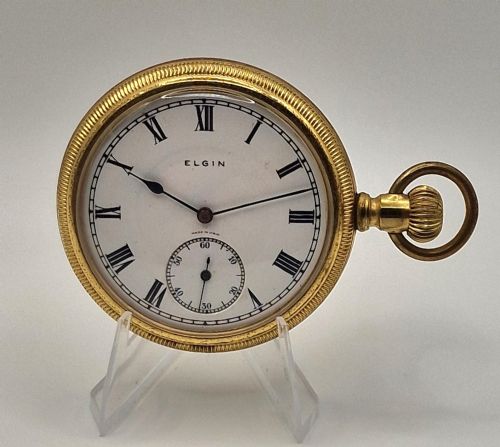
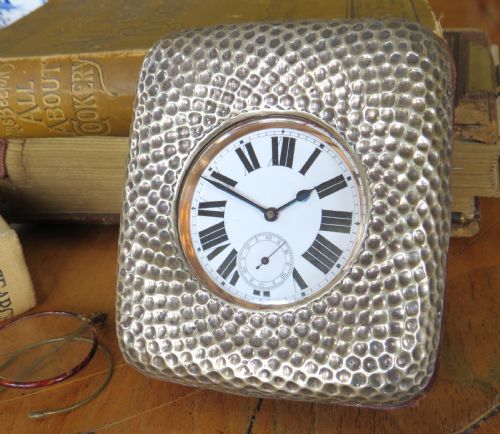
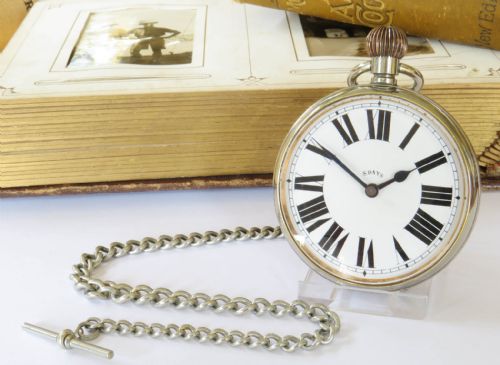
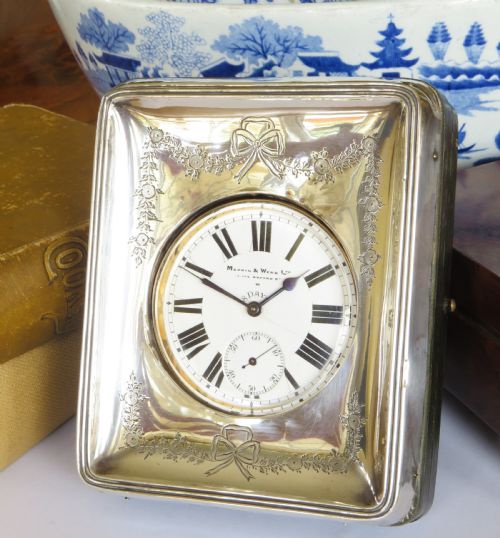
You are most likely to meet silver-cased travel clocks and larger goliath pocket watches dating from around nineteen hundred. These pieces often feature stands or folding cases suited for desks and bedside tables.
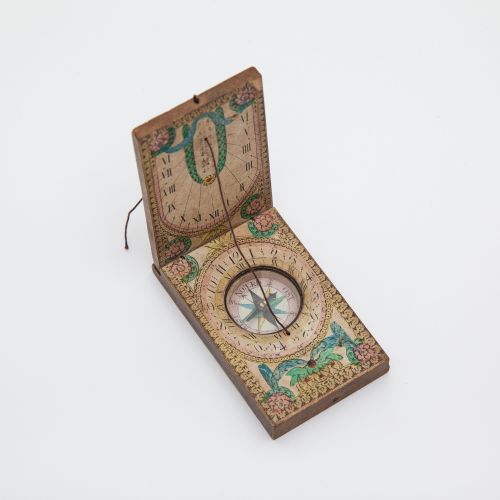
The category also encompasses specialised objects like maritime sundials, military cockpit watches, and novelty items fashioned as prayer books or capstan inkwells. Such items cross the boundaries between personal accessories and desk furniture.
Materials and construction
Makers utilised a variety of metals for casings, including sterling silver, brass, nickel, steel, and gilt metal. Enamel and glass often protect dials or add decorative colour through guilloche and champleve techniques.
Travel clocks frequently incorporated folding silver cases or leather-bound stands to protect the movement during journeys. Larger goliath movements required substantial metal housings to support eight-day power reserves.
Antique Pocket Clock Retail Price Guide 2026
Typical asking prices for pocket clock among the pieces listed under this phrase on Sellingantiques today, from the lower quarter to the upper quarter. They describe what is for sale here now, not the wider market.
Judging quality in portable timepieces
Quality rests in the complexity of the movement and the refinement of the outer case, whether silver, gilt bronze, or enamel. Finer pieces demonstrate precision engineering by established makers and jewellers.
The inclusion of original fitted cases, stands, or specialised complications distinguishes standard pocket watches from superior travel clocks and desk pieces.
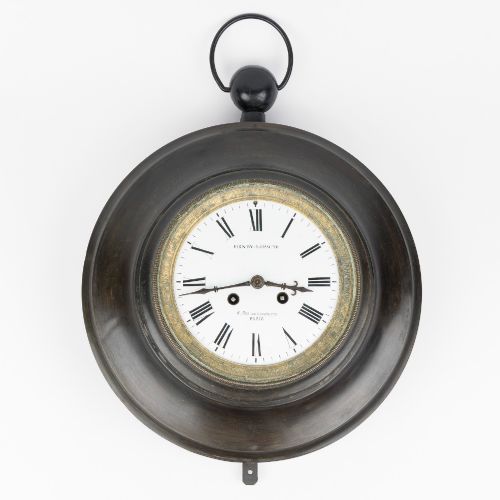
Henry-Lepaute of Paris·Mappin & Webb·Douard·Omega·Elliott Brothers·Barwise London
The Antique Pocket Clock Glossary
- Goliath pocket watch
- An exceptionally large pocket watch, typically measuring over sixty millimetres in diameter, often housed in a desk stand or travel case. These robust timepieces frequently housed eight-day movements.
- Guilloche enamel
- A decorative technique involving precise, intricate patterns engraved beneath a translucent layer of coloured enamel. This method was widely applied to portable watch cases and vanity items during the early twentieth century.
- Champleve enamel
- A process where troughs are carved into the surface of a metal object and filled with enamel powder before firing. It appears frequently on nineteenth-century novelty desk clocks and decorative items.
- Diptych sundial
- A portable folding instrument containing two small panels and a string gnomon for telling time by the sun. These maritime navigation tools date back to earlier centuries.
- Capstan-shaped
- Designed in the form of a nautical capstan, a drum-shaped revolving cylinder used on ships to raise anchors. This architectural silhouette appears on Edwardian desk inkwells combined with clocks.
Antique Pocket Clock: Frequently Asked Questions
What is a goliath pocket watch?
A goliath pocket watch is an oversized timepiece created around the turn of the twentieth century. They were generally too heavy for a standard waistcoat pocket.
Instead, owners placed them on desks or inside travel cases, often pairing them with eight-day movements that required less frequent winding.
How were travel clocks used?
Travel clocks provided portable timekeeping for journeys in carriages, trains, or early motor cars. Their folding silver cases protected the glass dials from damage on the move.
When unfolded, the case often served as a desk stand for use in hotels or temporary quarters.
What materials make up these clocks?
Casings employ sterling silver, nickel, brass, steel, and gilt metal. Dials and cases frequently incorporate protective glass and decorative enamel elements.
More elaborate examples utilise champleve or guilloche enamel work to enhance their decorative appeal.
How do you date an antique clock?
Dating relies on hallmarks stamped on silver cases, maker signatures, and stylistic indicators such as Edwardian or Art Deco design details. Military pieces often bear issue marks and dates from specific campaigns or conflicts.
Movements and construction techniques also help narrow down the period of manufacture.