





Antique Playing Cards
Antique playing cards and the vessels made to house them survive in sterling silver, burr walnut, and brass from the Victorian and Edwardian eras.
Antique Playing Cards
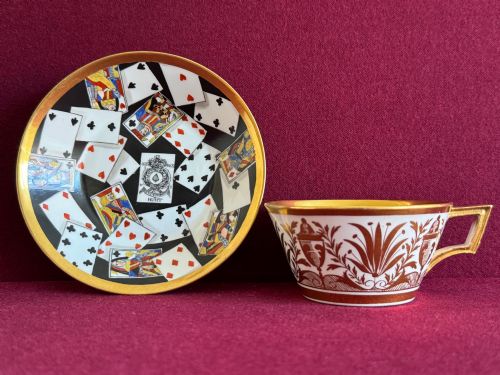
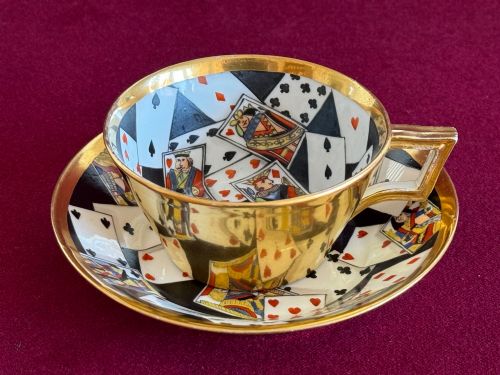
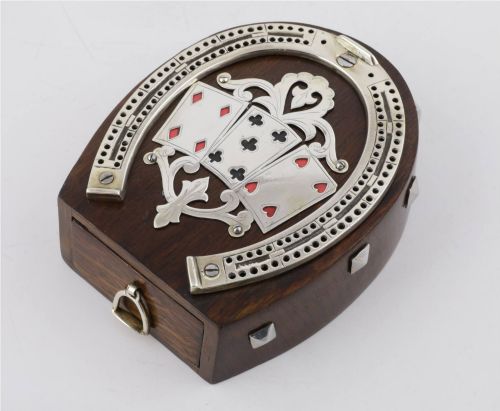
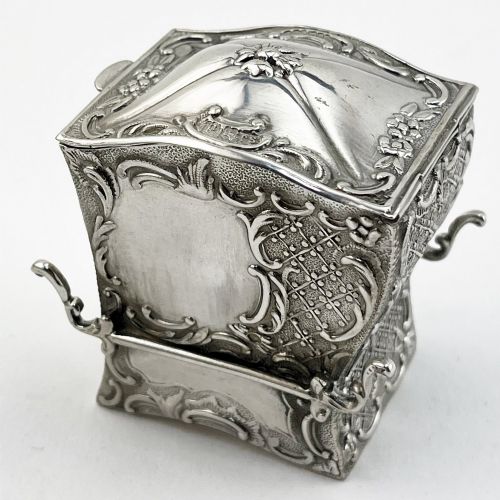
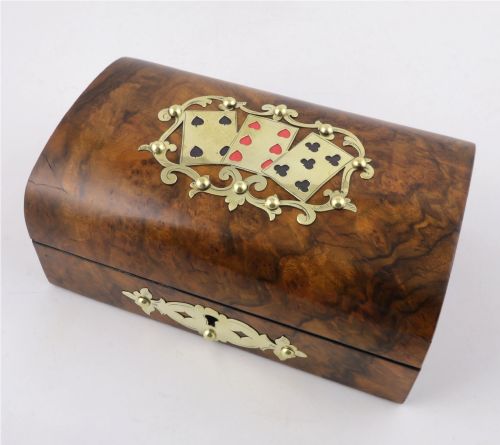
When you search for antique playing cards, you encounter containers and tables designed specifically for parlour games, alongside items celebrating the iconography of the suit. The selection spans Victorian and Edwardian pieces, ranging from silver caskets to fold-over card tables in walnut and mahogany.
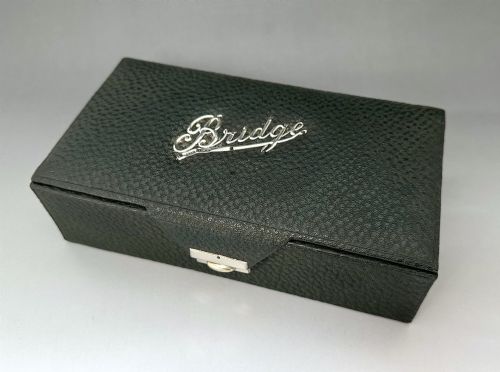
The objects take many forms, from dedicated bridge boxes and cribbage board cases to larger furniture like games tables. The period pieces reflect formal social gatherings where card games formed a central pillar of domestic entertainment.
Materials and construction methods
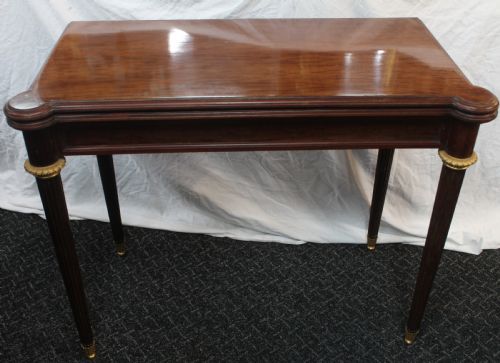
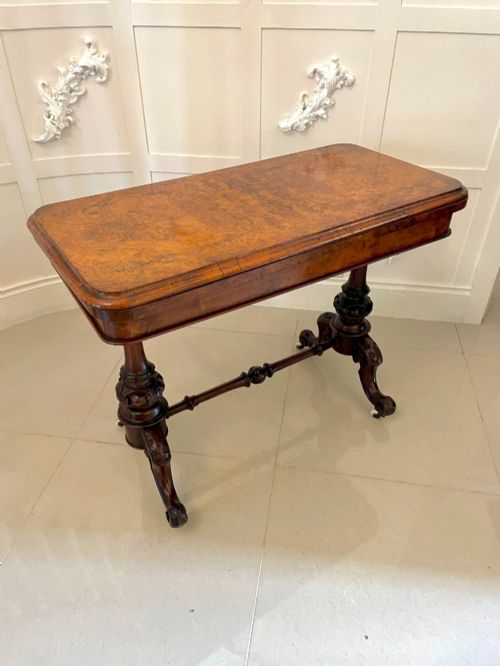
Woodwork relies on dense timbers such as walnut, burr walnut, and mahogany, often enhanced with brass mounts, hinges, and corner brackets. Tables feature fold-over leaves supported by pivoting mechanisms designed to reveal baize-lined playing surfaces.
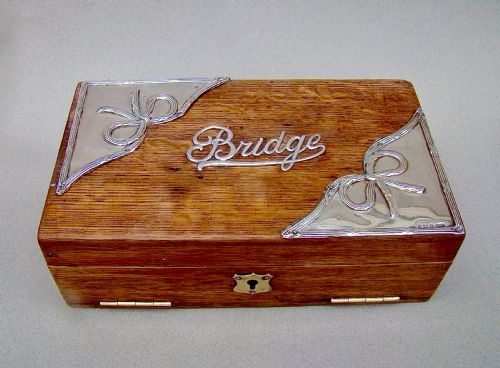
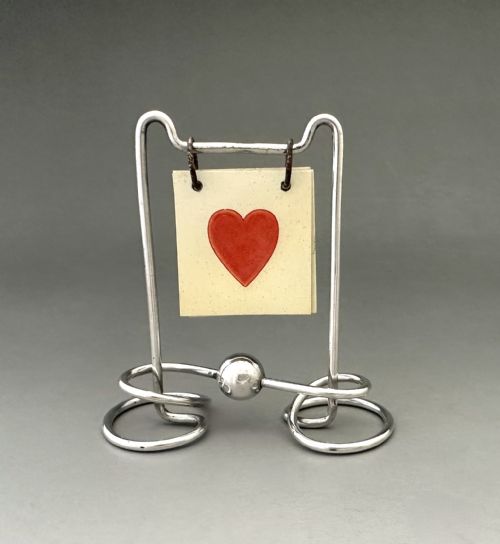
Metalwork utilises sterling silver and brass for caskets, boxes, and marker pieces, frequently bearing hallmarks from assay offices in Birmingham. Leather mounting, enamel detailing, and carved elements appear across smaller patience boxes and bridge cases.
Antique Playing Cards Retail Price Guide 2026
Typical asking prices for playing cards among the pieces listed under this phrase on Sellingantiques today, from the lower quarter to the upper quarter. They describe what is for sale here now, not the wider market.
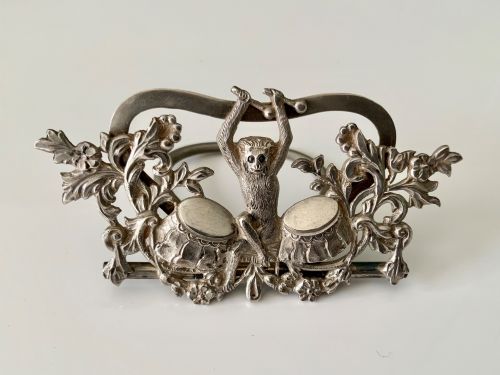
Monkeys playing drums and poker-playing characters populate the silver menu holders and historical genre oil paintings.
Distinctions in construction and design
Quality rests upon the precision of the joinery in timber boxes and the weight and finish of silver mounts. Makers who utilised figured burr walnut or thick gauge sterling silver produced pieces that maintain their structural integrity and crisp detailing.
Furniture quality depends on the stability of the folding mechanisms and the integration of the internal compartments designed to hold counters and decks. Finer items exhibit careful matching of wood veneers and substantial brass hardware rather than stamped or thin plating.
Levi & Salaman·George Betjemann·Johann Hamza·Marcel Brunery·Duesbury & Kean
The Antique Playing Cards Glossary
- Cribbage board
- A scoring board featuring tracks of small holes for pegging points during the card game. These are frequently incorporated directly into the lids of wooden games boxes.
- Fold-over table
- A piece of furniture with a hinged top that rotates and opens to double its surface area. The interior often reveals a baize-lined playing surface for cards.
- Patience box
- A small dedicated container specifically sized for solitary card games, also known as patience. They frequently feature silver mounts and interior divisions.
- Hallmark
- An official stamp applied to precious metals indicating the standard of purity, the assay office, and the date of manufacture. These markings help date silver card cases and boxes precisely.
- Bridge box
- A container organised to hold the specific decks and scoring paraphernalia required for the game of bridge. They appear in silver, leather, and fine timbers during the Edwardian period.
Antique Playing Cards: Frequently Asked Questions
What are antique playing card boxes made from?
The containers utilise woods such as burr walnut, rosewood, and oak, often reinforced with brass hardware and hinges.
Silver and sterling silver also appear frequently, especially in Edwardian bridge boxes and Victorian caskets bearing Birmingham hallmarks.
How do fold-over card tables work?
Fold-over card tables feature a hinged top leaf that swings open on a pivot to rest upon an extended frame or gate leg.
This mechanism doubles the surface area, revealing a baize-lined or polished timber top suitable for card playing.
What is a cribbage board box?
A cribbage board box combines a lidded storage compartment for cards and counters with a scoring track built into the exterior.
Pegs fit into small drilled holes along the board to record scores during gameplay.
How do I identify a Victorian games table?
Victorian games tables typically display dense timbers like walnut or mahogany, combined with heavy turnings or pedestal bases.
Interior compartments designed for gaming counters and cards help distinguish them from standard console tables.